
Shower Drain Smelly? Check Flow, the Trap and Reachable Buildup
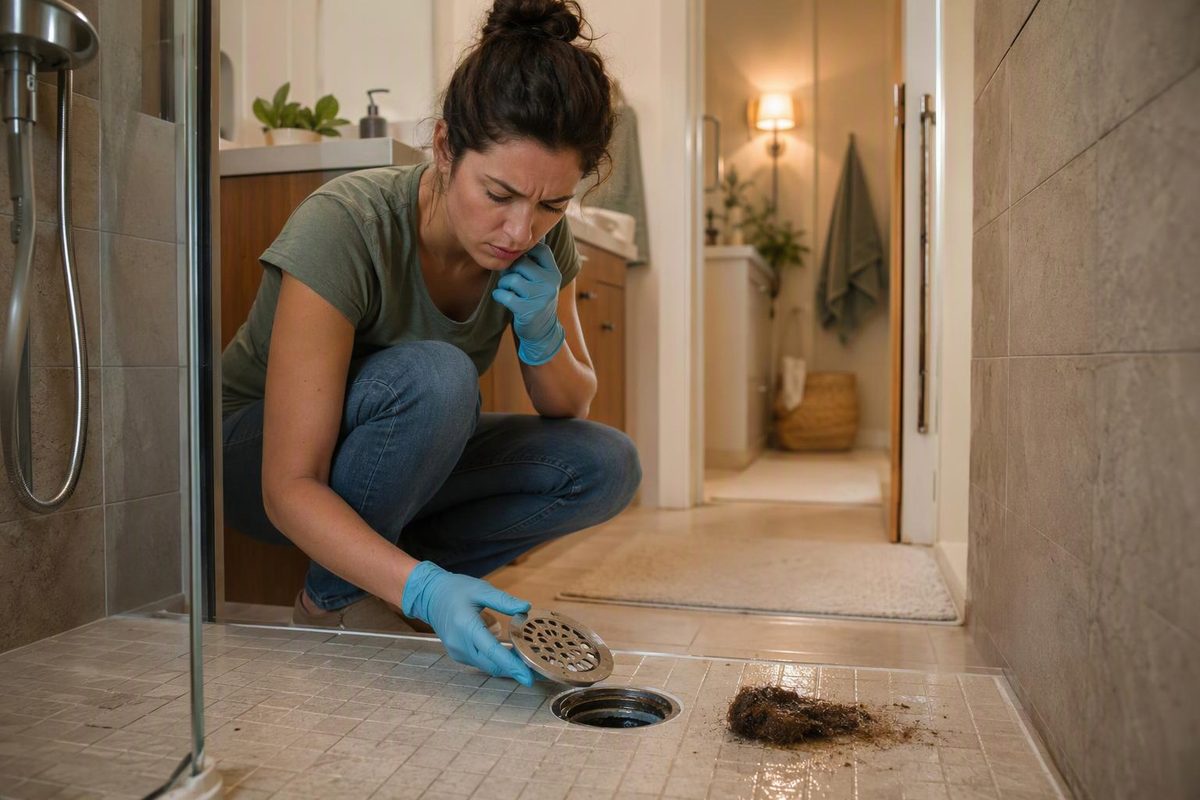
Diagnose a smelly shower drain safely: check other fixtures, refill an underused trap, clean reachable buildup and know when to call a plumber.
If your shower drain is smelly, first check whether water drains normally and whether other fixtures are affected. Hair and soap buildup can cause both odor and slow drainage. An unused shower may have a dry trap, while odor with gurgling or backups needs a broader drain-system check. Smell alone cannot identify the cause. Oatey’s shower-drain guidance identifies accumulated shower debris as a source of clogs and unpleasant odors.
Stop ordinary troubleshooting if wastewater is rising into the shower. Stop using toilets, faucets and water-using appliances, keep people and pets away from the affected area, and arrange urgent plumbing help. Continued water use can worsen a backup. Seattle Public Utilities’ backup guidance explains these precautions.
If you suspect concentrated sewer gas in an enclosed space, leave the building and call the fire department from outside; avoid flames and electrical switches. Headache, dizziness or nausea alongside a suspected gas leak also warrants medical attention. Wisconsin DHS gives this safety guidance.
1. Establish the fixture pattern
Before adding anything to the drain, note what is already happening during normal household use:
- Only the shower smells, and drainage is normal: Start with an underused trap or grime on accessible drain parts.
- Only the shower is slow or pools water: Remove reachable hair and soap residue first. Odor does not turn a likely local clog into a main-line diagnosis.
- The shower gurgles when another fixture drains: Record which fixture triggers it. A drain restriction or venting problem needs consideration; gurgling does not prove a blocked roof vent.
- Several fixtures drain poorly, or another fixture’s discharge appears in the shower: Stop treating this as a shower-only cleaning job. A shared branch, house drain or sewer connection may be involved.
Multiple affected drains, gurgling and water backing into a tub or shower are recognized warning signs of drain or vent-system trouble. This Old House distinguishes localized problems from broader backups. Our main line versus lateral line guide explains how fixture patterns help narrow the location.
Do not repeatedly flush a toilet or run the washer just to reproduce a suspected backup.
2. Refill an underused shower’s trap
The trap beneath the shower holds water that blocks sewer gas. When a fixture goes unused, that water can evaporate. Adding water restores the barrier if evaporation was the problem. Wisconsin DHS recommends flushing infrequently used drains with water to keep traps from drying out.
If the shower drains freely, run it briefly with ordinary tap water. Let the room air out, then check whether the odor returns without further shower use.
- Odor clears and stays away: Keep the shower on a periodic water-running routine.
- Odor returns despite regular use: Do not assume ordinary evaporation. Have a plumber investigate the trap, connections and venting.
3. Clean what you can reach without disturbing the drain assembly
If no chemical cleaner is present, use gloves and follow this order:
- Remove only the serviceable cover or grate. Follow the drain manufacturer’s instructions. Do not unscrew the drain body, pry against tile or disturb the waterproofing connection.
- Lift out reachable hair and sludge. Bag it for the trash rather than pushing it farther into the pipe.
- Clean the cover’s underside, hair basket, rim and accessible inner surfaces. Use a soft brush and a mild cleaner compatible with the drain finish and surrounding tile or stone.
- Rinse with warm tap water, then reassemble. Refit any removable trap insert or inspection plug exactly as instructed.
Drain manufacturer Easy Drain recommends soft brushes, material-compatible cleaners and thorough rinsing. Its instructions also show why removable water seals and inspection plugs must go back after cleaning. Those parts are model-specific—not every shower has them.
For a long channel drain, clean along the channel and beneath the cover, not just at the outlet. See our linear shower drain cleaning guide. For cleaning access at sinks and other fixtures, use our general smelly-drain guide rather than applying shower instructions to every drain.
Do not mix cleaning products. If drain opener has already been used and the drain remains blocked, stop hands-on cleaning and tell the plumber what was added. Follow the product’s precautions: for example, Drano Max Gel’s instructions prohibit mixing it with other chemicals and using a plunger during or after treatment because cleaner may remain.
If odor improves but pooling remains, the blockage is not resolved. Move to slow-drain diagnosis rather than repeated deodorizing.
4. Check whether the smell is actually in the water
If odor appears mainly while showering, compare hot and cold water at a nearby faucet. Fill separate clean glasses and take them into another room to smell them—no tasting is necessary.
- Odor follows the water: The supply, hot-water plumbing or water heater deserves investigation.
- Odor stays in the bathroom: Continue looking at drains and nearby surfaces rather than buying water treatment.
- Only the hot-water sample smells away from the drain: Arrange a water-heater or hot-water plumbing check; do not raise the heater temperature as an improvised fix. Hot water can also release drain odors, so smell at the fixture alone does not establish a heater problem.
Portland Water Bureau uses this glass-away-from-the-drain test and hot/cold comparison. For a private well with a new rotten-egg odor, seek water testing advice; Minnesota’s health department recommends checking for coliform bacteria and nitrate rather than assuming sulfur odor is harmless.
When to hand the diagnosis to a plumber
Call when sewer-like odor persists after refilling and accessible cleaning, returns quickly in a regularly used shower, accompanies cross-fixture gurgling, or comes with visible leakage or dampness. Leave roof-vent access and concealed trap repairs to a professional.
Give the plumber these observations:
- How often the shower is used and when the smell began.
- Whether it drains normally, pools or backs up.
- Which other fixtures are affected or trigger gurgling.
- Whether adding water or removing debris changed the odor—and for how long.
- Whether the smell follows a hot or cold water sample.
- Any recent drain work, removed inserts or chemicals used.
These details help separate a dirty shower drain from a trap, venting or shared-drain problem without guessing from the odor alone.