
Residential Plumbing: Diagnose the Problem Before Choosing a Fix
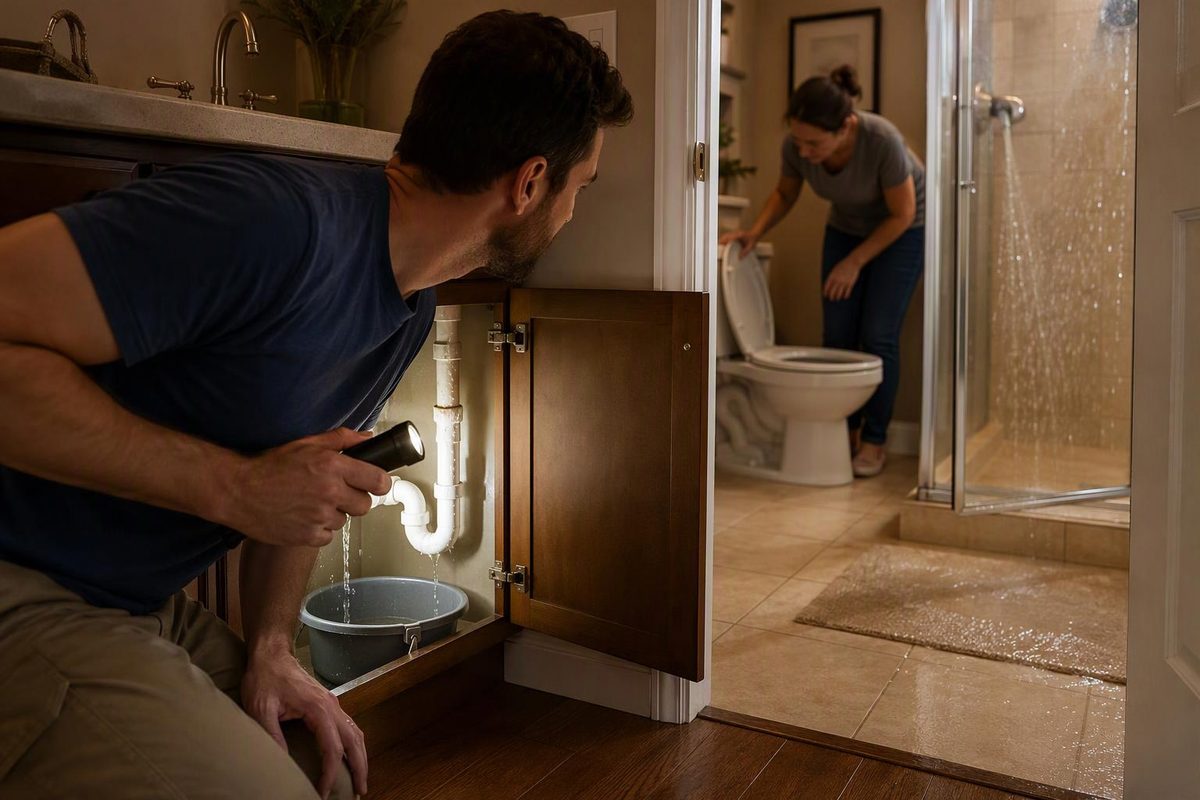
Start with the affected fixtures to separate a local clog, shared drain problem or supply leak—and know when to stop DIY work and call a plumber.
Start with where water appears and which fixtures are affected. A slow bathroom sink calls for a different first check than wastewater rising through a shower or water leaking inside a cabinet. This sequence is for single-family homes.
Residential plumbing has two main sides: the water supply brings pressurized water to fixtures, while drains carry used water toward a sewer or septic system. The drain-waste-vent system also includes traps that hold a water seal and vents that regulate air pressure and release sewer gases outdoors. Oatey explains how traps and vents work together.
You do not need to identify every pipe before getting started. Follow this order to narrow the problem without adding water to a backup or opening plumbing unnecessarily.
1. Stop active damage before testing anything
If wastewater is coming up through a drain, stop household water use. Do not flush another toilet, run laundry or start the dishwasher to “see what happens.” Widefield Water and Sanitation District advises using neither water nor other products in affected drains until the blockage is cleared, and contacting a plumber and the sewer utility. Read its sewer-backup guidance.
Keep people and pets out of contaminated areas. Do not enter standing water where electrical equipment or outlets may be involved. CDC’s standing-water safety guidance covers contamination and electrical hazards.
If a supply pipe has broken, shut off the home’s water supply if you can reach and operate the valve safely. If the valve is missing, inaccessible or stuck, contact your water provider or plumber rather than forcing it. A wheel-style shutoff closes clockwise; a ball-valve handle is closed when perpendicular to the pipe. Street shutoff rules differ by provider. The Regional Water Providers Consortium’s emergency shutoff guidance covers these distinctions.
Shutting off incoming water can limit a supply leak. It will not stop sewage pushed back from a public sewer.
2. Record the fixture pattern
Use what has already happened before deliberately running more water. Note the first affected fixture, the lowest fixture where water appeared and whether using one fixture caused a response in another.
| What you observe | Where to focus first | Safe next step |
|---|---|---|
| One sink, tub or shower is slow; other fixtures appear normal | Stopper, strainer, trap or that fixture’s drain | Check accessible debris before choosing a clearing tool |
| Two nearby fixtures drain poorly | A shared branch drain is possible | Report both fixtures; if water is backing up, stop water use |
| Several fixtures in different rooms back up, or laundry discharge rises through a floor drain | A shared downstream drain or sewer problem | Stop water use and arrange professional diagnosis |
| Gurgling without visible backup | Drain restriction or venting problem | Record what triggers it; sound alone does not identify the cause |
| Water appears outside pipes or fittings | A leak rather than necessarily a clog | Stop using the fixture; isolate its supply if the leak is on that side |
A single slow fixture is more consistent with a local obstruction; multiple backups or one fixture affecting another raise concern about the shared drainage path. These are clues, not proof of a blockage’s exact location. Pipe-lining manufacturer NuFlow describes these warning patterns.
Two fixtures in one bathroom may share a branch before joining the main drain. Likewise, a backup at the lowest drain identifies where water escaped—not necessarily where the obstruction sits.
3. Keep DIY work local and accessible
For an isolated slow drain with no sewage backup and no chemical cleaner present:
- Check that the stopper opens fully. Remove visible hair or debris from an accessible strainer or removable stopper. Do not pry out an unfamiliar assembly.
- Consider a fixture-appropriate plunger. A cup plunger suits sinks and tubs; a flange plunger suits toilets. Stop if there is no improvement, another fixture reacts or water begins leaking. NuFlow’s local clearing guidance distinguishes plunger types.
- Use a small hand snake only if you understand the access point and tool limits. Follow its instructions, including eye protection and the specified gloves. RIDGID’s hand-spinner instructions warn not to force the cable and do not recommend that tool for toilets. Read the manufacturer’s instructions. For a toilet, use a toilet-specific auger with a porcelain guard rather than a general cable pushed through the bowl; RIDGID describes that protective design.
Before moving beyond surface cleaning, see how to use a plumbing snake without forcing the cable. Resistance is a reason to reassess, not to apply more torque. Leave whole-house backups, unfamiliar cleanouts and powered drain machines to a professional.
If drain cleaner has already been used, change the plan. Do not mix in another cleaner or attempt to neutralize it. For example, Drano Max Gel expressly prohibits plunging during or after use because product may remain in an uncleared drain, and warns against mixing chemicals. Follow the exact product label and tell the plumber what was added. See the manufacturer’s precautions.
4. Separate odor and leak checks from clog checks
For an odor isolated to a rarely used drain that otherwise drains normally, adding water may restore an evaporated trap seal. Persistent odor, gurgling or a smell around a toilet base needs a different investigation; a dry trap is not the only possible cause. Oatey lists trap, vent, toilet-seal and sewer-line causes. Start with the accessible checks in how to clean a smelly drain, not a climb onto the roof.
For suspected hidden water loss in a metered home, EPA recommends comparing the meter before and after two hours with no water use. Include irrigation and automatic appliances in that no-use period. A changing reading suggests a leak but does not locate it. Do not delay shutting off a visible major leak to perform this test. EPA’s leak-check instructions also cover toilet dye testing and visible fitting checks.
If the house uses septic, report indoor backups along with unusual wet or spongy ground near the drainfield, particularly without recent heavy rain. These signs warrant septic-system evaluation rather than a drain-cleaner experiment. EPA advises against putting drain cleaners down septic drains and does not recommend routine bacterial or chemical additives. Its septic guidance explains the symptoms and limits.
5. Give the plumber observations, not a guessed diagnosis
Call for an active backup, uncontrolled leak, recurring blockage, persistent sewer odor or a local clearing attempt that produces no improvement. Have these details ready:
- Which fixtures are affected, including their floor and room.
- Where water first rose or leaked, and what was running at the time.
- Whether the problem is new, recurring or linked to rain.
- Whether the home uses public sewer or septic.
- Any cleaner used: product name, approximate amount and time added.
- Tools already tried, and any known cleanout location—without opening it just to check.
For a sewer-connected home, report a suspected public-main problem to the local sewer utility, especially if neighbors also have backups. The utility can check its main; responsibility for the private connection depends on local rules. Widefield’s guidance illustrates that division.
If clogs keep returning after clearing, ask what inspection would distinguish leftover buildup from roots, damaged joints or another pipe defect. A brief return to normal flow is not enough, by itself, to justify either repeated clearing or pipe replacement.