
Recognize a Blocked Vent Without Mistaking a Drain Clog
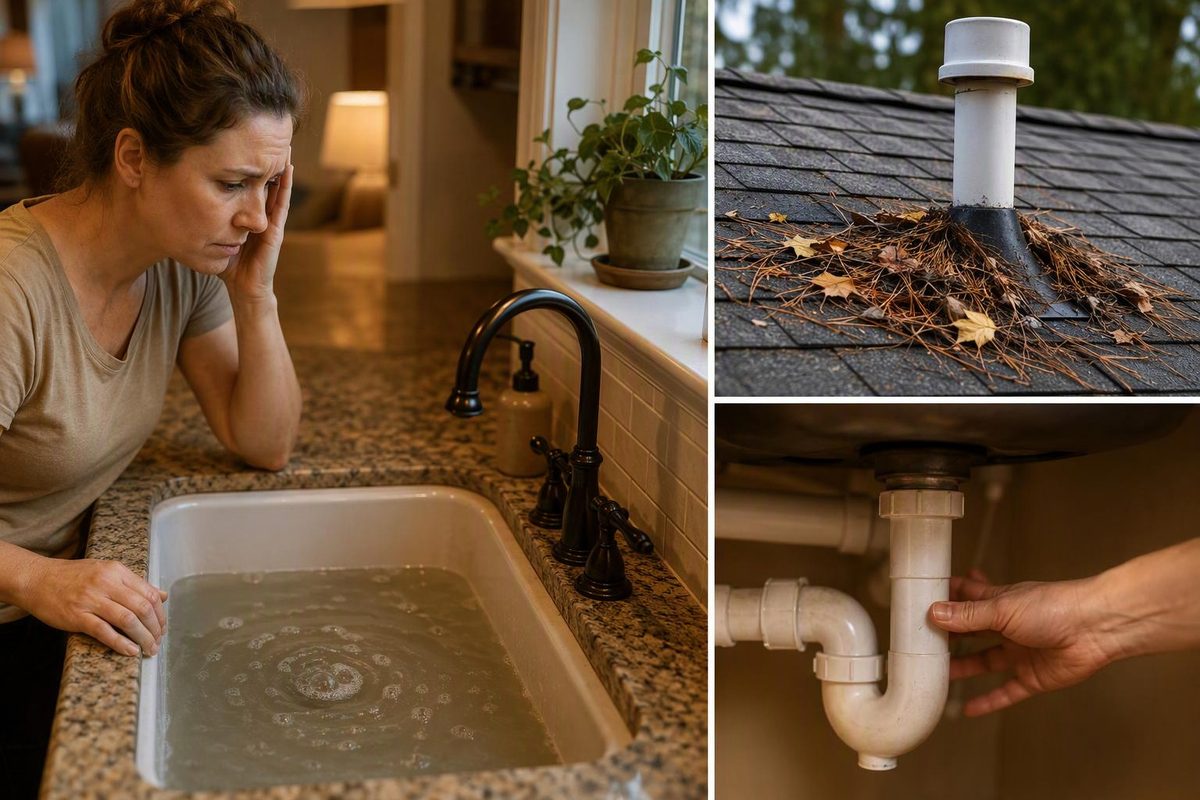
Recognize roof debris, indoor gurgling and pressure clues that may indicate a blocked plumbing vent, then learn when a drain clog is more likely.
A blocked plumbing vent may look like a roof pipe packed with leaves, twigs, a bird nest, snow or ice. More often, nothing is visible from the ground: the blockage may be deeper in the pipe, while indoor clues include fixtures gurgling together, unexpected toilet-bowl movement and intermittent sewer odor. Those symptoms can also come from a branch-drain or main sewer clog.
Choose the symptoms you have; the checker identifies the more likely path and next step.
Blocked Vent Symptom Checker
Use what happens during normal fixture use. Do not run more water if wastewater is already backing up.
A Local Drain Clog Is More Likely
One isolated fixture with no reaction elsewhere points more strongly to its trap or branch drain than to the roof vent.
Next step: Avoid roof access. Diagnose the affected fixture first and call a plumber if the problem persists.
Source basis: Brevard County Utility Services, EPA, City of Orono, Oatey and Village of Hartland guidance cited in the article. This checker distinguishes symptom patterns; it cannot confirm a blockage.
Visible Signs at the Roof Opening
A plumbing vent is normally an open vertical pipe extending through the roof. It allows air to move through the drainage system and routes sewer gases outdoors, while water-filled fixture traps help keep those gases out of the house (Brevard County Utility Services). For help identifying the pipe, see A Roof Pipe Is Usually a Plumbing Vent.
Visible obstructions include:
- Leaves, pine needles or twigs packed into the opening
- A bird or animal nest covering or filling the pipe
- Frost or ice closing the opening
- Hard-packed snow completely covering a short vent
- An added cap, screen or improvised cover that has become clogged or blocks airflow
Brevard County identifies leaves and nesting birds as possible causes of clogged roof vents. In prolonged cold weather, water vapor in the vent can condense and freeze at the exposed end. Frost can partly or fully seal the pipe, while drifted snow can also plug it, according to North Dakota State University Extension. The EPA also lists leaves, debris and freezing as possible vent obstructions (EPA).
A pipe that looks open at the top is not confirmed clear. Debris can sit farther down, beyond what is visible from outside. A cracked, disconnected or poorly installed vent may also cause odor or pressure symptoms without being visibly plugged.
Indoor Fixture Reactions Are Often the Stronger Clue
Watch how fixtures interact during normal use rather than repeatedly flushing toilets or running more water to provoke a symptom.
| Observation | More Likely Interpretation |
|---|---|
| A sink, tub or toilet gurgles when another fixture drains | Air is moving through a trap; a vent fault is possible, but so is a drain restriction |
| Toilet-bowl water rises, falls or bubbles when a nearby fixture runs | Pressure is changing in a shared drain-and-vent path |
| Sewer odor appears near one or more drains | Check for a dry trap first; a blocked or damaged vent is another possibility |
| One fixture alone is slow, with no reaction elsewhere | A local trap or branch-drain clog is more likely than a roof-vent blockage |
| Several fixtures are slow | Suspect a shared drain restriction first, especially in different rooms or on different floors |
| Water backs up into a tub, shower or floor drain when another fixture runs | Treat this as a drain or sewer blockage, not proof of a vent clog |
Blocked or damaged vents can be associated with gurgling drains, slow drainage and intermittent sewer odor (Oatey). A Wisconsin utility also explains that restricted venting may cause toilet bubbling or brief bowl-level changes when pressure fluctuates in the sewer system (Village of Hartland).
These clues overlap with other faults. A dry P-trap, failed toilet seal, blocked sewer line or septic-system problem can also produce odor or gurgling.
The distribution of the problem matters. One isolated slow sink points more strongly to that fixture’s trap or branch drain. Several slow fixtures, particularly on different floors, make a shared drain restriction more concerning. If slow drainage is the main complaint, use the one-fixture-versus-several-fixtures checks in How to Deal With a Slow Drain.
Diagnose the Pattern Without Causing an Overflow
- Stop if wastewater is backing up. Do not run the washer or dishwasher, and do not perform additional test flushes. More incoming water can worsen the overflow. Municipal backup guidance likewise advises stopping water use while locating a sewer blockage (City of Orono).
- Map the affected fixtures. Note which fixture starts the symptom and which other fixture gurgles, bubbles or changes level. Record whether they share a bathroom, are on different floors or include the home’s lowest drain.
- Check traps when odor is the only symptom. Run a small amount of water into an infrequently used sink, shower or floor drain. Brevard County notes that trap water can evaporate when a fixture sits unused and recommends refilling the trap before assuming the roof vent is responsible.
- Inspect from a safe location only. From the ground, an upper window or another stable position, use binoculars or a zoom camera to look for debris, a nest, snow, ice or visible pipe damage. Do not climb onto a wet, icy or steep roof.
- Call a plumber if the pattern persists. A plumber can check the vent and drain paths separately and determine whether the restriction is at the roof opening, deeper in the vent, in a branch drain or in the building sewer.
Do not pour chemical drain cleaner into a fixture to “test” a vent problem. It cannot clear an air passage blocked at the roof, and many non-enzymatic drain cleaners contain concentrated corrosive chemicals that can burn skin and eyes (Poison Control). Leave roof access and deep vent clearing to someone equipped to work safely and confirm the pipe route.
Wastewater Backup Requires Prompt Help
Stop using water and arrange prompt help if sewage appears at any fixture, several drains back up together, or flushing a toilet raises wastewater in a lower tub, shower or floor drain. Keep people and pets away from sewage; the EPA advises avoiding contact because it may contain harmful pathogens (EPA).
For a suspected vent blockage without a backup, tell the plumber which fixtures react, what triggers the symptom, whether freezing or a storm occurred recently, when any odor appears and whether the roof opening looks covered. That fixture map is more useful than reporting only that the vent looks blocked.