
21 Necessary Plumbing Tools: A Practical Toolkit Guide
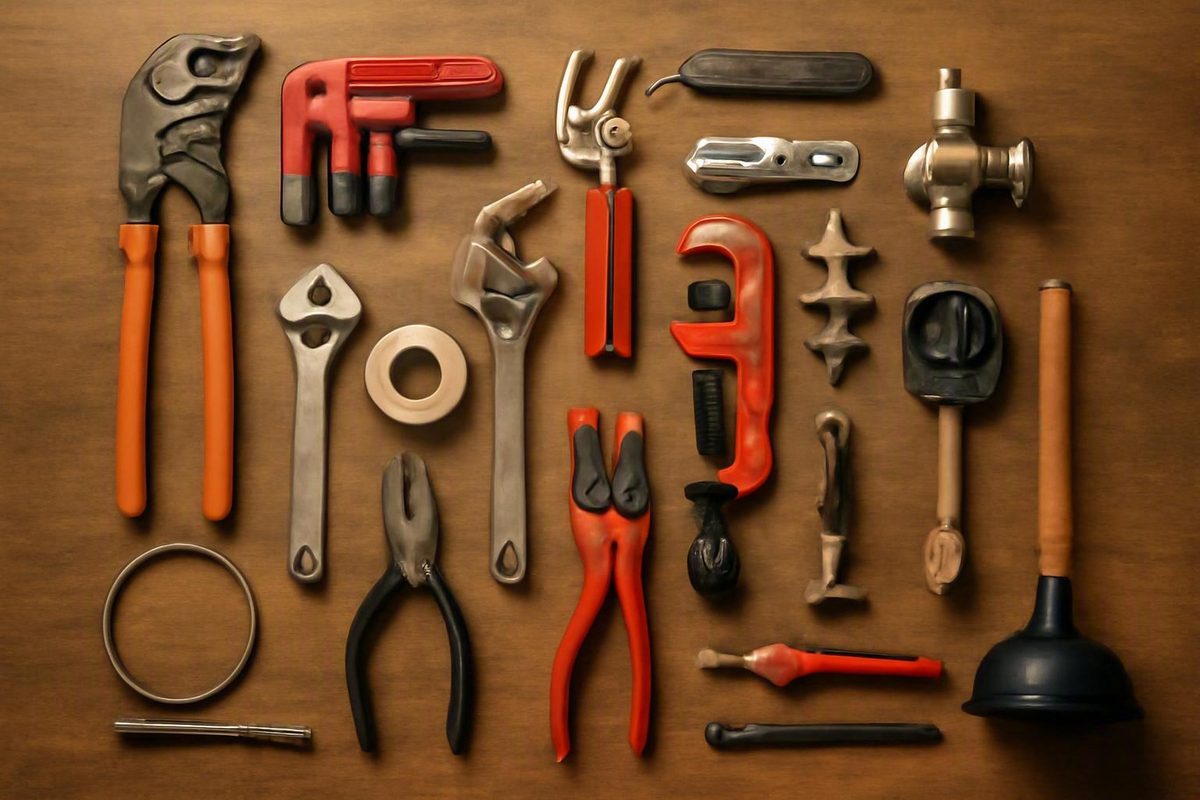
Each tool is paired with its main task, the compatibility limit that trips up new buyers, and a priority from starter essential to task-dependent addition.
Overview
A practical plumbing toolkit comes down to 21 physical entries: five gripping and fastening tools, nine cutting, preparation, and joining tools, six clog-clearing and inspection tools, and one personal protective equipment (PPE) set. This list is built for apprentices and early-career service plumbers first, with entries also suitable for capable DIY homeowners labeled accordingly.
The count deliberately excludes business software, consumables used to pad other lists, and size-only duplicates. Every entry is a tool you can hold, and every entry earns its place by covering a recurring residential service function: gripping pipe, turning fittings, reaching faucet fasteners, cutting and preparing pipe, making connections, clearing clogs at different fixtures and depths, diagnosing what you cannot see, measuring, drilling, and protecting yourself. That functional structure follows the way trade-focused sources such as Ferguson and ServiceTitan organize their own tool coverage — by job, not by an unexplained ranking.
The matrix below is the complete 21-item answer. Each row pairs the tool with its main task, the compatibility limit that most often trips up new buyers, and a priority label that separates starter essentials from task-dependent professional additions.
| # | Tool | Main task | Material / fixture fit | Priority |
|---|---|---|---|---|
| 1 | Pipe wrench | Grip and turn threaded metal pipe and fittings | Toothed jaws can mar finished surfaces | Starter essential |
| 2 | Tongue-and-groove pliers | Adjustable gripping, holding, and tightening | Wide jaw adjustment covers many sizes | Starter essential |
| 3 | Adjustable wrench | Turn hex nuts and fitting flats | Smooth jaws suit finished fittings | Starter essential |
| 4 | Basin wrench | Reach faucet mounting and supply nuts behind sinks | Pivoting head for cramped under-sink spaces | Starter essential; DIY-suitable |
| 5 | Strap wrench | Turn parts without tooth marks | Polished, plated, or plastic surfaces | Task-dependent |
| 6 | Hacksaw | General-purpose cutting | Metal and plastic pipe; rougher cut | Starter essential |
| 7 | Tubing cutter | Clean, round cuts on metal tubing | Copper and similar tubing | Starter essential |
| 8 | Plastic-pipe cutter | Cut plastic pipe cleanly | Plastic pipe such as PVC | Starter essential |
| 9 | Deburring tool | Remove burrs after cutting or drilling | Metal or plastic pipe edges | Starter essential |
| 10 | PEX connection tool | Make PEX connections | Must match the specific PEX system in use | Task-dependent |
| 11 | Press tool | Press fittings onto pipe for watertight joints | Must match the press-fitting system | Professional, task-dependent |
| 12 | Plumber’s torch | Heat joints for soldering | Copper work; hot-work hazards apply | Professional, task-dependent |
| 13 | Cup plunger | Clear clogs at flat drain openings | Sinks, tubs, and showers | Starter essential; DIY-suitable |
| 14 | Flange plunger | Seal and plunge a toilet outlet | Toilets | Starter essential; DIY-suitable |
| 15 | Hand auger | Drive a cable down a drain by hand crank to break clogs | Sink and shower drain lines | Starter essential; DIY-suitable |
| 16 | Toilet auger | Reach clogs through the toilet trap | Toilets | Capable-DIY option |
| 17 | Powered drain-cleaning machine | Motorized clearing of deep or stubborn clogs | Drain sizes per the operator’s manual | Professional, task-dependent |
| 18 | Borescope | Inspect pipe interiors and obstructions | Diagnostic only; does not remove clogs | Task-dependent |
| 19 | Tape measure | Measure runs, cuts, and fixture placement | Universal | Starter essential |
| 20 | Drill/driver | Drill mounting holes and drive fasteners | General fastening and access work | Starter essential |
| 21 | PPE set (eye protection + task-appropriate gloves) | Provide eye and hand protection as required by the task, hazard, and tool manufacturer’s instructions | Glove type must match the task | Starter essential |
Counting the PPE set as a single entry keeps the list honest: eye protection and gloves travel together, and neither is optional. Items labeled task-dependent — the strap wrench, PEX connection tool, press tool, torch, powered drain machine, and borescope — are legitimate professional equipment, but they belong in your kit when the work demands them, not on day one. The sections below explain each category in enough depth to buy correctly.
Why these 21 tools make the cut
The selection follows five rules, and stating them openly is what most tool roundups skip. First, every entry must cover a recurring residential service function — the gripping, cutting, joining, clog-clearing, inspection, measurement, and protection work that fills most service days. Ferguson frames the same balancing act for professionals: organize a kit around “what you need to complete 90% of your jobs against those few outliers that require specific tools” (Ferguson).
Second, only physical tools count. Some 21-item lists reach their number with scheduling or invoicing software; that may matter to a business, but it does not belong in a toolkit answer. Third, no size-only duplicates: a second pipe wrench in a different size is a sensible purchase, but it is not a distinct entry. Fourth, expensive or training-dependent equipment — press tools, torches, powered drain machines — appears only with an explicit task-dependent label, because trade guidance supports adding specialized tools “one by one” as project complexity grows rather than buying everything upfront (Daitool).
Fifth, the audience scope is stated rather than implied. Competing lists silently address homeowners, apprentices, or veteran professionals, which makes “essential” mean three different things. This list is scoped to an apprentice or working plumber’s first service toolkit, with DIY-suitable entries labeled where the tool genuinely fits ordinary household work.
Gripping and fastening tools
Gripping and fastening tools resolve the most common decision in plumbing service work: how to hold one component still while turning another, without damaging what the customer can see. Five tools cover this territory, and each has a distinct job.
The pipe wrench is the classic heavy gripper for threaded metal pipe and fittings. Its serrated jaws bite harder as you apply force, which is exactly what you want on rusted iron pipe and exactly what you do not want on a chrome-plated trap or a polished fixture — the teeth will mar finished surfaces. Plumbers often carry two pipe wrenches and use them together on threaded connections: one wrench stabilizes the pipe or fitting so it does not rotate, while the other turns the component being loosened or tightened. That counterhold role is why a second wrench can serve a genuinely different function rather than merely duplicating a size, though whether you need two depends on the work in front of you. One pipe wrench is the starter entry; the second is a task-dependent addition.
Tongue-and-groove pliers are the most-reached-for tool in many kits because a single adjustable pair spans a wide range of nut, fitting, and pipe sizes. The Hamm and Sons list notes that this adjustability means the tool “can replace an entire set of pliers.” Like the pipe wrench, though, the jaws are toothed — keep them off polished finishes or pad the jaws.
The adjustable wrench handles the hex-shaped nuts and flats found on supply valves, compression fittings, and fixture connections. Its smooth jaws make it the safer choice on finished hardware where pliers or a pipe wrench would leave marks. It is a starter essential precisely because so many everyday connections use hex flats.
The basin wrench is the specialist of the group. It has a pivoting head at the end of a long handle designed to reach into the awkward, cramped space behind a sink to tighten or loosen faucet mounting nuts and flexible supply tube nuts (Hamm and Sons). No general-purpose wrench reaches those fasteners comfortably. Worth knowing: sources disagree on whether it is irreplaceable. Ferguson points out that a multipurpose faucet-and-sink tool “can handle most of the jobs the basin wrench does but with less of a learning curve and muscle strain” (Ferguson). The honest reading is that coverage is context-dependent: a multipurpose tool may handle many faucet jobs, but it does not automatically replace a basin wrench in every configuration. This list keeps the basin wrench as the named entry because its function — faucet fasteners in confined spaces — is the requirement; which tool you buy to meet it is a reasonable personal choice.
The strap wrench rounds out the category as the finished-surface answer. Its flexible strap grips by friction rather than teeth, letting you turn polished, plated, or plastic components without leaving tooth marks. It is the least frequently needed of the five, which makes it a task-dependent addition rather than a first purchase — but when a chromed part must come off intact, nothing else in this group does the job safely.
Cutting, preparation, and joining tools
This category resolves a different decision: how to cut pipe to length, prepare the cut end, and make a connection that holds — and the right answer changes with the pipe material and the connection system. Nine entries cover it, including the measuring and drilling tools that support the rest.
Start with measurement, because every cut begins there. The tape measure is unglamorous and non-negotiable: pipe runs, fixture rough-in positions, and cut lengths all depend on it. The drill/driver is the general-purpose power tool of the kit, used for drilling mounting holes, driving fasteners, and opening access — not a plumbing-specific tool, but one that plumbing work constantly requires. Both are starter essentials.
For cutting, the toolkit carries three options because no single cutter suits every material and situation. The hacksaw is the versatile fallback that cuts both metal and plastic pipe; it appears on essentially every plumbing tool list, including ServiceTitan’s, because it handles the odd cuts that dedicated cutters cannot reach. Its tradeoff is a rougher cut that needs more cleanup. The tubing cutter is the precision choice for copper and similar metal tubing: it scores and cuts squarely around the tube’s circumference. The plastic-pipe cutter does the equivalent job for plastic pipe such as PVC; ServiceTitan notes there are many handheld tube and plastic pipe cutters and PVC ratchet-style tools on the market, so buyers at any experience level can choose a model that suits them.
The supported tradeoff worth internalizing: for clean, fast cuts with less need to deburr, a quality pipe cutter can sometimes be the better option for a task than a reciprocating saw (Ferguson). Daitool makes a similar point against hacksaws, describing dedicated cutters as “far more precise than hacksaws” while taking “a lot less effort in those confined spaces.” Note the conditional wording in both cases: a dedicated cutter is often the cleaner choice in suitable materials and access conditions, not universally superior. Keep the hacksaw for versatility; reach for the cutter when the material and space allow.
Every cut creates the need for the deburring tool, which removes the sharp burrs left on the edges of metal or plastic pipes after cutting and drilling (ServiceTitan). Skipping this step is the classic beginner shortcut that compromises the joint made afterward. It is inexpensive, small, and a starter essential.
Joining is where compatibility limits matter most, and three task-dependent entries cover the main modern approaches. The PEX connection tool makes connections in PEX tubing systems — but PEX connections are system-specific, and the tool must match the particular PEX connection method and fittings being installed. Do not assume one PEX tool covers every PEX system; verify compatibility with the system you actually work on before buying. The press tool takes the same logic to metal pipe: press-fitting systems allow plumbers to press a connection onto a pipe, producing a watertight seal, and Scorpion’s trade coverage notes that these connections go faster than welding or soldering, meaning more jobs completed per day and less time on each installation. That speed is why press tools have become standard professional equipment — but the tool and jaws must match the press-fitting system in use, and the equipment cost puts it firmly in the task-dependent professional column.
The plumber’s torch remains on the list because soldered copper joints remain part of residential service work. It is a hot-work tool with real hazards: ServiceTitan’s list pairs torch work with heat shields and pads that “protect plumbers and the surrounding environment from heat damage or fire when soldering is necessary.” This article deliberately provides no soldering, pressing, or drilling procedures — those belong to training and manufacturer instructions, not a selection guide. Treat the torch as a professional, task-dependent entry that you add when your work and training justify it.
Clog-clearing and inspection tools
Clog work resolves a progression: match the tool to the fixture first, then to the depth and severity of the blockage, and know which tool only shows you the problem rather than fixing it. Six entries cover the progression from a slow sink drain to a deep line inspection.
The two plungers are fixture-specific, and buying the wrong one is the most common beginner mistake in this category. Cup plungers consist of a rubber suction cup attached to a long handle and are used to clear clogs in sinks, tubs, and showers — fixtures with a flat drain surface the cup can seal against (Oatey). Flange plungers have an extended rubber flap below the cup that seals into a toilet bowl’s outlet, and they are designed specifically to clear toilet clogs (Oatey). A cup plunger cannot seal a toilet outlet properly, and a flange plunger is awkward on a flat sink drain — so the toolkit carries both, and both are starter essentials suitable for DIY use.
When plunging fails, augers reach deeper. The hand auger is a circular, handheld device that lets you drive a cable deep down a drain via a hand crank to break apart and clear clogs (ServiceTitan). It is the right escalation for sink and shower drain lines and a sensible starter purchase. The toilet auger applies the same cable principle to the one fixture a standard hand auger handles poorly: it is shaped to feed a cable through the toilet’s trap and reach clogs beyond the reach of a flange plunger. Because the toilet’s porcelain and internal trap geometry differ from an open drain line, the fixture-specific tool exists for a reason. Oatey’s homeowner guidance adds a sensible boundary for DIY readers here: if a clog gets too complicated, call a professional to avoid damaging the pipe.
The powered drain-cleaning machine is the professional escalation, not a first purchase. As Scorpion describes it, a drain snake machine is larger than a hand auger and motorized, making it better suited to clogs deep in drains or clogs that resist hand tools (Scorpion). These machines are also line-size specific: manufacturer documentation for RIDGID’s K-400 drum machine, for example, matches a 3/8” (10 mm) cable to 1 1/2” to 3” lines and a 1/2” (12 mm) cable to larger lines, and supplies the machine with drain-cleaning gloves and an operator’s manual (RIDGID). Those figures describe one model, not all machines — the point is that powered drain cleaners carry model-specific capacity limits and safety requirements, which is exactly why this entry stays in the professional, task-dependent column. The safety section below covers the manufacturer-documented boundaries.
Finally, the borescope — and this distinction matters more than most lists make clear. Borescopes are small cameras attached to a long, flexible cable, meant to be inserted far down drains and supply lines to give plumbers a look at anything obstructing the pipe or at the condition of the pipe being inspected (eSUB). A borescope diagnoses; it does not remove anything. Its value is reducing guesswork — confirming what and where the obstruction is, or whether the pipe itself has failed — before you choose the tool that will actually clear or repair the problem. Position it in your kit as a diagnostic instrument and a task-dependent addition, not a substitute for an auger.
Safety boundaries for higher-risk tools
Several tools on this list carry hazards that a purchase decision should acknowledge upfront: wastewater exposure during clog work, entanglement and electrical risk with powered drain machines, and eye, hand, heat, and fire risk during cutting, drilling, and torch work. The PPE set — eye protection and task-appropriate gloves — is entry 21 because it applies across all of these, but PPE alone is not a safety plan. It does not replace training, equipment inspection, ventilation, applicable workplace or local requirements, or the manufacturer’s directions for the specific tool in hand. The evidence supporting this section is uneven, and that is stated plainly: powered drain-cleaner boundaries below are drawn from primary manufacturer manuals, while comparably specific governing guidance for cutting, drilling, and hot work was not available for this article, so that treatment stays deliberately high level.
Powered drain-cleaner boundaries
Manufacturer operator documentation for RIDGID drain-cleaning machines establishes concrete boundaries that any buyer should understand before this tool enters the kit. Baseline protection is safety glasses and leather work gloves in good condition whenever handling or using the equipment — and never grasping the cable with anything else, including cloth gloves or a rag (RIDGID operator manual). When chemicals, bacteria, or other toxic or infectious substances are suspected in the drain, the manuals call for additional protection: latex or rubber gloves worn under the leather gloves, plus face shields, protective clothing, or respirators as appropriate (RIDGID safety documentation).
The electrical boundaries are equally explicit: test the Ground Fault Circuit Interrupter (GFCI) on the power cord before use where one is provided, keep all electrical connections dry and off the ground, never touch plugs or the tool with wet hands, and do not operate the machine if the operator or the machine is standing in water. Entanglement control means no loose clothing or jewelry, and keeping hair and clothing away from moving parts, because the rotating cable can catch, wrap, or crush. Hygiene is part of the documented protocol too: wash hands and any exposed skin with hot, soapy water after handling drain-cleaning equipment, and do not eat or smoke while operating it.
Two final boundaries: use the machine only on drain sizes recommended in its operator’s manual, and follow the model-specific cable-control and switch instructions rather than improvising. None of the above is an operating tutorial — it is the minimum picture of what owning this tool responsibly involves, and it is why the machine is labeled a professional, task-dependent entry.
Cutting, drilling, and hot-work limits
For the hacksaw, tubing and plastic-pipe cutters, drill/driver, and plumber’s torch, the responsible boundaries are stated at a high level because primary governing guidance for these specific categories was not part of the evidence behind this article. The hazard picture is still clear enough to act on: cutting and drilling create eye and hand injury risks and sharp burrs; torch work adds heat, fire, and property-damage risk to nearby materials, along with ventilation considerations in enclosed spaces. Trade coverage reflects these realities indirectly — ServiceTitan’s tool list includes heat shields and pads specifically to protect the plumber and the surrounding environment from heat damage or fire when soldering, and Scorpion calls safety gear “non-negotiable” for jobs involving soldering, chemicals, or tight spaces.
The practical rule for a toolkit builder: before using any of these tools on real work, read the manufacturer’s instructions for the specific model, wear the eye and hand protection the task calls for, and confirm whether workplace rules, local fire requirements, or local plumbing rules add obligations — particularly for torch work. Where this article’s boundaries feel thin, that thinness is deliberate; do not treat the absence of detailed precautions here as evidence that fewer precautions are needed. Task-specific training and current manufacturer documentation are the authoritative sources for how these tools are actually operated, and they should be consulted before the torch, in particular, moves from the store shelf into your kit.
Build the toolkit in stages
The priority labels in the overview matrix translate directly into a purchasing sequence, and the sequence matters more than buying everything at once. Trade guidance supports this explicitly: rather than buying an expensive pre-assembled kit that might include items you rarely use, add specialized tools one by one based on the specific types of work you actually do most often (Daitool). Ferguson’s 90%-of-jobs framing points the same direction: build the foundation first, then handle the outliers as they arrive.
A staged plan looks like this:
- Stage one — the working foundation: pipe wrench, tongue-and-groove pliers, adjustable wrench, basin wrench, hacksaw, tubing cutter, plastic-pipe cutter, deburring tool, tape measure, drill/driver, cup and flange plungers, hand auger, and the PPE set. These cover the recurring gripping, cutting, preparation, clog, and measurement work of everyday service.
- Stage two — material- and fixture-specific additions: toilet auger, strap wrench, and the PEX connection tool matched to whichever PEX system your work actually uses.
- Stage three — training- and demand-dependent equipment: press tool, plumber’s torch, powered drain-cleaning machine, and borescope, added when task demand, training, and the manufacturer’s requirements justify each purchase.
This guide deliberately avoids price figures and rigid size recommendations because the underlying evidence does not support them — sizes and capacities are model-specific decisions best made against the manufacturer’s documentation for the equipment you are considering. What the evidence does support is the shape of the plan: a complete 21-entry toolkit is the destination, the starter essentials are the road, and the specialized tools join the kit when the work — not the shopping list — calls for them.