
What Homeowners Need to Know About Sewer Rodding for Main Line Clogs
It can cut through root masses, but mechanical cable cleaning often removes roots only partially rather than providing a permanent cure.
If several drains in your house are slowing down at once, the toilet makes another fixture gurgle, or wastewater starts backing up into a tub or basement drain, you are usually past the point of a simple sink-clog fix. That is the situation where homeowners start hearing the term sewer rodding.
In plain language, sewer rodding is a mechanical way to reopen a blocked main sewer line. It is used for tougher obstructions deeper in the system than the hair-and-soap clogs a small hand snake handles near a sink or shower. When roots, grease, paper buildup, or sludge have narrowed or blocked the line, rodding may be the service that restores flow.
The key homeowner takeaway is that sewer rodding is usually a main-line service, not a casual weekend project. The right access point matters. Pipe condition matters. And it matters just as much to know when rodding is enough and when the real problem is a damaged line that needs repair, lining, or replacement. If you are still sorting out whether you have a simple fixture clog or a bigger sewer problem, a symptom-first drain diagnosis guide can help you narrow that down before you touch a tool.
When to Call a Plumber: The Drain Symptoms That Mean Stop DIYing: Most drain clogs are DIY-fixable in under 30 minutes. These seven symptoms are the exceptions — signs of main-line, sewer, or structural problems that get worse if you wait.
What Is Sewer Rodding?
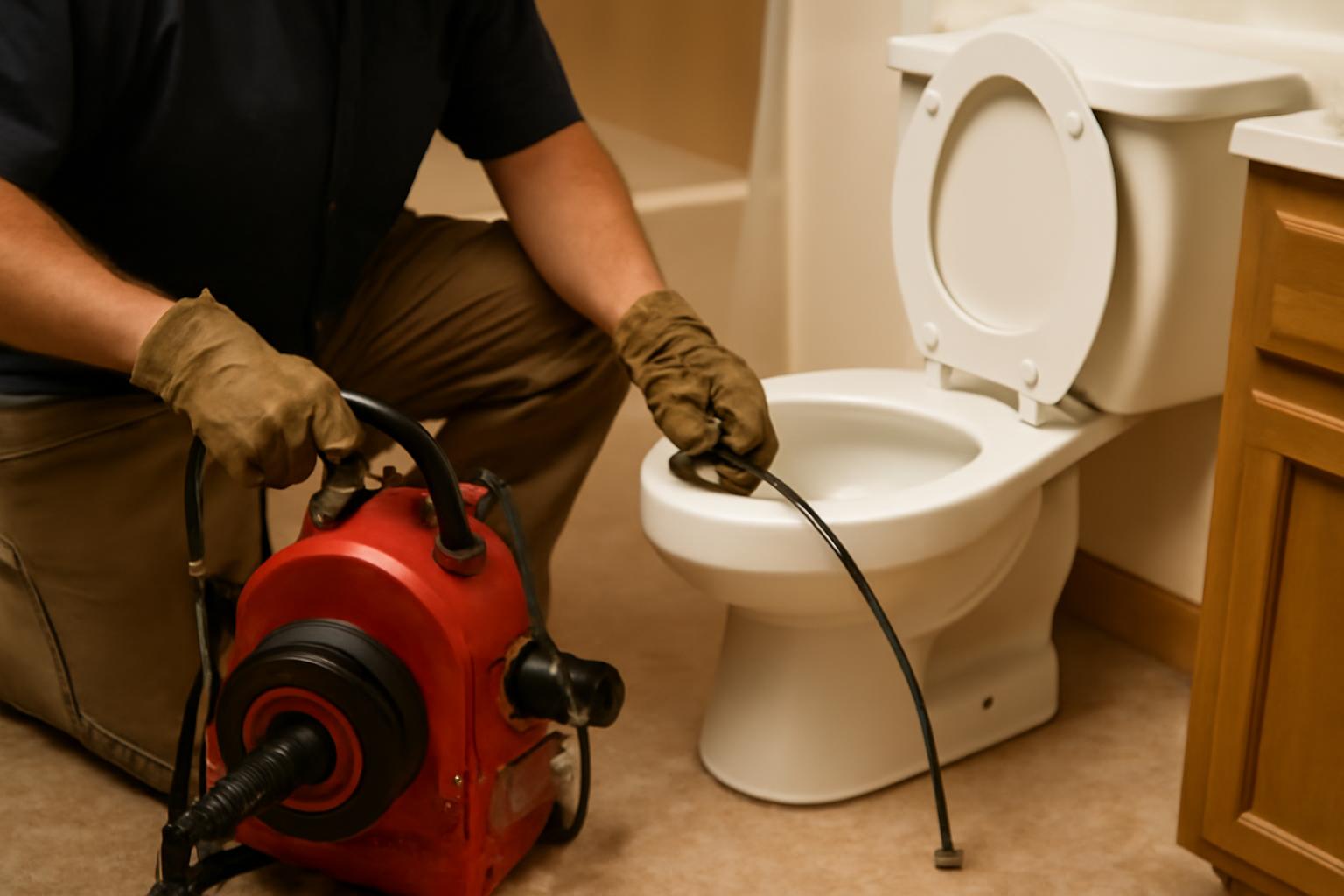
Sewer rodding is a method of clearing a sewer or main drain line with a flexible rod or steel cable that spins a cutting, augering, or cleaning head through the pipe. In homeowner-facing plumbing language, power rodding usually means the motorized version: a machine-driven cable with rotating heads used to cut through roots, grease, and debris deeper in sewer lines, not just nudge aside a shallow clog near a fixture (All Suburban Plumbing).
That is why sewer rodding is more than “just snaking,” even though the terms overlap in everyday conversation. A small hand snake is usually about reaching a local blockage in a sink, tub, or toilet branch. Sewer rodding usually means heavier-duty work in the main line that carries wastewater from multiple fixtures out to the municipal sewer or septic connection.
The equipment reflects that difference. True sewer rodding normally uses specialized motorized machines rather than the lightweight hand tools sold for ordinary household clogs. Access matters too: plumbers commonly note that an outside or otherwise accessible cleanout gives them the best reach and lets them use larger cutters, while entry through a pulled toilet or roof vent can limit tool size and thoroughness (Reid & Pederson).
So if you picture sewer rodding as a plumber feeding a powered cable with the right head deep into the house sewer to cut open a stubborn obstruction, that is basically the right picture. The goal is to mechanically reopen flow in the line. It is not automatically the same thing as fully scrubbing every inch of the pipe wall back to bare material.
The Sewer Rodding Process Step by Step
A sewer rodding job should start with diagnosis, not with blindly pushing a machine into the pipe. A typical workflow is: assess the symptoms, inspect the line, choose the access point, run the rodding machine, flush the pipe, and then verify results. Plumbing service guides commonly describe camera inspection at the front end or back end of the job, especially when the clog is recurring or roots are suspected (Excel Plumbing).
Once the plumber has chosen the access point, the flexible cable is fed into the line. If there is a proper cleanout in the basement, crawlspace, or yard, that is usually the most direct entry. If there is no cleanout, the plumber may work through a pulled toilet or sometimes a roof vent, but those alternatives can limit how directly the clog can be attacked.
As the cable advances, the machine rotates the head. The operator works it forward and back so the cutter can bore through or break apart the obstruction. Different heads fit different problems: a root-cutting head is not the same as a smaller auger or general cleaning head. On severe blockages, one pass may only create a narrow opening for water to move. Additional passes may be needed to widen that path and bring back more debris.
After flow is restored, the line is usually flushed with water to move loosened material downstream. If the line has a history of recurring trouble, a follow-up camera inspection can be the part that turns a basic clearing job into a real diagnosis.
For homeowners, this process explains why two sewer backups that look identical at the surface can lead to different recommendations. One line may just need mechanical clearing. Another may reopen, then fail again because the actual problem is structural.
Signs Your Home Needs Sewer Rodding
The classic pattern of a main sewer clog is multi-fixture trouble, not one lonely slow sink. Common warning signs include multiple slow drains, gurgling sounds, foul sewer odors, and wastewater backing up into tubs, sinks, or lower drains. Conditions outside can matter too: unusually wet ground or suspicious lawn changes along the sewer route can point to a buried sewer issue rather than a simple fixture clog (John’s Sewer & Drain Cleaning).
One of the most useful distinctions a homeowner can learn is the difference between a branch-drain problem and a main-line problem. A single slow bathroom sink usually points to a local blockage near that fixture. If the kitchen sink, toilet, and tub are acting up together, you are thinking more about the main stack or sewer line. That fits the basic definition of the main sewer line as the pipe carrying wastewater from all household drains out to the sewer system or septic tank (Swift Plumbing).
A few symptoms need nuance. Gurgling alone does not prove a sewer clog; venting problems and dry traps can create similar noises or smells. But when gurgling shows up with multiple slow drains, toilet-related cross-effects, or backups into lower fixtures, the odds shift toward the main line. The same is true of repeated “fixed” clogs that return soon after plunging or after a small snake works only briefly.
Newer piping can absolutely clog, but older sewer materials are more often tied to the recurring, deeper stoppages that push a job beyond ordinary branch-drain clearing.
What Blockages Does Sewer Rodding Target?
Sewer rodding is aimed at the kinds of blockages that are too tough, too deep, or too extensive for light-duty drain clearing. In residential main lines, that usually means tree roots entering through joints or cracks, grease and fat buildup, heavy paper accumulation, sludge, debris, and foreign objects lodged in the flow path (All Suburban Plumbing).
Rodding can cut a channel through a root mass and restore flow, sometimes very quickly. So rodding can solve the immediate backup without solving the reason the roots were there in the first place.
Grease is another common example. A rodding head can break through hardened grease and sludge, especially when the line is too blocked for water-based cleaning to work at first. But that does not mean the walls are fully cleaned afterward. In many cases, the line is reopened rather than completely stripped of residue.
What sewer rodding does not fix is just as important. If the cable cannot safely pass the damaged section, the conversation has to shift from cleaning to repair or replacement, and service descriptions of sewer rodding say as much when discussing damaged or collapsed lines (Excel Plumbing).
Sewer Rodding vs Snaking vs Hydro Jetting
The simplest way to compare these methods is to ask one question: Are you trying to reopen flow, or are you trying to clean the pipe walls more completely?
Basic drain snaking is usually the smaller-scale option. It fits localized clogs in branch drains near the fixture: hair in a shower, soap buildup in a lavatory line, paper at a toilet, or a kitchen clog that has not reached the main. Sewer rodding overlaps with snaking mechanically, but in homeowner use it usually means heavier equipment tackling a tougher blockage in the main sewer line. Hydro jetting is different again: it uses high-pressure water to scour the inside of the pipe, while rodding and snaking use a cable and head to cut or punch through the obstruction (First Chicago Plumbing).
Some service descriptions put professional hydro jetting at as much as 4,500 PSI of water pressure, which helps explain why it is often discussed as the more thorough wall-cleaning method for grease, sludge, and recurring buildup (Open Drains). That does not make it automatically the first step on every job. A fully blocked main line may need to be rodded open first so there is enough passage for water-based cleaning to work at all.
That is the practical tradeoff homeowners should understand. Sewer rodding is often about restoring movement through a blocked line. Hydro jetting is often about deeper cleaning once the plumber can safely and effectively run water through the pipe. If a line keeps clogging because buildup is clinging to the walls, rodding alone may be a short-lived fix. If the line is fully blocked by roots or solids, rodding may be the move that gets the system flowing again in the first place.
The deciding factors are usually blockage type, access, and pipe condition. That is why a camera inspection matters so much. A decent-structure line with roots may be opened mechanically and then evaluated for follow-up cleaning or repair. A fragile or damaged line may call for a more cautious choice from the start.
For homeowners, the neutral shorthand is:
- Snaking: localized clog clearing near the fixture.
- Sewer rodding: mechanical reopening of tougher main-line blockages.
- Hydro jetting: more complete wall cleaning when the line can be safely and practically jetted.
Is Sewer Rodding a DIY Job or Professional Only?
For a true residential main sewer clog, sewer rodding is usually a professional job.
That is not just “call a pro” boilerplate. Main-line work involves longer runs, stronger machines, larger cutters, and a higher chance of making things worse if the cable binds or is forced into a damaged section. Homeowner guidance from plumbing sources consistently draws a line between simple hand-snaking of short fixture clogs and powered equipment used for sewer-line work. DIY snaking is generally described as appropriate for minor sink, tub, and toilet clogs, while sewer clogs often require much longer, more powerful machines and carry more risk of pipe damage if handled badly (Apollo Home).
That does not mean homeowners can do nothing. A plunger, trap cleaning where appropriate, or a hand snake can still make sense when you have one slow fixture and no evidence of a main-line backup. This guide is also written for the same single-family-home context described in DrainFinder’s residential drain coverage, not for commercial buildings or specialty systems.
Where people get into trouble is escalating from a simple branch-drain clog into main-line work without changing their assumptions. The fact that a rental sewer machine exists does not mean the job is low-risk. If the blockage is deep, if roots are involved, or if the pipe is already compromised, inexperience can turn a stoppage into a repair.
A good homeowner stop point is when the symptoms no longer look local. If the problem affects multiple fixtures, if wastewater is backing up at the lowest drain, or if resistance is farther away than a normal hand tool can reasonably handle, the smarter move is diagnosis through the cleanout, not more force. DrainFinder’s general homeowner threshold is to stop DIY if resistance appears beyond about 25 feet or if the pattern points to a main-line problem rather than a branch clog (DrainFinder).
Limitations and When Sewer Rodding Isn’t Enough
Sewer rodding has a clear purpose, but it also has clear limits.
First, it is usually a reopening method more than a full-restoration method. Mechanical cable cleaning often breaks through the blockage and gets wastewater moving again, but it may leave residue on the pipe walls. That is one reason recurring grease or sludge problems may come back faster after snaking or rodding than after a more thorough wall-cleaning method (Bison Plumbing).
Second, roots are a repeat-problem case. Rodding may cut them back, but it does not repair the crack, bad joint, or other defect that let them into the pipe. If the line backs up again soon after root cutting, the next question is usually not “Should we rod it again?” but “Where are the roots entering, and what is the long-term fix?”
Third, access matters. A proper cleanout improves reach and working angle and can allow larger cutters.
Finally, some lines are simply beyond cleaning as a stand-alone solution. If a camera shows collapse, major offset, or another structural failure, rodding may only confirm that the line cannot be reliably restored by mechanical clearing alone.
If a sewer line reopens but the relief is brief, the most useful next-step questions to ask a plumber are:
- What did the camera show after the line was opened?
- Was the blockage mostly roots, grease, sludge, or paper?
- Did the cable fully pass the problem area?
- Is there a crack, offset joint, sag, or collapse behind the clog?
- Is the next step another cleaning method, periodic maintenance, or actual repair?
Those questions turn a one-time emergency visit into a better decision about what happens next.
Preventing Sewer Line Blockages After Rodding
Once a main sewer line has been rodded, prevention is mostly about reducing what the line has to carry and catching structural trouble before it turns into another backup.
The basic habits still matter most. Do not flush wipes or other non-toilet items, and do not pour grease or cooking fat down the drain. Grease that looks harmless in the sink can cool farther down the line and start the buildup cycle again (John’s Sewer & Drain Cleaning).
Cleaning tells you that there was a blockage; a camera can help show why it formed and whether the line has root intrusion, breaks, or heavy deposits (Swift Plumbing).
Maintenance products need realistic expectations. Enzyme-based cleaners may help with light organic residue in some branch drains, but they work slowly and are not emergency clog removers for an active main-line stoppage (Tennessee Standard Plumbing). A chemical drain cleaner is also not a substitute for diagnosing a sewer problem that is affecting multiple fixtures.
A small practical step helps more than many homeowners realize: know where your sewer cleanout is. If a backup happens, that can make professional access more direct and reduce the amount of guesswork at the start of the job (Reid & Pederson).
How much does sewer rodding cost?
For homeowners, the best pricing question is usually not “What does sewer rodding usually cost?” but “What does this quote include?” Ask whether the price covers diagnosis, clearing, flushing, camera verification, and any return visit if the line does not stay open.
Is sewer rodding safe for older pipes or PVC?
Sometimes, but not automatically.
Safety depends less on the label older pipe or PVC and more on the line’s actual condition, the type of blockage, and the size and force of the equipment being used. Homeowner guidance generally treats small hand augers as a tool for minor fixture clogs, while longer and more powerful sewer machines carry more risk if the pipe is damaged or the operator is inexperienced (Apollo Home).
That is why the safer rule is condition first, method second. If the line is structurally sound, rodding may be reasonable. When the pipe is older or uncertain, camera-based professional judgment is more useful than assuming a method is always safe or always unsafe.
Does sewer rodding fully remove tree roots?
Usually not.
Rodding can cut through root masses and reopen the line, but mechanical cable cleaning is often described as partial root removal rather than a permanent cure. Root fragments may remain, and the intrusion can return if the opening in the pipe is still there (Bison Plumbing).
That is why root-related sewer backups should usually lead to a camera inspection and a repair conversation if the problem keeps coming back. The cleaning may solve the emergency, but the entry point is what determines whether the roots become a recurring expense.
When should I stop DIY and call for sewer rodding?
Stop DIY when the symptoms suggest the problem is no longer local.
That includes multiple slow drains at once, sewage backing up into tubs or lower drains, a toilet flush affecting another fixture, or a clog that seems to return right after a short-lived fix. Those are the patterns more commonly associated with a main sewer blockage than with a simple branch-drain clog (First Chicago Plumbing).
A single slow sink is one thing. A house-wide pattern is another. Once the signs point to the main line, the better question is not “What stronger tool can I rent?” but “What is blocking the line, what does the camera show, and what is the safest access point?”
What’s the difference between sewer rodding and power rodding?
In most homeowner-facing plumbing language, there is little or no difference.
Many plumbers use power rodding to mean sewer rodding done with a motorized machine rather than manual rods. The shared idea is a flexible cable or rod with a rotating cutting or cleaning head working through a sewer line to break up tougher obstructions (All Suburban Plumbing).
Where the wording gets messy is that some companies blur power rodding, snaking, and rootering. For homeowners, the functional distinction is what matters: if the job involves a powered cable machine clearing a deeper, tougher blockage in the main sewer line, you are in sewer-rodding territory.
For residential main sewer clogs signaled by house-wide symptoms, sewer rodding is a targeted mechanical way to reopen flow. It often makes sense when the obstruction is too deep or too tough for ordinary DIY tools, especially when roots, grease, paper buildup, or sludge are involved. But the real homeowner decision point is not just whether the line can be opened today. It is whether the line stays open because the blockage was cleared, or whether the backup was warning you about a larger pipe problem. When the symptoms point to the main line, professional access and camera-based diagnosis are what separate a temporary rescue from a useful answer.