
What Exactly Is a Hub Drain? Key Facts for Homeowners Facing Floor Drain Confusion
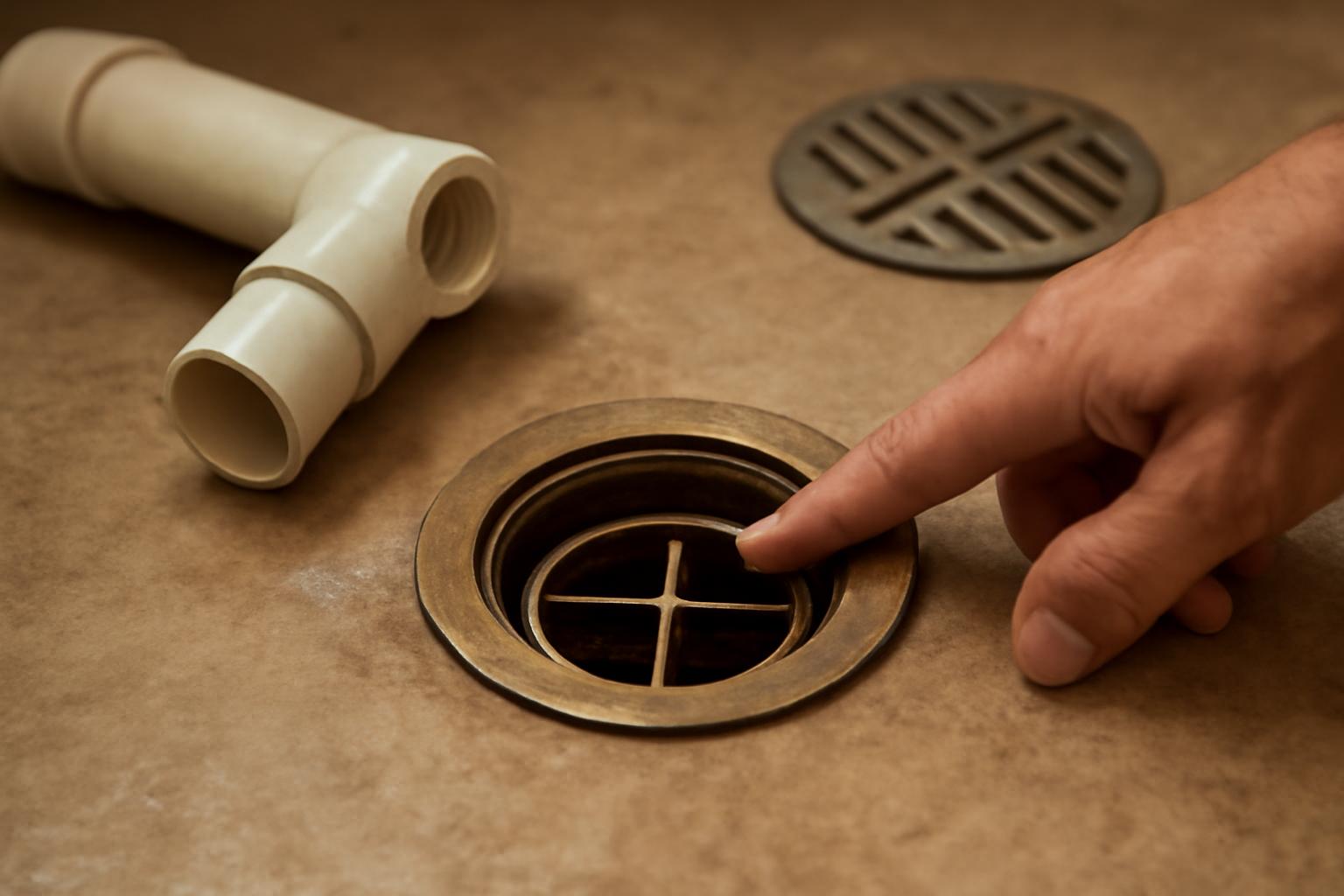
For homeowners, "hub drain" can mean a specialized indirect-waste receptor used around equipment or a hub-style outlet connection on a more ordinary drain.
If you searched hub drain because you saw the term on a drain label, a plumbing listing, or a contractor note, the confusion is understandable. In plumbing, hub drain can point to two different ideas. Sometimes it means a specialized indirect-waste receptor—the bell- or funnel-shaped fixture used under equipment in commercial or sanitary spaces. Other times, hub describes only the connection style at the outlet of an otherwise ordinary drain body.
That split in meaning is what trips people up. A homeowner may see “hub floor drain” in a residential catalog and assume it refers to the stainless, above-floor receptor used around equipment. But the listing may only be describing a bell-shaped outlet connection below the drain. On the other hand, if the drain itself looks like a short funnel or bell and receives discharge from a pipe with visible open air above it, you are probably dealing with something closer to the commercial indirect-waste meaning.
So the useful homeowner question is not just “What is a hub drain?” It is: Are we talking about the drain’s job, or the drain’s connection? Once you separate those two meanings, the rest of the terminology becomes much easier to follow.
This guide is written with that exact confusion in mind. It explains what a true hub drain is, how it differs from a standard floor drain, what materials and sizes are common, where these drains are typically used, and why the word hub on a residential product page may mean something much more ordinary than it first sounds.
When to Call a Plumber: The Drain Symptoms That Mean Stop DIYing: Most drain clogs are DIY-fixable in under 30 minutes. These seven symptoms are the exceptions — signs of main-line, sewer, or structural problems that get worse if you wait.
What Is a Hub Drain?
In the product-category sense, a hub drain is a specialized receptor used for indirect drainage from equipment. Public manufacturer descriptions are fairly consistent on the basics: the body is bell-shaped or funnel-shaped, the lower section connects into the plumbing system, the upper opening is wider so it can receive discharge, and the rim stands above the surrounding floor instead of sitting flush with it. FoodSafe Drains describes its hub drain that way and lists standard sizes from 3x2 through 16x14 for this bell-style indirect-waste setup (FoodSafe Drains).
The key feature is the air gap. Instead of hard-piping the equipment outlet directly into the drain, liquid discharges into open air above the receptor and then falls into the drain body. In this context, the air gap is used to keep the discharge indirect and reduce the chance that wastewater could back up into the equipment outlet line, which is why hub drains show up so often in sanitary and equipment-heavy settings rather than ordinary room drainage (FoodSafe Drains blog).
That makes a hub drain visually and functionally different from the floor drain most homeowners picture first. A normal basement or bathroom floor drain is usually a flush opening with a grate. A true hub drain is more likely to look like a short metal bell, cone, or funnel projecting above the finished surface. The raised rim is not a styling detail; it helps define a receiving point for discharge coming from equipment rather than water washing across the floor.
It also helps to define the category by what it is not. A hub drain is not primarily designed as the room’s general collection point for mop water, shower overspray, or garage runoff. Those are typical floor-drain jobs. A hub drain is built around receiving liquid from something else—often a condensate line, cooler drain, or food-service fixture—before that waste enters the rest of the drainage system.
Another reason the term can feel slippery is that some plumbing products sit near the boundary. The market includes floor sinks, drains with funnels, and floor drains fitted with hub funnels, so visual similarity alone does not settle the issue. But as a working rule, the more the drain’s job depends on an air gap, a receiving funnel, and equipment discharge, the more likely you are dealing with the indirect-waste meaning of hub drain rather than a standard house drain.
For homeowners, that distinction is the whole game. If you are simply reading specifications for a garage or basement floor drain, hub may refer only to how the drain connects to the pipe. If you are looking at a raised receptor accepting discharge from equipment, you are in a different category entirely.
Hub Drain vs. Floor Drain: Key Differences
A standard floor drain is built for area drainage. It normally sits level with the floor and collects water that reaches it across the finished surface. In FoodSafe Drains’ comparison of the two categories, floor drains are described as flush-mounted drains for area drainage, and one comparison there frames them for spaces up to about 400 square feet, while hub drains are described as indirect-waste receptors for equipment discharge rather than general runoff (FoodSafe Drains blog).
That difference in purpose changes the whole design.
A floor drain expects water to be already on the floor. It gets a grate because people may walk over it, roll equipment over it, or wash water toward it. A hub drain expects water to come from a specific pipe, fixture, or machine. It gets a bell or funnel because the goal is to catch discharge before it spreads across the floor in the first place.
In plain language:
- Floor drain: handles surface water
- Hub drain: receives discharge from equipment or piping
That is why the two can look so different in the field. If you see a flat grate in a slab, that is the classic floor-drain form. If you see a receptor with a visible lip standing above the floor, that points toward a hub-style indirect-waste function. The shape follows the job.
The sanitation and backflow side matters too. In the hub-drain context, the air gap is not just a layout preference; it is part of keeping equipment discharge indirect and reducing the risk of wastewater backing into the equipment line. That is why commercial discussions of hub drains focus so heavily on separation, cleanliness, and equipment discharge rather than just “moving water” (FoodSafe Drains blog).
Where readers get tripped up is in the overlap of product language. Some manufacturers and sellers market items such as a floor drain with hub funnel, which shows how easily names can blur across categories even when the functions are not identical (Mainline Materials / Watts FD-200-DD). So the safe interpretation is not to assume that every product with hub in the title is the same thing. Instead, ask what the drain is meant to do: collect water from the room, or receive indirect discharge from a source above it.
That question is especially useful for homeowners because it moves the issue away from jargon. If your concern is a normal wet-floor drain in a basement, laundry, or garage, you are probably in the floor-drain world. If the drain exists mainly to sit under a line or a piece of equipment and receive discharge through open air, you are dealing with an indirect-waste receptor.
Materials and Construction of Hub Drains
AWI Manufacturing lists hub drains in T-304 or T-316 stainless steel, with Schedule 10 or Schedule 40 wall-thickness options, a standard glass bead finish, and round or oval shapes (AWI Manufacturing).
That material choice makes sense once you look at the applications. Hub drains are commonly placed where sanitation, repeated wet use, corrosion resistance, and cleanability matter more than appearance.
Jay R. Smith’s general-purpose hub drain gives a representative example of how manufacturers specify that construction. Its Figure 9654 is described as Type 304 stainless steel with Schedule 10 wall thickness, with Type 316 offered as an option for applications that need a different stainless grade (Jay R. Smith).
Zurn’s Z1870 page points the same direction. It identifies the product as a 304 stainless steel hub drain with a bead blasted finish and notes that it can be used with or without strainer baskets in an indirect-liquid-waste setting (Zurn).
Construction details vary beyond the metal itself. Depending on the maker and application, hub drains may be available with removable lids, strainer baskets, primer fittings, clamping rings, setting rings, outlet variations, or custom inlet sizes. Kusel’s custom gallery shows how broad that variability can be, with examples in 304 or 316L stainless steel, different schedules, different lengths, and optional features such as strainers, primer fittings, clamping rings, and threaded outlets (Kusel).
It is also worth separating category facts from brand extras. The supported cross-brand pattern is that stainless steel—especially 304, with 316 or 316L as an option—is common, and sanitary or corrosion-resistant finishing is normal. So if you are comparing pictures online, do not assume that every hub drain must have a basket, lid, or special fitting to count as a hub drain. The core idea is still the receptor shape and the indirect-waste function.
Standard Sizes and Configurations
Hub drain sizes are often written as shorthand like 3x2, 4x3, 6x4, 8x6, 12x10, or 16x14. FoodSafe Drains publishes that range as standard sizing, and the tables pair each larger upper size with a smaller lower outlet size; AWI publishes similar size patterns in its own catalog (FoodSafe Drains).
For practical reading, homeowners can usually interpret a label like 6x4 as a larger receiving inlet over a smaller outlet connection. That fits the actual geometry manufacturers show: wide at the top so the drain can receive discharge, narrower below where it ties into the plumbing.
Height is another important dimension. FoodSafe’s published table lists standard heights beginning around 7.5 inches on smaller units and reaching about 21 inches on larger ones, and it notes that custom heights are available across the line (FoodSafe Drains).
That may sound like a minor detail until you picture the installation. A hub drain has to sit at a workable elevation relative to the floor, the incoming equipment line, and the outlet piping below. In new work, that affects rough-in planning. In replacement or retrofit situations, it affects whether an existing line can be reused without awkward adapters or elevation problems.
Configuration options go beyond raw size as well. Across the evidence set, hub drains appear in:
- round forms
- oval forms
- standard-height versions
- custom-height versions
- larger custom funnel designs
- versions with removable lids
- versions with strainer baskets
- different schedule and outlet arrangements
That variability explains why researching hub drains can feel harder than researching ordinary residential floor drains.
For identification, three measurements usually tell you more than the product name alone: top opening, outlet size, and overall height. If a drain has a pronounced funnel, a tall fabricated body, and sizing written in inlet-by-outlet shorthand, you are likely dealing with a purpose-built receptor rather than a simple flush floor drain.
Common Applications for Hub Drains
The strongest supported use case for hub drains is indirect liquid waste in commercial and sanitary environments. Kusel describes hub drains as drainage solutions for condensation piping and other discharged liquids in food processing, dairy, pharmaceutical, and other sanitary applications (Kusel).
FoodSafe’s comparison and product material give concrete examples of the kinds of equipment involved: walk-in coolers and freezers, ice machines, steam kettles, and ovens are repeatedly named as the sort of sources that discharge to a hub drain rather than directly into the building drainage system (FoodSafe Drains blog).
Those examples matter because they show the real role of the drain. A hub drain is often not the room’s all-purpose drain. It is the receiving point near a specific source. The equipment or line above it discharges into open air; the hub drain below receives that liquid and sends it into the drainage system.
Zurn’s product page places hub drains in a broader sanitary-drainage network by describing its stainless hub drain as intended for indirect liquid wastes and noting compatibility with trench drains, floor sinks, sanitary drains, and catch basins (Zurn).
In a real facility, a trench drain may collect washdown water, a floor sink may serve another indirect-waste line, and a hub drain may sit beneath a particular piece of equipment. To someone looking only at photos, those parts can look like variations of the same thing. Functionally, they are often chosen for different jobs.
This is also the section where many homeowners realize why their search results felt so off. If the examples you keep seeing are dairies, commercial kitchens, sanitary plants, and fabricated stainless drains under equipment, that is not an accident.
So the right takeaway is not “this term has nothing to do with me.” It is: the evidence behind true hub drains mostly comes from commercial indirect-waste use. If your drain problem is in a normal house utility room, the meaning of hub may be much more about piping connection than about a commercial-style receptor.
Hub Connections in Plumbing Systems
This is the second major meaning of the word, and it is the one that causes most catalog confusion.
A hub connection describes a type of outlet connection on the drain body. Roof Drain Express defines a hub outlet—also called an outside caulk outlet in that glossary—as a drain connection, usually on side-outlet drains, where the plain end of the drain pipe is inserted into the outlet and sealed by caulking or by a compression gasket. The same glossary contrasts that with an inside caulk outlet, a spigot or no-hub outlet, and a push-on outlet (Roof Drain Express).
In other words, hub can refer to the female bell-style end of the connection, not just to a funnel-shaped receptor above the floor.
That is why a homeowner may search “hub drain” and land on products that look nothing like the stainless indirect-waste drains described earlier. The listing may be talking about the bottom connection, not the top opening.
Hunker’s residential explainer uses exactly that framing for house and garage floor drains. It describes the hub as the female bell end of the pipe and the no-hub approach as a plain-ended connection joined with a separate coupling, typically using a neoprene sleeve and stainless steel clamps (Hunker).
Here is the plain-language comparison:
- Hub connection: a female bell-style opening receives the plain end of pipe and is then sealed
- No-hub connection: a plain end joins with a separate mechanical coupling
- Push-on connection: a gasketed push-fit style
- Inside caulk connection: another distinct outlet arrangement, opposite the hub outlet in the glossary above
Once you see that split, a lot of product titles make more sense. A hub floor drain in a residential setting may be a totally ordinary floor drain body whose outlet connection happens to be hub style. That is not the same thing as a true commercial indirect-waste hub drain standing above the floor and receiving discharge through an air gap.
This distinction is more than semantic. It changes what information you need. If you are buying a replacement floor drain for a garage, basement, or utility space, the key question may be which outlet style matches your existing piping. If you are identifying a raised funnel-shaped receptor under equipment, the key question is what indirect-waste function it serves and whether the surrounding setup is designed around an air gap.
So when you see the word hub, stop and ask: Hub where? At the receptor, or at the outlet? That single question usually separates the commercial category from the residential connection style.
Hub Drains in Residential Contexts
For homeowners, the most important editorial point is this: the evidence supplied here does not show true hub drains as a common single-family-house fixture. The commercial sources describe them in sanitary and equipment-discharge settings. The residential source, by contrast, discusses hub vs. no-hub floor drains mainly as a connection choice for a house or garage floor drain (Hunker).
That means the safest residential reading of the term is cautious and specific.
If you are looking at a catalog page for a garage, basement, or utility floor drain, and the options say hub or no-hub, you are probably reading about the pipe connection type. In that context, Hunker says homeowners should think about expected liquid volume and traffic when choosing a floor drain arrangement, because the installation conditions matter as much as the grate itself (Hunker).
If, instead, you are looking at a drain that has a raised bell or funnel, appears designed to sit above the floor line, or visibly receives discharge from a line with open air between the line and the drain, that matches the commercial indirect-waste descriptions much more closely. In that case, the term hub drain is probably being used in the receptor sense, not the outlet-connection sense.
A practical homeowner checklist looks like this:
- Flush grate in a slab, with “hub” or “no-hub” in the spec: likely a connection-style issue
- Raised bell or funnel above the floor: likely a receptor-style issue
- Pipe discharging into open air above the drain: indirect-waste setup
- Equipment-specific placement rather than room-wide drainage: closer to commercial hub-drain use
This is also where it helps to resist overconfidence. The evidence set shows overlapping terms in the market, and some products blur the line with funnels or sink-like configurations. So the goal is not to label every drain from a distance. It is to avoid assuming that the word hub automatically means the same thing every time you see it.
For homeowners, that alone is valuable. If the question is “Which outlet style matches my existing residential piping?” you are in one conversation. If the question is “What is this raised receptor doing under a line or machine?” you are in another.
When to Call a Professional for Hub Drain Issues
That is especially true because the supported evidence for true hub drains is system-oriented and commercial: indirect discharge, equipment use, fabricated stainless bodies, custom sizes, and sanitary applications.
For general household drain troubleshooting, DrainFinder’s residential guidance says to stop DIY work if multiple drains are slow at the same time, if a snake meets resistance past about 25 feet, if sewage backs up into another fixture, or if water appears near the foundation; those conditions point away from a simple local clog and toward a larger drain or sewer issue (DrainFinder).
Those are general residential stop conditions, not hub-drain-specific rules. But they are still useful because they tell homeowners when ordinary clog logic has stopped being safe or efficient.
Separately, the hub-drain evidence shows that a true hub drain is often part of an indirect-waste arrangement with an air gap, where the separation is used to keep equipment discharge indirect and reduce the chance of wastewater backing into the equipment line (FoodSafe Drains blog).
In practical terms, call a professional sooner when any of these are true:
- the drain appears to serve equipment discharge, not just wet-floor drainage
- there is a visible air gap or open discharge arrangement
- the drain body is a fabricated bell or funnel receptor rather than a normal flush grate
- recurring odor, backup, or poor drainage suggests the issue may involve more than a simple local blockage
- you are unsure whether the problem is in the receptor, the trap, the branch line, or the main line
Notice that this is not a claim that homeowners can never touch these drains. It is a claim about uncertainty and system role. When a drain may be part of an indirect-waste setup, the problem may not be just “something stuck in the opening.” It could involve the wrong receptor, wrong elevation, wrong connection arrangement, or a downstream problem showing up at a specialized drain.
That is why the smartest first question is often not “What tool should I run down this?” but “What kind of drain is this, exactly?” A homeowner who answers that correctly avoids a lot of wasted effort—and sometimes avoids turning a plumbing-identification issue into a bigger repair.
What is the main purpose of a hub drain’s air gap?
The air gap keeps the discharge indirect by leaving open space between the equipment outlet and the drain receptor, which helps reduce the chance that wastewater could back up into the equipment line (FoodSafe Drains blog).
Are hub drains made for home use or commercial?
The published examples in this evidence set place true hub drains mainly in commercial and sanitary settings such as food processing, refrigeration, and equipment discharge areas, while the residential source discusses hub mostly as a connection term for house or garage floor drains (Kusel).
How do hub and no-hub drain connections differ?
A hub connection uses a female bell-style opening that receives pipe and is then sealed, while a no-hub connection uses a plain-ended outlet joined with a separate mechanical coupling; outlet glossaries also distinguish both from push-on and inside-caulk connections (Roof Drain Express).
What materials make hub drains corrosion-resistant?
The common corrosion-resistant materials in hub-drain product literature are 304 stainless steel and 316 or 316L stainless steel, which appear across multiple commercial manufacturer examples (AWI Manufacturing).
Can homeowners DIY clear a hub drain clog?
For most homeowners, the bottom line is simple: hub drain usually means either a specialized indirect-waste receptor used around equipment or a hub-style outlet connection on a more ordinary drain. If the drain you are dealing with is raised, funnel-shaped, and tied to equipment discharge through an air gap, think specialized system. If hub appears only in the drain’s plumbing specification, think connection type first.