
Navigating Commercial Sewer Line Problems: From Diagnosis to Repair Options
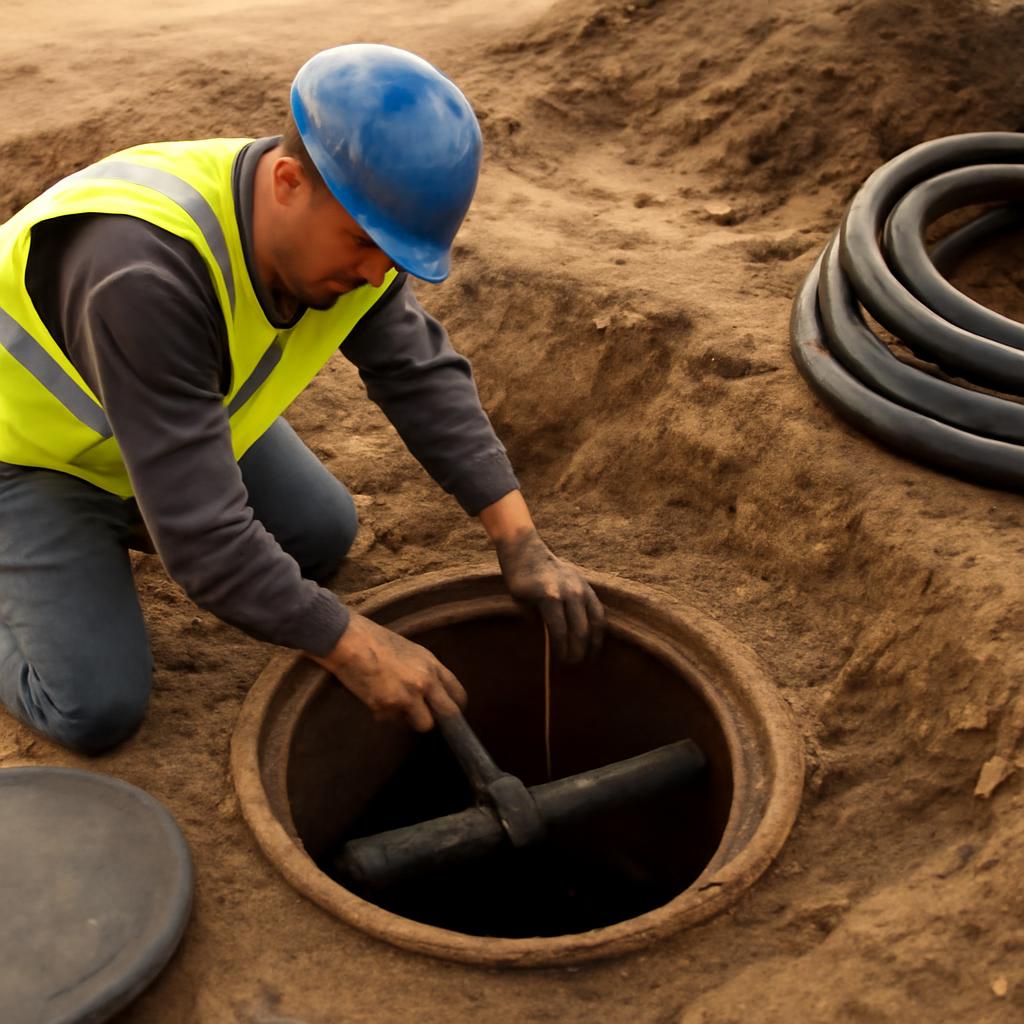
A business may prefer trenchless, yet still need excavation if the pipe is crushed, badly sagged, or improperly graded.
Editorial note: DrainFinder primarily covers residential, single-family drain problems. This article is published as a general educational overview of commercial sewer-line terminology, failure patterns, and repair methods so readers can better understand inspection findings and contractor proposals. It is not a substitute for site-specific evaluation by a licensed commercial plumbing professional (DrainFinder About).
Commercial sewer repair usually starts with a simple question: is the problem a blockage that can be cleared, or is the pipe itself failing?
That distinction matters more in commercial buildings than it does in most homes. Business properties often run more fixtures through shared piping, see denser daily use, and may send grease, food residue, or other difficult waste streams into the line depending on the type of operation. Across commercial sewer repair pages, the same core failure patterns appear repeatedly: root intrusion, grease buildup, corrosion, leaking joints, bellied sections, and broken or collapsed pipe segments. The usual workflow is also consistent: inspect first, clear blockages where possible, then move to trenchless or excavated repair if the line has structural defects (Baethke Plumbing).
For owners, facility managers, and property managers, that framework is useful because it turns a chaotic backup into a more manageable decision tree. First confirm what is happening. Then determine whether the immediate need is cleaning, rehabilitation, or replacement.
Recognizing Signs of Commercial Sewer Line Failure
One of the clearest signs of a main sewer problem is multiple fixtures draining slowly at the same time. When several restrooms, sinks, or floor drains begin acting up together, the issue is less likely to be an isolated branch-line clog and more likely to involve a shared downstream line (The Pipe Boss). In a commercial setting, that may look like toilets in different restrooms flushing poorly, a mop sink backing up when another fixture is used, or a floor drain reacting when nearby plumbing discharges.
Other common warning signs include recurring backups, foul sewage odors, gurgling from drains or toilets, and wet or persistently soggy ground over the buried sewer route (CMH Plumbing Solutions). None of those symptoms proves a collapse by itself, but together they strongly suggest that wastewater is not moving through the system normally.
The commercial context changes how quickly those symptoms matter. A restaurant, office, warehouse, hotel, apartment building, or retail center may have many fixtures feeding the same line, and commercial service pages consistently note that heavier use makes business sewer lines more susceptible to clogs and backups (Roto-Rooter). In a grease-producing business, especially food service, a line can seem tolerable during slow periods and then fail during peak demand when the system has no remaining capacity.
That is why early recognition matters. A minor slowdown at one sink is an annoyance. A main-line sewer issue can quickly affect multiple restrooms, interrupt kitchen operations, create sewage backup cleanup, and make parts of the building unusable until flow is restored (Southport Plumbing). The earlier the pattern is recognized, the better the odds that the next step is a controlled inspection rather than an emergency response.
Common Causes of Commercial Sewer Line Damage
Tree root intrusion is one of the most commonly cited causes of sewer line trouble. Roots seek moisture and can enter through small cracks, separated joints, and aging connection points. Once inside the pipe, they expand and begin catching debris, turning a small opening into a recurring obstruction (NuFlow, John’s Sewer).
For restaurants, cafeterias, grocery operations, and other food-service environments, grease buildup is another major cause. Commercial sewer pages repeatedly call out grease and food residue as common offenders, and general sewer guides explain why: fats and oils go down warm, then cool, solidify, and collect other debris until the effective pipe diameter narrows enough to impede flow. In practice, that means a line may not fail all at once.
Corrosion and material aging also show up often, especially in older cast-iron systems. Commercial and trenchless repair pages describe long-term corrosion and scale buildup as a process that roughens and narrows the pipe interior, making it easier for solids to hang up and harder for the line to stay clear after ordinary cleaning (Zoom Drain).
Then there are the shape and alignment problems: broken sections, collapsed sections, leaking joints, offsets, and bellies or sags. These conditions are listed across multiple commercial repair sources and are commonly associated with settling, soil movement, heavy loads above the pipe, or general deterioration over time (CMH Plumbing Solutions). A bellied section matters because it creates a low spot where water and solids settle instead of draining away, so even a freshly cleaned line may begin clogging again if the geometry is wrong.
Commercial lines also have to contend with debris and foreign objects. General sewer guides identify wipes, dropped items, and accumulated solids as common obstruction sources, and commercial service pages add that line blockages can come from grease or foreign material restricting sewage flow in high-use buildings (The Pipe Boss).
How Professionals Diagnose Sewer Line Issues
The standard starting point for professional diagnosis is a video camera inspection. Commercial sewer repair pages repeatedly present camera work as the fastest way to determine whether the problem is a removable blockage, a damaged pipe, or both.
That inspection matters because the same symptom can come from very different causes. Several restrooms draining slowly could mean grease, roots, scale, a separated joint, a sag, or a partially collapsed section. Without seeing the inside of the pipe, it is easy to mistake a structural problem for a routine clog. Camera inspection helps separate cleaning problems from repair problems.
Commercial providers describe camera inspection as a way to locate and confirm conditions such as clogs, root intrusion, cracks, leaks, broken pipe, offsets, corrosion, and bellies from inside the line rather than inferring them from symptoms alone.
A good inspection also shapes the scope of the conversation. If the footage shows a heavy but removable obstruction and otherwise sound pipe walls, the first recommendation may be cleaning. If it shows corrosion, separated joints, deformation, or a low spot that holds water, cleaning alone is unlikely to stay effective.
The inspection is not just a prelude to selling work; it is the step that defines what kind of work is actually appropriate based on the condition of the pipe as found in the field.
Clearing Blockages: Cleaning vs Structural Repair
Not every commercial sewer problem calls for immediate replacement. Many service calls begin with blockage removal, especially when the main issue is grease, sludge, roots, or debris rather than a pipe that has physically failed.
The two clearing methods mentioned most often in the evidence set are hydro jetting and mechanical snaking or root cutting.
Hydro jetting uses high-pressure water to scour the inside of the pipe. Commercial sewer-cleaning pages frequently present it as the preferred approach for heavy grease accumulation, sludge, and some root intrusion because it cleans the pipe wall more thoroughly than simply punching a narrow opening through the blockage. In grease-heavy operations, that fuller cleaning matters because restoring a small flow path is not the same thing as removing the buildup that caused the restriction.
Mechanical snaking and root removal still have an important role. But they do not automatically solve the reason the clog formed. If roots are entering through a joint opening, or if solids are collecting in a sagged section, recurrence is likely until the underlying defect is repaired.
That leads to the core distinction:
- Cleaning fixes the obstruction.
- Structural repair fixes the condition that keeps recreating the obstruction.
If it clogs repeatedly, especially with evidence of roots, corrosion, broken joints, or a bellied section, then repeated cleaning becomes symptom control rather than a durable solution.
Traditional Excavation for Sewer Repairs
Traditional excavation becomes more likely when the pipe is too damaged, too deformed, or too poorly graded for internal rehabilitation to work reliably. Commercial repair pages consistently tie open-trench work to collapsed pipe, severe bellies, and grade or slope problems that require the line to be physically exposed and reset.
In practical terms, excavation means trenching down to the sewer line, removing the failed section or run, installing new pipe, backfilling, and restoring the disturbed surfaces afterward. For commercial properties, surface restoration can be a major part of the disruption if the line passes under a parking lot, sidewalk, landscaped frontage, driveway, or slab-adjacent area.
That disruption is exactly why trenchless options attract so much interest. Even so, excavation still has one major advantage: it can reset the line’s alignment and slope. A sewer with a real low spot or a bad fall is not simply “old”; it is laid in a way that causes water and solids to collect. Internal rehabilitation cannot always solve a geometry problem if the path itself is wrong.
Excavation can also be the better answer when conditions vary along the run. A commercial sewer may have one collapsed area, another section with significant offsets, and a longer section that remains serviceable.
So when is digging necessary? Usually when inspection shows that the old pipe no longer offers a usable route for lining or bursting, or when correcting the pipe’s position and drainage is part of the repair itself—not just restoring the inside wall of the existing route.
Trenchless Repair Methods for Minimal Disruption
The two trenchless methods cited most consistently in commercial sewer repair materials are cured-in-place pipe (CIPP) lining and pipe bursting.
With CIPP lining, the contractor first inspects and cleans the line, then inserts a resin-saturated liner into the existing pipe and cures it so the liner hardens into a new internal pipe wall. The exact curing method can vary by system, but the core concept is consistent: restore the pipe from the inside without removing the entire buried run.
With pipe bursting, the old pipe is fractured while a new pipe is pulled through the same general path from small access pits. It is trenchless in the sense that it avoids a continuous open trench, but it is still fundamentally a replacement method rather than a lining method.
The main commercial appeal of trenchless work is reduced surface disruption. Commercial repair pages specifically frame trenchless methods as useful under driveways, sidewalks, parking lots, landscaped areas, slabs, and other finished surfaces where full excavation would interrupt access or require extensive restoration. For a business, that can mean less impact on parking, entrances, site circulation, and exterior appearance while the repair is underway.
Trenchless options are often presented as a fit for cracks, corrosion, root-related damage, minor offsets, and aging pipe that still retains a usable internal path. Commercial pages also indicate that these methods are used across common sewer materials including cast iron, clay, PVC, and ABS, though suitability still depends on the actual condition of the existing line rather than the material label alone.
The limit is important: trenchless is less disruptive than open excavation, but it is not universally available. Fully collapsed sections, severe bellies, and major slope problems may rule it out because the repair method still needs a workable route to follow. That is why trenchless is not the first answer. Inspection is.
Choosing the Right Repair Approach
The most useful way to think about commercial sewer repair is as a staged decision process driven by inspection findings.
If the camera shows removable blockage with otherwise sound pipe walls, the first step is usually cleaning. That may mean hydro jetting for grease, sludge, or widespread buildup, or mechanical clearing for a more localized obstruction.
If the inspection shows cracks, corrosion, minor offsets, or repeated root entry, but the pipe still has a navigable and structurally usable shape, trenchless rehabilitation becomes a realistic option to discuss. That is one reason trenchless methods are so often raised in commercial settings: they may restore the line while preserving parking areas, landscaped entries, and slab-adjacent surfaces that would be costly or disruptive to open up.
If the inspection shows full collapse, severe bellies, or major grade problems, excavation becomes more likely because the repair has to restore the line’s physical path, not just reinforce the inside of that path. One especially important point from replacement-vs-repair comparisons is that pipe bursting follows the existing route. It does not automatically correct a bad slope simply because the old pipe has been replaced in place.
Pipe material also affects the conversation. Commercial repair pages specifically mention cast iron, clay, PVC, and ABS as common materials encountered in sewer repair work. Cast iron may still be a trenchless candidate if corrosion is significant but the line is not fully collapsed.
Access constraints matter too. A line under a slab, sidewalk, parking area, or landscaped entrance creates a strong incentive to preserve the surface if the pipe condition allows it. But access concerns do not override physical reality. A business may prefer trenchless, yet still need excavation if the pipe is crushed, badly sagged, or improperly graded.
A practical framework looks like this:
- Inspect the line.
- Clear what is clearly cleanable.
- Repair structurally when the pipe condition is driving repeat failures.
- Excavate when the route, slope, or collapse makes trenchless unrealistic.
That sequence reflects the broad logic repeated across the commercial and trenchless sources in the evidence set.
Preventive Maintenance for Commercial Properties
The simplest way to reduce emergency commercial sewer repair is to stop treating the sewer line as something that only matters after a backup. Many commercial providers promote scheduled maintenance programs, recurring cleanings, and periodic inspections for exactly that reason.
The evidence set does not establish a universal commercial maintenance interval, and most available guidance comes from service pages rather than neutral standards. Even so, the recurring recommendation is clear: high-use properties benefit from regular inspection and cleaning rather than waiting for a blockage to announce itself. Some sewer guides describe schedules ranging from annual checks to roughly every one to two years depending on usage history and previous problems. The more demanding the use case—especially restaurants or buildings with a history of backups—the stronger the case for closer attention.
Prevention is also about what enters the system. General sewer guidance consistently warns against pouring grease down drains and against flushing anything beyond intended waste and toilet paper.
Routine camera work can also catch problems before they become shutdown events. That is especially helpful in multi-tenant properties or customer-facing businesses where restroom outages or kitchen backups affect operations immediately.
Commercial sewer repair is easiest to manage when it is not a surprise. Knowing the warning signs, understanding the difference between cleaning and structural repair, and recognizing where trenchless methods do and do not fit can make contractor recommendations much easier to evaluate. But every property still has its own pipe materials, usage patterns, access limitations, and damage history. The safest next step is always an on-site inspection by a licensed professional who can evaluate the actual line condition and match the repair method to the problem found.
What makes commercial sewer issues different from residential?
Commercial service pages also point to business-specific contributors such as restaurant grease, food residue, and high fixture counts across property types like restaurants, offices, warehouses, apartments, hotels, retail, and mixed-use buildings.
Is trenchless repair always possible for commercial sewers?
No. Trenchless methods are commonly used for cracks, corrosion, minor offsets, and some root-related damage when the pipe still has a usable route for lining or bursting. They may not be suitable when the line is fully collapsed, severely bellied, or has major grade problems that require the sewer to be physically re-laid rather than repaired in place.
How does camera inspection help in sewer repair decisions?
Commercial repair pages consistently describe video inspections as the first step for locating clogs, roots, breaks, corrosion, offsets, leaks, and bellies without starting with excavation. That matters because cleaning, lining, bursting, and excavation solve different problems; the inspection is what tells you which category the line falls into.
What role does grease play in commercial clogs?
Grease is one of the most important commercial clog drivers, especially in restaurants and other food-service settings. Commercial pages specifically call out grease and food residue, while general sewer guides explain the mechanism: fats and oils enter the drain warm, then cool, harden, and trap other debris until flow is restricted. Hydro jetting is often used for that kind of buildup because it is intended to clean the interior wall more thoroughly than a simple opening pass through the obstruction.