
Four Habits That Keep a Home Septic System Working
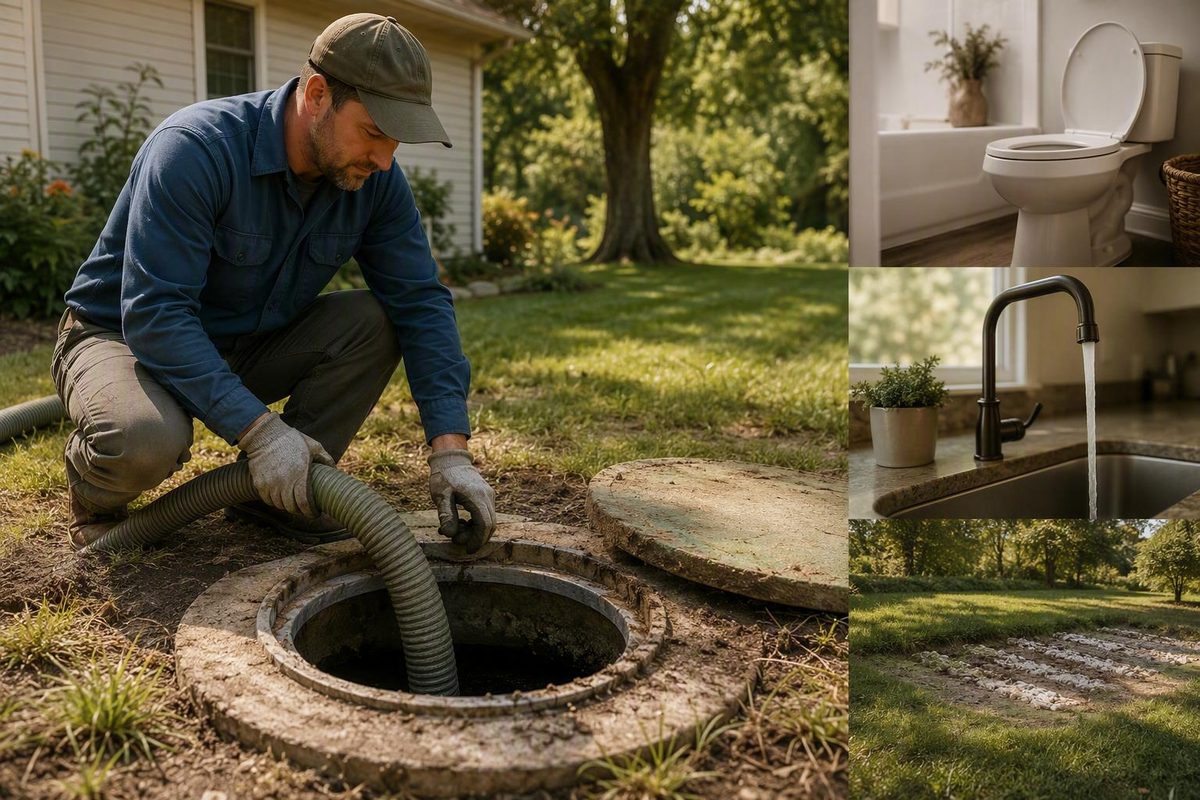
Use condition-based service instead of fixed deadlines, control incoming water, keep unsuitable waste out and protect the drainfield.
Reliable septic maintenance comes down to four habits: arrange condition-based professional service, control the water entering the system, keep unsuitable waste out, and protect the drainfield. Inspection and pumping benchmarks are starting points, not fixed deadlines. The correct schedule depends on measured solids, household use, tank capacity, system design, equipment instructions, service contracts, and local requirements.
Use This Septic Maintenance Schedule
Start with this calendar, then adjust it to your system’s permit, operating manual, service contract, and local health-department requirements.
| When | Maintenance task | Call a professional when |
|---|---|---|
| Ongoing | Repair leaks. Spread laundry and other high-water-use activities across the week. Flush only human waste and toilet paper. Keep grease, wipes, chemicals, and food solids out of drains. | A leak cannot be isolated, several fixtures slow at once, an alarm activates, or sewage backs up. |
| Before changing the property | Locate the tank, access lids, drainfield, and reserve area if one exists. Preserve service access before digging, paving, parking, building, or landscaping. | Plans are missing or the proposed work could affect the septic area or site drainage. |
| About annually | Review records and check for alarms, odors, wet ground, settlement, or unusually lush growth. Confirm that runoff is directed away from the field. | Systems with pumps, float switches, alarms, or other mechanical parts generally need annual or manufacturer-specified professional attention, according to EPA septic-care guidance. |
| At least every three years | Arrange a professional inspection for an average conventional household system, unless your system documents or local authority call for more frequent service. | The EPA recommends inspection at least every three years for an average household system. |
| Typically every three to five years | Use this only as a pumping-planning range. Have the provider measure solids and recommend timing from actual conditions. | Government homeowner guidance describes pumping every three to five years as a general range, not a fixed deadline. Pump sooner if measurements show it is due. |
| At any time | Reduce nonessential water use if backups, alarms, sewage odors, pooling water, muddy or spongy soil, or unusually green drainfield grass appear. | Arrange prompt evaluation rather than assuming the tank is simply full. |
Treat the calendar as a reminder to review records and schedule an assessment—not as permission to wait when warning signs or measurements indicate a problem.
Base Pumping on the Tank, Not Just the Calendar
Inside a conventional septic tank, heavy solids settle into a sludge layer while grease and lighter materials form scum at the top. Liquid effluent between those layers moves through the outlet toward the drainfield. If sludge or scum accumulates too close to the outlet, solids can leave the tank and obstruct piping or the soil absorption area.
That is why a qualified provider should measure both layers rather than relying only on the previous pumping date. The service interval changes with:
- Number of occupants
- Total wastewater use
- Amount and type of solids entering the tank
- Tank capacity
- Frequency of garbage-disposal use
- Seasonal or unusually heavy occupancy
- Conventional, pressure-dosed, aerobic, or other system design
- Findings from the previous inspection
EPA homeowner guidance identifies three pumping indicators for service professionals: scum within six inches of the bottom of the outlet, sludge within 12 inches of the outlet, or combined sludge and scum exceeding 25% of the liquid depth (EPA homeowner guide). These are professional assessment criteria, not instructions to open or measure the tank yourself. They also do not override system-specific instructions or local requirements.
Inspection and pumping are separate services:
- Inspection evaluates system condition, solids levels, visible drainfield conditions, and applicable operating components.
- Pumping removes accumulated liquid, sludge, and scum from the tank compartments.
Ask what is included when scheduling. A pump-out receipt without measurements, condition notes, or a recommended next step provides little basis for planning the next visit.
If symptoms continue after pumping, the building drain, tank, distribution components, mechanical equipment, and drainfield need diagnosis.
Know What a Professional Service Visit Should Cover
The visit should match the installed system, accessible components, contracted scope, and local inspection requirements. For a conventional tank-and-field system, ask whether the provider will inspect and document the following as applicable:
- All tank compartments
- Liquid level and signs of leakage or infiltration
- Sludge and scum measurements
- Tank walls, lids, access points, and overall condition
- Inlet and outlet baffles or tees
- Effluent filter, if present
- Pumps, floats, controls, and alarms, if present
- Accessible distribution boxes or other distribution components
- Visible drainfield conditions, including surfacing wastewater, wet areas, settlement, or signs of uneven loading
- Repairs completed and additional work recommended
- Recommended condition or date for the next inspection and pumping
The Bureau, Putnam & Marshall County Health Department’s septic maintenance guidance illustrates how an inspection can include tank walls, plumbing connections, baffles or tees, solids, pumps, distribution components, and field conditions. Confirm the scope in advance, especially if the property has multiple tanks, treatment equipment, dosing components, or alarms.
When pumping is performed, ask whether every tank compartment is included. Request a written service report with measurements and findings rather than retaining only a payment receipt.
Keep the report with:
- System location sketch
- Permits and approval records
- As-built drawings
- Tank capacity, if known
- Inspection and pumping dates
- Sludge and scum measurements
- Repair and replacement records
- Alarm events
- Equipment manuals
- Service-contract documents
- Provider reports
- Recommended next action and due date
Compare the local health department’s requirements with the equipment manual and any active maintenance contract. One document should not be assumed to replace the others.
Use a simple log so changes are visible over time:
| Date | Service and measurements | Components checked and repairs | Provider and next action |
|---|---|---|---|
| YYYY-MM-DD | Inspection/pumping; sludge: ___; scum: ___ | Tank, baffles, filter, pump, alarm, field; repairs: ___ | Provider: ___; next action/date: ___ |
| YYYY-MM-DD | |||
| YYYY-MM-DD |
Reduce the Water Load Reaching the System
In a typical home where indoor fixtures discharge to the septic system, household water use becomes septic flow. A large surge can shorten the time wastewater remains in the tank, disturb solids that should settle, and send more flow to the drainfield than the soil can accept at once.
Repair running toilets and other leaks first. One leaking or running toilet can add as much as 200 gallons per day, according to the EPA homeowner guide. That continuous flow can matter more than small conservation measures elsewhere.
Next, flatten out demand:
- Choose efficient toilets, faucets, showerheads, and appliances when replacement is due.
- Match the washing machine’s water setting to the load.
- Spread laundry across several days.
- Avoid stacking showers, laundry, and dishwasher cycles into the same short period.
- Repair dripping faucets, leaking supply lines, and malfunctioning toilet valves promptly.
For example, run four laundry loads over multiple days instead of consecutively while family members are showering and the dishwasher is operating. There is no universal daily load limit because tank size, household use, equipment, soil, and field capacity differ.
Keep water that does not need wastewater treatment away from the septic area. Direct roof drains, surface runoff, footing drains, and sump-pump discharge away from the drainfield without creating erosion, standing water, or drainage problems elsewhere.
Hot tubs, pools, and some water-treatment or softener equipment can release a large volume over a short period. Do not assume the septic system is an acceptable outlet. Proper routing depends on the equipment, discharge characteristics, site drainage, system design, and applicable rules; EPA guidance advises handling these discharges according to local requirements and qualified professional advice (SepticSmart homeowner guidance).
Use a Flush-or-Trash Rule
The simplest household rule is: toilets receive human waste and toilet paper; household drains receive normal wastewater. Everything else needs a more appropriate disposal route.
| Normal septic input | Keep out of the system |
|---|---|
| Human waste Toilet paper Normal household wastewater from bathing, laundry, sinks, and dishwashing |
Wipes, including “flushable” wipes Paper towels and diapers Hygiene products and condoms Dental floss and cat litter Coffee grounds and food scraps Fats, oils, and grease Paint and solvents Pharmaceuticals Harsh or excessive chemicals |
Wipes marketed as flushable still belong in the trash.
A garbage disposal does not make food disappear. It grinds food into solids that enter the tank, increasing sludge and potentially shortening the interval between pump-outs. Limit or avoid disposal use. Put food scraps in the trash or compost where appropriate, and allow cooking grease to cool in a container before discarding it.
Ordinary household cleaners used in normal amounts according to their labels are not the same as dumping paint, solvents, hazardous chemicals, concentrated disinfectants, or repeated doses of drain cleaner into the system. Use cleaners as directed and take hazardous products and unwanted pharmaceuticals to locally approved disposal programs.
Protect the Drainfield as Part of the System
Tank maintenance alone is not septic-system maintenance. The drainfield distributes effluent into surrounding soil, where additional treatment occurs. Compacted, waterlogged, excavated, or obstructed soil cannot perform that job normally.
Keep the following off an active drainfield:
- Cars, trucks, trailers, and parked equipment
- Heavy machinery
- Large livestock
- Buildings, sheds, decks, and patios
- Concrete, asphalt, and other pavement
- Stockpiled soil, lumber, or other heavy materials
Weight can compact the soil or damage distribution piping. Impermeable surfaces can also restrict evaporation and soil oxygen. Native grasses or shallow-rooted ground covers are the general planting choice for the field.
Do not rely on one generic setback for every tree or shrub. Root behavior, soil, climate, field design, pipe depth, and available space vary. Ask a septic professional, system designer, or local authority to determine suitable plants and spacing for the property.
Before digging, planting deeply, adding a shed, expanding a driveway, installing a patio, or changing grading, locate the tank, drainfield, and any reserve area. Check with the permitting authority before work begins, and preserve clear access for future inspection and pumping.
Direct roof and surface runoff away from the field, but do not solve one drainage problem by sending water toward the foundation, a well, neighboring land, or an unstable slope.
Recognize Trouble and Stop Unsafe DIY Work
Warning signs identify a need to investigate; they do not diagnose the failed component.
| Symptom | First action |
|---|---|
| One slow fixture with no other symptoms | A fixture trap or branch-line clog may be possible. Address it cautiously and monitor other fixtures rather than assuming septic failure. |
| Several slow fixtures or widespread gurgling | Reduce water use and arrange prompt evaluation of the building drain, tank, and septic system. |
| Septic pump or high-water alarm | Stop nonessential water use. Follow the system’s alarm instructions and contact the designated service provider. Do not bypass the alarm or handle submerged equipment. |
| Backup into tubs, showers, toilets, or floor drains | Stop wastewater-producing activities and call a qualified septic or plumbing professional. |
| Sewage odor indoors or outdoors | Reduce water use and arrange an inspection; odors can have several plumbing or septic causes. |
| Pooling water, muddy or spongy field soil, or unusually lush grass | Keep people, pets, and vehicles away and seek prompt septic evaluation. |
| Sewage surfacing or backing up | Minimize wastewater generation, prevent contact, and contact a septic provider, local health department, or onsite-wastewater authority. |
These symptoms do not prove that the tank is full.
Backed-up sewage may contain harmful pathogens. Avoid direct contact, keep children and pets out of the affected area, and obtain cleanup instructions from the local health department or wastewater authority, as advised by EPA septic-failure guidance.
Safety warning: Never enter, lean over, or attempt to pump an open septic tank. Toxic septic-tank gases can kill within minutes, and even looking into an open tank can be dangerous (local public-health safety guidance).
Leave pumping, internal tank measurements, electrical work, excavation, and contaminated-soil work to trained professionals. Opening a lid for a quick look is not a safe substitute for an inspection.
Do septic additives reduce the need for pumping?
No. Additives do not remove the sludge and scum that pumping physically takes out, and they do not replace inspection. Septic tanks already contain microbes involved in normal wastewater treatment, while additive effectiveness has not been established, according to EPA homeowner guidance.
Do not make bacterial, enzyme, or chemical additives part of routine maintenance unless a qualified authority provides system-specific direction.
What should I do if the septic system has no maintenance records?
Start by identifying the system and arranging a professional inspection. Ask the provider to locate the tank and drainfield, identify accessible components, estimate or confirm tank capacity where possible, measure sludge and scum, check operating equipment, and document visible conditions.
Contact the local health department, permitting office, or onsite-wastewater authority for permits and as-built drawings. Ask prior owners or the closing agent for pumping, repair, and service-contract records. Do not assume that a missing record means the tank was never pumped—or that it was serviced recently.
From that point forward:
- Identify the system and preserve its records. Map the tank, drainfield, access points, and reserve area, and retain permits, drawings, manuals, and service reports.
- Confirm the appropriate inspection schedule. Compare local requirements with equipment instructions and any service contract.
- Base pumping on measured conditions. Use professional sludge and scum measurements, system condition, and household demand rather than the calendar alone.
- Reduce water and unsuitable solids. Repair leaks, spread high-volume water use across the week, and keep wipes, grease, food, chemicals, and other unsuitable waste out.
- Protect the drainfield. Keep vehicles, structures, pavement, heavy materials, intrusive roots, and excess runoff away.
If backups, alarms, odors, or surfacing sewage appear, stop nonessential water use, avoid exposure, and seek qualified local evaluation. Do not assume that pumping alone will solve the underlying problem.