
Stop Guessing Why Your Toilet Keeps Clogging
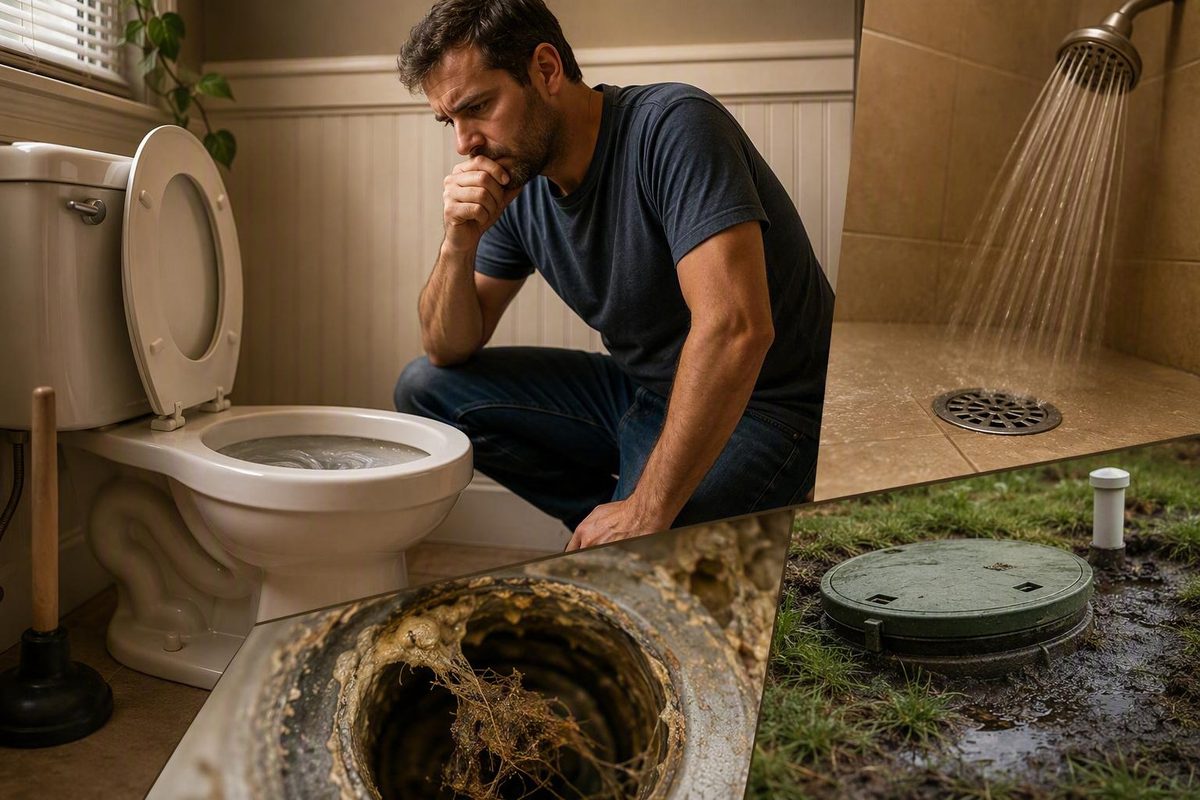
If other fixtures drain normally, start at the toilet. Slow drains in different rooms make a main drain or sewer lateral problem more plausible.
If your toilet keeps clogging, the cause is usually not something you can identify from the bowl alone. The repeat blockage may be in the toilet’s built-in trapway, the nearby branch drain, the vent or waste stack, the main sewer line, or a septic system. It can also be a mismatch between what is being flushed and how well the fixture is operating.
Start with the pattern: Does only one toilet clog? Do nearby drains gurgle? Are several fixtures slow? Does the tank deliver a strong flush? Those observations narrow the likely location. They do not prove a diagnosis, but they tell you whether a careful DIY attempt is reasonable or whether it is time for a licensed plumber.
First, stop an overflow safely
If the bowl water is rising, do not flush again. Close the toilet’s supply valve if you can reach it without stepping into contaminated water, keep people and pets out of the area, and call for help if sewage is backing up or spreading.
Treat sewage as contaminated. Avoid direct contact, and do not touch outlets, cords, appliances, or electrical panels while standing in water. The CDC’s cleanup guidance calls for protective boots, gloves, and eye protection when sewage is involved. A significant spill may also need professional cleanup and drying, especially when water reaches porous flooring, drywall, cabinets, or insulation.
If the overflow followed a single obvious clog and stayed in the bowl, wait for the water level to fall before using a flange-style toilet plunger. Do not add chemical drain cleaner: it can leave caustic liquid in the bowl and create an exposure hazard for whoever plunges or removes the toilet next.
Use this symptom decision tree
Only one toilet clogs
When every other fixture drains normally, begin at the fixture. The likely categories are too much paper or another item, a partial obstruction in the trapway, weak flush performance, or a defect in that toilet.
Ask what changed before the problem started. Wipes, paper towels, hygiene products, cotton swabs, floss, and other trash may disappear from the bowl without breaking down in the drain. New York City’s wastewater guidance warns that even products labeled “flushable” may not clear pipes or disintegrate in a sewer system; its practical rule is to trash them rather than flush them.
For an ordinary paper-and-waste clog, use a flange plunger with enough water to cover the rubber cup. Make several controlled strokes rather than splashing. If the same toilet soon clogs again, a toilet auger may reach an obstruction in the trapway. Stop if you suspect a hard object, the auger will not pass, or you are unsure how to protect the porcelain. Removing the toilet or running equipment into the branch drain is a plumber-level next step.
The flush is weak or incomplete
Watch one flush after the bowl is clear. A slow swirl, low tank water, a handle that must be held down, or water rising before draining can point toward a fixture adjustment, restricted water passages, or insufficient venting. Compare the tank water level and moving parts with the manufacturer’s instructions for the exact model; do not raise the level beyond its marked setting.
Low water use by itself is not proof that the toilet is underpowered. The EPA explains that some early low-flow toilets had performance problems, while current WaterSense-labeled toilets are independently certified for efficiency and flushing performance. If an older toilet has always performed poorly despite correct setup and a clear drain, replacement may be more sensible than repeated service calls. Choose by tested performance and compatibility, not gallons per flush alone.
The toilet gurgles or nearby drains make noise
Gurgling, bubbles in the bowl, a slow flush, or sounds from nearby drains can occur when air cannot move normally through the drain-waste-vent system. They can also occur with a partial downstream blockage. Kohler’s poor-flush troubleshooting guide lists rising bowl water, frequent clogs, slow flushing, nearby drain sounds, and trapway bubbles as signs associated with a clogged waste stack or vent pipe.
Do not climb onto the roof to inspect or snake a vent unless you have the right fall protection, equipment, and experience. A plumber can distinguish a vent obstruction from a drain restriction and check whether the installation meets local plumbing rules. Vent modifications, wall or roof penetrations, and drain rerouting may require a permit or inspection; requirements vary by jurisdiction.
More than one fixture is slow or backing up
This pattern moves the suspected problem beyond the toilet. If a toilet and nearby tub or sink are affected, a bathroom branch drain may be restricted. If fixtures in different rooms are slow, or flushing sends water into the lowest shower, tub, or floor drain, a main building drain or sewer lateral problem becomes more plausible.
Stop using water-intensive fixtures until the line is assessed. Repeated flushing, laundry, showers, and dishwasher cycles add water behind a restriction and increase the chance of an indoor sewage backup. A licensed plumber may use a properly sized cable, cleanout access, or a camera inspection to locate the failure. Tree roots, a separated joint, a sagging section, or a damaged pipe cannot be confirmed from symptoms alone.
The location of the blockage also determines who is responsible for repair. The boundary between a private sewer lateral and a public main differs by municipality, and excavation or lateral replacement often has local permit and inspection requirements. Check with the sewer utility or building department before authorizing invasive work.
The home uses a septic system
A repeatedly clogged toilet may be the first noticeable symptom of a system-wide septic problem, but look for a cluster of signs: several slow drains, plumbing gurgles, sewage odors, damp or spongy ground over the tank or drainfield, unusually lush grass, or wastewater surfacing outdoors.
The EPA lists backups from toilets and drains, slow fixtures, gurgling, odors, and wet areas near the drainfield among the signs of a malfunctioning septic system. It also cautions that the exact cause cannot be diagnosed remotely. Reduce water use and contact a qualified septic service provider, plumber, or local health or environmental authority. Do not open or enter a septic tank; confined-space gases and unstable components make that dangerous. Pumping, repair, and drainfield work may be regulated locally.
Six common causes, separated from the symptoms
- What is being flushed. Excess toilet paper or non-dispersing products can lodge in the trapway or collect at an existing rough spot. Flush only human waste and toilet paper.
- A partial trapway obstruction. A toy, hygiene product, buildup, or other object can leave enough room for water to pass but repeatedly catch paper and waste.
- Poor fixture performance. Incorrect tank water level, worn or misadjusted parts, restricted rim or siphon-jet passages, or an inherently weak older model can produce an incomplete flush.
- A vent or waste-stack restriction. Abnormal air movement can accompany slow, noisy flushing, but similar signs can come from a downstream clog.
- A branch or main drain problem. Multiple affected fixtures suggest that the restriction is no longer confined to one toilet.
- A septic malfunction or overload. Onsite systems add the tank, pump or controls, outlet, and drainfield as possible failure points.
These categories can overlap. A weak toilet may reveal a marginal branch drain, while wipes may collect on roots or a damaged joint. Clearing the immediate bowl does not prove the underlying problem is gone.
What you can check without dismantling the plumbing
- Confirm that the toilet is the only affected fixture.
- Note whether the bowl rises, drains slowly, bubbles, or clears with a normal surge.
- Check the tank water against the manufacturer’s marked waterline.
- Look for an obvious loose chain, damaged flapper, or refill tube out of place, using the model’s instructions.
- Ask whether wipes, excess paper, or a foreign object may have been flushed.
- If on septic, inspect the yard from a safe distance for odors, wet soil, or surfacing wastewater; do not open covers.
- Record when the clog happens and which other fixtures are in use. This gives a plumber more useful evidence than “it clogs sometimes.”
A plunger is appropriate for a simple, isolated soft clog. A toilet auger is reasonable for someone comfortable using it and certain no chemical cleaner is present. Stop before roof work, toilet removal, powered drain equipment, excavation, or septic access.
When repeated clogging needs a plumber
Arrange a professional inspection when the clog returns after plunging, an auger cannot clear it, a hard object may be trapped, the toilet has always flushed poorly, or gurgling and nearby drain symptoms continue. Call urgently when multiple fixtures back up, sewage enters the home, water appears around the toilet base or foundation, wastewater surfaces over a septic area, or water approaches electrical equipment.
A useful service call should identify the suspected location and the evidence for it. Ask whether the next diagnostic step is fixture testing, toilet removal, cleanout access, cable clearing, camera inspection, vent inspection, or septic evaluation—and why. DrainFinder’s symptom-first drain overview can help you organize what you observed before making that call.
The short answer to “why does my toilet keep clogging?” is that the first clog was either never fully removed or the toilet is revealing a repeatable problem elsewhere. Follow the symptoms from one fixture outward, stop when sewage or system-wide signs appear, and use inspection—not guesswork—to decide the repair.