
Your Well Pump Control Box Explained: Purpose, Parts, and Basics
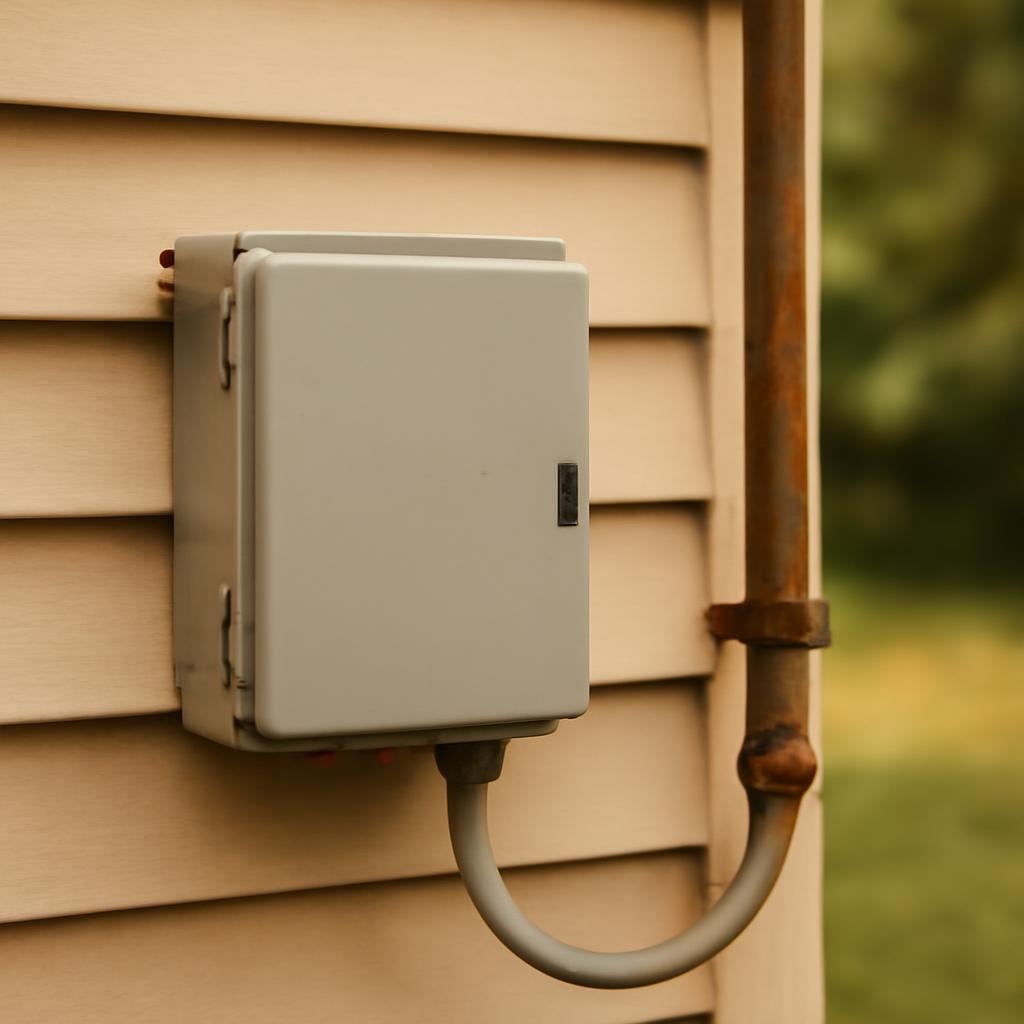
This above-ground electrical enclosure starts, protects and helps automate certain pumps, most commonly 3-wire submersible pumps in residential systems.
If your home has a private well, a well pump control box usually means the separate above-ground electrical box used with a 3-wire single-phase submersible pump. Its job is to help start the motor, provide some protection, and work with the pressure-switch circuit so the pump runs automatically when water pressure falls. That is the most consistent residential meaning across Water Well FAQ, Ruirong Pump, and Blair & Norris.
That narrower definition matters because the phrase control box is sometimes used more broadly for other pump-control enclosures. For homeowners troubleshooting a typical residential well, though, the practical question is usually much simpler: Do I have the external starter/protection box that a 3-wire submersible pump needs? In most cases, that is what this article is about, as reflected by Water Well FAQ, Ruirong Pump, and Blair & Norris.
Definition and Primary Purpose
A well pump control box is an above-ground electrical enclosure that starts, protects, and helps automate certain well pumps—most commonly a 3-wire submersible well pump in a residential system. That basic definition is consistent across, and Blair & Norris.
For a homeowner, the easiest way to think about it is this: the control box is not just an on-off switch. In a typical 3-wire submersible setup, it combines three main jobs:
- Motor starting by using capacitors and a relay to get the pump motor turning.
- Motor protection through overload protection on many models.
- Automatic operation by working with the pressure-switch circuit so the pump starts when pressure drops and stops when pressure is restored. These roles are described across, and Blair & Norris.
A second reason the control box exists is accessibility. The pump motor sits deep in the well, but the serviceable starting parts are kept above ground in a dry, protected location rather than sealed inside the submerged motor. That separation is part of why 3-wire systems can be easier to diagnose at the surface than systems that place all starting components in the motor itself, according to Ruirong Pump and Blair & Norris.
So if you are asking, “What is a well pump control box?” the homeowner answer is usually:
It is the external above-ground starter and protection box used with many 3-wire submersible well pumps.
2-Wire vs. 3-Wire Pumps: When You Need a Control Box
Not every well pump uses a separate control box. The key distinction is usually 2-wire versus 3-wire submersible pump motors.
For a 2-wire submersible pump, the motor’s starting components are built into the motor, so there is no separate external control box required. That point is stated directly by Water Well FAQ, and Blair & Norris. A 2-wire system may still have a pressure switch and pressure tank for automatic water service; it just does not need that extra above-ground starter box.
For a 3-wire submersible pump, the starting components are not all housed in the motor, so an external control box is required to start the pump. That is the central distinction in Water Well FAQ and Ruirong Pump.
That is why many homeowners never hear about a control box until they move into a house with a 3-wire pump. The system still includes the usual pressure tank and pressure switch, but the motor also depends on the separate box above ground.
The wire-count terminology can be confusing. In trade usage, installers often count the motor conductors and discuss ground separately. A troubleshooting discussion on DoItYourself.com describes a 3-wire, single-phase submersible system with functional conductors for start, run, common, and ground—four physical conductors including the equipment grounding wire, but still called a 3-wire pump in ordinary usage. See DoItYourself.com.
In practice, the tradeoff is straightforward:
- 2-wire pumps are simpler at the surface because there is no separate control box.
- 3-wire pumps keep key starting components above ground, which can make diagnosis or control-box replacement easier than pulling a pump from a deep well. That practical advantage is reflected in Ruirong Pump and Blair & Norris.
So the short answer is: No, not all well pumps use a control box. In normal residential well talk, separate control boxes are mainly associated with 3-wire submersible pumps.
Key Components and Their Functions
Inside a typical residential 3-wire submersible pump control box, you will usually find some combination of these parts: start capacitor, run capacitor, start relay, overload protector, and wiring terminals. That component list is consistent across, and the forum discussions cited below for real-world examples.
Start capacitor
The start capacitor gives the motor extra starting torque. In plain language, it provides the temporary boost that helps the motor overcome inertia and begin spinning. That role is described by Ruirong Pump and Blair & Norris.
Run capacitor
The run capacitor supports ongoing motor operation once the motor is up to speed. A simple homeowner summary is:
- the start capacitor helps the motor start
- the run capacitor helps it keep running properly
That distinction appears in Ruirong Pump and Blair & Norris.
There is one nuance worth knowing. A Northern Arizona Wind & Sun forum discussion points out that some well-pump motors are PSC motors—permanently split capacitor motors—which use a run capacitor as part of normal single-phase operation, not just as a momentary start aid. That is a narrower technical point, but it helps explain why “capacitor in the box” does not always mean a simple one-time startup device. See Northern Arizona Wind & Sun.
Start relay
The start relay connects the start circuit during startup, then removes it once the motor is near running speed. That general function is consistent across, DoItYourself.com, and Mike Holt’s Forum.
The exact relay design can vary. The Mike Holt discussion describes a QD solid-state relay, which is a reminder that “relay” does not always mean the same internal hardware from one box to another. For homeowners, the important point is the function: the relay helps the start components do their job briefly, then takes that start circuit back out.
Overload protector
Many control boxes also include an overload protector. Its purpose is to trip the system if current draw is excessive or the motor overheats, helping reduce damage from abnormal operation. That function is described by Ruirong Pump, and Blair & Norris.
Wiring terminals and enclosure
The box also serves as the organized connection point for incoming power, pressure-switch wiring, and the pump leads going down the well. The DoItYourself.com thread shows this in practice: the control box sits between the power/pressure-switch side and the pump-motor side, rather than acting as a mystery black box on its own. See DoItYourself.com.
Not every control box has every possible feature. Some models add items such as voltage protection or contactors, but those are model-dependent features, not universal parts of every residential control box, according to Blair & Norris and Water Well FAQ.
How the Control Box Works Step-by-Step
A control box does not work alone. In a normal residential well system, it operates as part of a chain that includes the breaker, pressure switch, control box, pump motor, pressure tank, and plumbing.
1. Tank pressure drops
When you use water in the house, pressure in the pressure tank falls. Once pressure reaches the switch’s cut-in setting, the pressure switch closes and sends power into the pump circuit. That basic sequence is described by Ruirong Pump.
2. The control box energizes the motor circuits
Once the pressure switch has called for the pump to run, the control box sends power to the motor windings. In a common single-phase 3-wire setup, the box uses its capacitor-and-relay arrangement to energize the motor’s start and run circuits correctly. The DoItYourself.com troubleshooting thread explains this at a functional level using common, run, and start leads rather than just part names. See DoItYourself.com.
3. The start circuit drops out after the motor comes up to speed
This is the main trick the box performs. The start capacitor and relay help the motor begin turning, but that start circuit is only temporary.
Ruirong Pump says the relay disconnects the start capacitor at about 75% speed. Forum explanations on DoItYourself.com and Mike Holt’s Forum describe the same idea more generally as dropping the start circuit once the motor is near operating speed. The exact trigger depends on the design, but the practical point is consistent: the start circuit is used briefly, then removed.
4. The pump runs until system pressure is restored
As the pump refills the pressure tank, system pressure rises. When the pressure switch reaches its cutout setting, the switch opens and power to the pump stops. That is the normal automatic cycle described by Ruirong Pump.
5. The box may trip on overload instead of normal cutoff
If current or heat rises beyond what the overload protector allows, the box may trip the pump before the normal pressure-cutoff point. That protective role is described by Ruirong Pump and Water Well FAQ.
For homeowners, the most useful mental model is simple:
The pressure switch decides when the system wants water. The control box provides the motor-starting and protection functions the 3-wire pump needs so it can respond.
Types of Control Boxes by Horsepower and Features
Control-box labels are not perfectly standardized across brands, so it helps to treat them as product families, not universal categories. One useful breakdown comes from Water Well FAQ, which divides them into QD, Standard, and Deluxe boxes.
QD boxes
According to Water Well FAQ, QD boxes are the simpler style generally used for 1/2 HP, 3/4 HP, and 1 HP applications. That same source says QD boxes do not include overload protection.
It is best to read that as a common example from that source, not as a rule that overrides every manufacturer catalog.
Standard boxes
Water Well FAQ describes Standard control boxes as covering about 1 HP to 10 HP and including overload protection. For a homeowner, the useful takeaway is that “standard” usually means a more full-featured box than a basic QD style.
Deluxe boxes
The same Water Well FAQ article describes Deluxe boxes as covering roughly 2 HP to 15 HP and adding a line contactor, which allows alternate pressure-switch wiring arrangements.
Again, think of that as a source-specific family description, not a universal code.
Why these labels can be confusing
Homeowners often run into conflicting names because different sellers group boxes differently. Blair & Norris, for example, uses labels such as QD, CSCR, and magnetic contactor boxes rather than the QD/Standard/Deluxe pattern.
That does not necessarily mean one source is wrong. It usually means the exact naming system depends on manufacturer or seller. The safer rule is to focus on whether the box matches the motor’s electrical requirements, then treat the marketing label as secondary.
There can also be overlap. Water Well FAQ notes that 1 HP can be a crossover point where either a simpler or more feature-rich box may be offered. So if you see more than one 1 HP option, that may reflect a design choice rather than a mistake.
Matching a Control Box to Your Pump Motor
If you ever need to replace a well pump control box, the safe principle is straightforward:
Match the box to the motor, not just to the old box’s appearance.
Across, and Blair & Norris, the key matching points are:
- Horsepower
- Voltage
- Phase
- Motor type or wire configuration
In many residential wells, the motor is single-phase 230 volts, as noted by Water Well FAQ and illustrated by the 1 HP, 230-volt, single-phase example in DoItYourself.com. But common is not universal. Ruirong Pump and Blair & Norris both mention 115-volt and 230-volt possibilities, so the actual nameplate matters.
If you are considering a different brand, Water Well FAQ says cross-brand use can be possible if the control box’s full-load amp rating matches or exceeds the motor’s requirements. The same source also says same-brand matching is often recommended. So the balanced takeaway is:
- same brand may reduce compatibility questions
- different brands may still work if the electrical ratings match
That means “brand never matters” is too loose, but “you must use the same brand” is too absolute. The evidence supports electrical compatibility first.
Location matters too. These boxes are described as above-ground components that should be installed in a dry, protected place, not down in the well, according to Ruirong Pump and Blair & Norris.
If you are trying to decide whether you are dealing with a bad control box or a broader aging-pump problem, our guide to well pump maintenance and lifespan is the more useful next step.
Single-Phase vs. Three-Phase Systems
Most homeowners with private residential wells are dealing with single-phase systems, not true three-phase pump systems. That distinction matters because the control hardware is different.
In a single-phase submersible pump system, the control box commonly uses capacitors and a relay to create the starting and running conditions the motor needs. That basic arrangement is described by Ruirong Pump, with additional context from Northern Arizona Wind & Sun, which discusses PSC well-pump motors that use a permanent run capacitor as part of normal operation.
A true three-phase pump motor works differently. The Northern Arizona Wind & Sun discussion explains why three-phase motors do not depend on a start capacitor in the same way single-phase motors do; instead, they are associated more with different control arrangements such as contactors or VFD-based control. See Northern Arizona Wind & Sun.
For a homeowner article like this, the practical takeaway is modest:
- Single-phase residential pumps are the ones most associated with the familiar capacitor-and-relay control box.
- True three-phase systems are controlled differently and usually are not what a homeowner means when asking about a standard residential well pump control box. This narrower homeowner framing is consistent with Water Well FAQ and Ruirong Pump.
Basic Troubleshooting Signs of Control Box Issues
A bad control box can absolutely cause a no-water or low-pressure problem, but it is only one possible failure point. Similar symptoms can also come from a failed pressure switch, damaged wiring, a bad splice, or the pump motor itself. That caution shows up repeatedly in Ruirong Pump, and Mike Holt’s Forum.
So the goal here is not to tell you to replace the box blindly. It is to help you recognize when the box is a reasonable suspect.
Hums but will not start
If the system hums but the pump does not start, the start circuit is a common suspect. Ruirong Pump specifically ties that symptom to a bad start capacitor, while the troubleshooting discussions on DoItYourself.com and Mike Holt’s Forum show that relay behavior, capacitor issues, and pump-end winding problems can look similar in practice.
So “hums but won’t start” often points toward the start side of the circuit, but not automatically to the box alone.
Frequent overload trips
Repeated overload trips suggest a heat or current problem somewhere in the system. Ruirong Pump ties frequent trips to overheating, and Water Well FAQ confirms that many control boxes include overload protection for exactly this kind of event.
The control box may be involved, but the underlying cause could also be a motor problem, voltage problem, or mismatch issue.
Clicking, but no water
If the pressure switch clicks and you hear clicking from the box but still get no water, the relay or capacitor path may be suspect. That symptom appears in Blair & Norris and is broadly consistent with Ruirong Pump.
But the Mike Holt troubleshooting thread is a useful warning here: a case that initially looked like a control-box problem ended up involving pump-end connections along with capacitor damage. See Mike Holt’s Forum.
No response when pressure drops
If system pressure falls and nothing happens at all, the failure may be upstream of the control box—such as loss of power or a failed pressure switch—or it may be inside the box. The DoItYourself.com thread illustrates how diagnosis often starts by verifying whether power is actually reaching the control box before blaming the pump motor. See DoItYourself.com.
Visual clues
Visual clues can support the diagnosis. Blair & Norris mentions signs such as clicking, bulging capacitors, and a burnt smell. Those are useful red flags, but they still do not prove the box is the only failed part.
Because these systems commonly involve line-voltage well circuits and control-box components such as capacitors, troubleshooting and replacement should be treated as real electrical work, not casual appliance swapping. Blair & Norris explicitly says to turn off power at the breaker before touching anything, the DoItYourself.com troubleshooting example shows 240-volt readings in a residential well circuit, and the Mike Holt discussion includes capacitor-checking issues that were not straightforward even for people actively troubleshooting the box. See Blair & Norris, and Mike Holt’s Forum.
That leads to the practical homeowner boundary: it is reasonable to identify symptoms, read labels, and compare model information, but if you are not comfortable with electrical diagnosis, energized equipment, or capacitor-related parts, this is the point to bring in a qualified well or electrical professional rather than continue guessing. That caution follows from the breaker-off warning and the troubleshooting complexity shown in Blair & Norris, and Mike Holt’s Forum.
And if your issue involves a septic effluent pump or alarm/control setup rather than a water-supply well pump, that is a different system entirely; our guide to septic pump and control checks during drain field diagnosis covers that separate context.
The bottom line is simple: a control box is often the right first suspect on a 3-wire submersible system, but it is still only one link in the chain.
FAQ
Why don’t 2-wire pumps need a control box?
Because the motor-start components are built into the 2-wire pump motor itself, a separate external starter box is not required. That is stated directly by Water Well FAQ and Ruirong Pump. A 2-wire system can still use a pressure switch and pressure tank; it just does not need the separate above-ground box that a 3-wire motor uses.
Can I use a different brand control box than my pump?
Sometimes, yes. Water Well FAQ says cross-brand use can be possible when the box’s full-load amp rating is compatible with the motor, while also noting that same-brand matching is often recommended. So the cautious answer is: possibly, if horsepower, voltage, phase, and amp rating match—but verify compatibility instead of assuming.
What wires connect from the control box to the pump?
In the common residential 3-wire single-phase setup, the control box connects to the pump with functional conductors for start, run, common, and ground. The exact labels, terminal names, and wire colors vary by manufacturer and model, which is why the pump and control-box wiring diagram matters more than any generic color rule. That functional description is supported by the troubleshooting discussions on DoItYourself.com and Mike Holt’s Forum.
Where should the control box be located?
The usual location is above ground in a dry, protected, accessible place. It is not installed down in the well. That guidance appears in Ruirong Pump and Blair & Norris.
Is a control box used with surface pumps?
Sometimes the term is used that way in a broad, generic sense. A Quora overview describes a well-pump control box broadly enough to include control enclosures for submersible or surface well pumps. But that is not the main homeowner meaning used in this article. Here, “well pump control box” means the separate above-ground starter/protection box used with a 3-wire submersible pump, which is the narrower residential use supported most clearly by Water Well FAQ, and Quora.
Sources
- Third Party · The Basics: Pump Control Boxes.
- Third Party · How Does a Submersible Pump Control Box Work?.
- Forum · Well pump troubleshooting - DoItYourself.com Community Forums.
- Forum · Well Pump Control Box | Mike Holt’s Forum.
- Third Party · well pump control box replacement: 10 Essential Warning Signs 2025.
- Third Party · 3-phase pump, run on single phase supply?? — northernarizona-windandsun.
- Qna-Forum · What is the purpose of a well pump control box? - Quora.