
Restore Your Well Water Flow: How to Prime a Jet Pump Step by Step
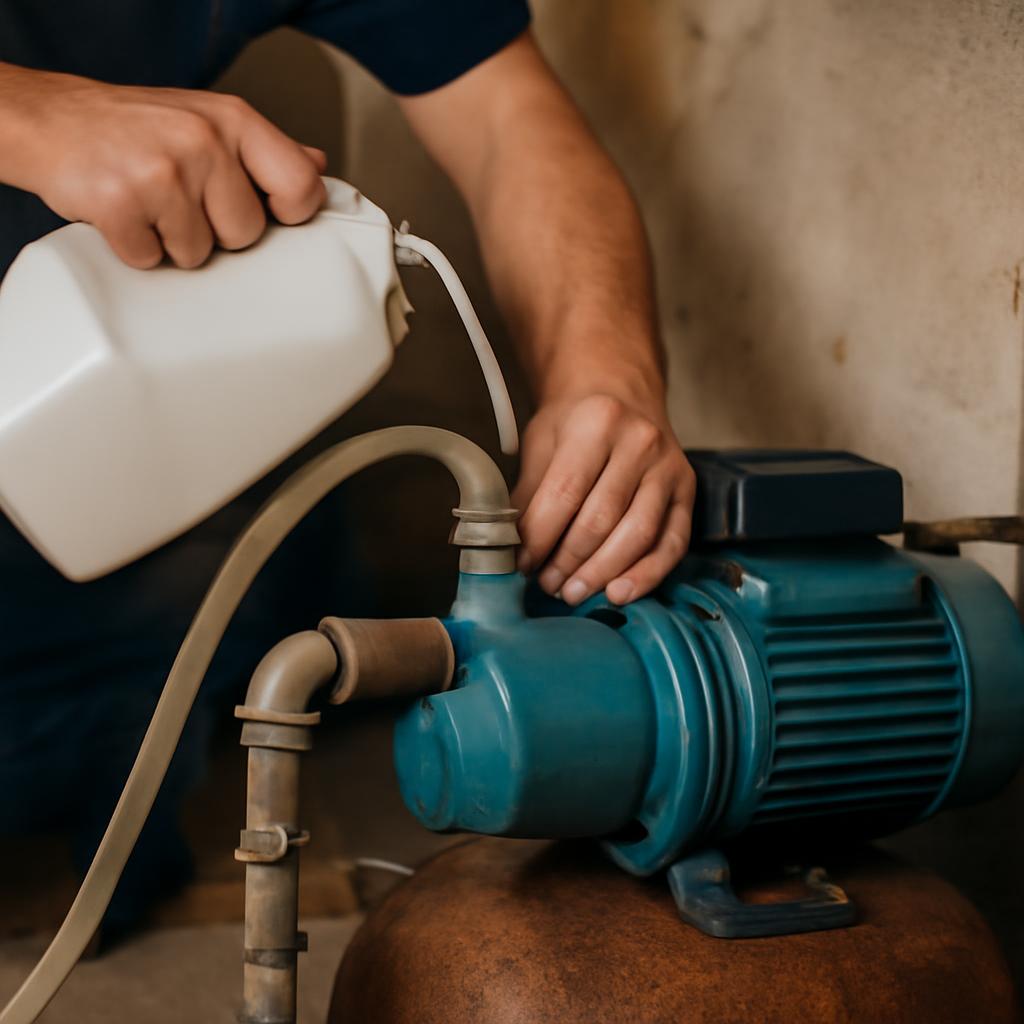
For a shallow jet pump, turn off power and add clean water until it stays at the priming port. Falling water suggests drain-back, not a one-time air pocket.
If your well pump is running but no water is reaching the house, the pump may have lost prime. In practical terms, priming means filling the pump housing and suction line with water so the pump can push air out, create suction, and start moving well water again. That is the common DIY fix for an above-ground jet pump after a shutdown, plumbing work, or a brief air intrusion. (NightOwl Monitoring)
Just as important, lost prime is often a symptom rather than the real problem. A shallow well jet pump may lose prime because of a suction-side air leak, a failing foot or check valve, a low well level, or another fault that lets air into the system or lets water drain back out. (NightOwl Monitoring; Prime Plumbing & Drains)
This guide is intentionally narrow: it covers the most common homeowner case, an above-ground shallow well jet pump. If you have a submersible pump or a deep-well jet system, the diagnosis and priming procedure may be different enough that model-specific instructions matter.
What Is Pump Priming and When Is It Needed?
Priming is the process of replacing trapped air in the pump and suction line with water so the pump can develop suction again. Above-ground jet pumps depend on water already being in the pump body. If that space is full of air, the pump may run, but it cannot pull water from the well the way it should.
Common situations that can cause lost prime include:
- a power outage or shutdown that leaves the system sitting idle
- a low well water level that allows the pump to pull air
- loose, cracked, or poorly sealed suction piping that lets air in
- a foot valve or check valve that no longer holds water in the line
- a new installation, recent repair, or long period of inactivity that introduces air into the system (Haller Enterprises)
The signs are usually straightforward: the pump runs but no water arrives, faucets spit air or sputter, and pressure does not build normally. (Haller Enterprises)
A useful homeowner-level distinction is when the problem shows up:
| Pattern you notice | More likely issue | What that suggests |
|---|---|---|
| Pump loses prime after sitting unused | Drain-back through a bad foot/check valve or a suction-side leak | Water is not staying in the pump and suction line |
| Pump loses prime mainly during heavy demand | Low well yield or drawdown | The system may be pulling air when water level drops under load |
That split is not a complete diagnosis, but it is a helpful starting point. It is consistent with the troubleshooting guidance on drain-back and low water level, and with an example of heavy-use-only prime loss discussed on Home Improvement Stack Exchange. (Home Improvement Stack Exchange)
Which Well Pumps Need Manual Priming?
The clearest manual-priming case is the shallow well jet pump. It sits above ground and pulls water up using suction, so it commonly needs to be filled with water after losing prime. (Dultmeier)
A submersible well pump is different. It sits underwater in the well and pushes water upward, so it generally does not require manual priming the way an above-ground jet pump does. If a submersible system stops delivering water, the usual next checks are power, controls, water level, or pump condition rather than filling a priming port. (Dultmeier)
Deep-well jet pumps sit in the middle. They may also require priming, but they are not a good place for generic advice. Dultmeier notes that shallow-well jet systems typically use one pipe, while deep-well jet systems often use two pipes with a down-well ejector arrangement. NightOwl also cautions that deep-well jet systems may need model-specific instructions. If you have a two-pipe setup or are unsure what type of jet pump you have, use the manual instead of assuming the shallow-well steps are identical.
Depth matters because shallow jet pumps have practical suction limits. Dultmeier describes shallow-well jet pumps as typically suitable for wells up to about 25 feet. If the water level is deeper than that, a correct shallow-jet priming procedure may still fail because the pump type is the wrong match for the lift.
One more caution: self-priming does not mean dry-starting forever. Sources agree that self-priming jet pumps still need water in the casing at startup and can still lose prime because of air leaks, drain-back, or a dry source.
Tools and Materials for Priming
You do not need a large toolkit, but a few basics make the job much easier. Across the service and supplier guides, the usual list includes:
- wrench or pliers for the priming plug
- screwdriver if your pump or fittings require one
- bucket, hose, or funnel to add water
- flashlight
- towels or rags for spills
- PTFE thread seal tape (often called Teflon tape) if threaded fittings need to be resealed (Sameer Appliances)
The most important supply is clean water. The consistent instruction is to fill the pump housing until the water remains at the top of the priming port or slightly overflows, which indicates you have displaced most of the trapped air.
How much water does that take? There is no single amount for every system. Prime Plumbing says residential pumps often need several gallons, while Haller suggests having 5 to 10 gallons available as a practical prep amount. Treat that as a planning number, not a universal requirement. Pump size, line length, and how much of the suction side has drained down all affect the amount needed.
If your suction run is long or the system is stubbornly air-bound, RC Worst notes that a hand primer pump can help.
Safety Precautions Before Priming
Start by shutting off power at the breaker. That is the clearest and most consistent safety instruction in the evidence, because priming involves working around both water and electrical equipment.
If the system is pressurized, relieve pressure before opening fittings. If the pump has been running, let hot components cool first.
Use clean water only. Dirty water can introduce debris, clog valves, and create another problem while you are trying to fix the first one.
Gloves are sensible if you have them. Also, do not force fittings. Haller specifically warns that overtightening can crack plastic parts or damage threads.
Finally, do not let the pump keep running dry while you experiment. Jet pumps rely on water in the housing. Running without it can overheat the pump and damage seals or other internal parts.
Step-by-Step Guide to Priming a Shallow Well Jet Pump
If you have a typical above-ground shallow well jet pump, this is the standard homeowner procedure supported across the evidence.
1. Turn off power and relieve pressure. Switch off the breaker before touching the pump. If your setup holds system pressure, relieve it before removing the priming plug.
2. Locate and remove the priming plug. On most jet pumps, the priming plug is on top of the pump housing or on a tee directly above it. Remove it carefully with the correct tool so you do not damage the plug or the threads.
3. Fill the pump with clean water until it is completely full. Pour water slowly into the priming port until the housing is full and the water level stays at the top or slightly overflows. This is the actual priming step: you are replacing air with water so the pump can create suction again.
Pay attention to what the water does while you fill. If it immediately drains back down instead of staying near the top, that points to a system that is not holding water. The common causes named in the evidence are a suction-side leak or a foot/check valve that is failing to hold the water column in place.
4. Reseal the plug securely. Reinstall the priming plug and tighten it enough to prevent air leaks. If the fitting is threaded and needs resealing, use fresh PTFE tape. Secure matters here, but over-tight is not better. (Sameer Appliances)
5. Restore power and check for steady water flow and pressure. Turn the breaker back on and let the pump start. Open a nearby faucet and watch for steady water flow instead of spurting air. Running a faucet helps purge remaining air from the house side of the system and makes it easier to tell whether normal operation is returning.
If the flow still sputters badly or the pump does not pick up water, shut it back off and repeat the fill once more. Do not keep letting it run dry in the hope that it will recover by itself. If a careful second attempt fails, move to troubleshooting rather than repeating the same dry restart over and over.
Priming with a Pressure Tank or After Inactivity
A pressure tank does not change the basic priming job. You are still priming the pump housing, not the tank itself. The practical startup advice is to prime the pump, then leave a faucet open while the system restarts so trapped air can purge from the house side.
After a long outage, seasonal shutdown, or extended period of inactivity, pay close attention while filling through the priming port. If the water level falls quickly, that suggests drain-back rather than a one-time air pocket. In other words, the pump may not just need priming; it may be losing the water column between uses.
The first restart after inactivity is also when early warning signs matter most. If the pump takes unusually long to recover, the water remains airy, or pressure falls off again soon after a successful prime, that points away from a simple reset and toward an underlying leak, valve issue, or water-supply problem.
Troubleshooting If the Pump Won’t Prime
If you filled the pump properly and it still will not catch or hold prime, the goal is to separate a simple air problem from a deeper system fault. The safest homeowner approach is to focus on visible, accessible clues.
1. Check for suction-side leaks
A jet pump cannot maintain suction if air is entering anywhere between the well and the pump. The recurring suspects in the evidence are loose fittings, cracked suction piping, worn seals, and a leaking priming plug. Start with the parts you can actually inspect: recently disturbed threaded joints, exposed pipe runs, the plug you just removed, and any visible cracks or looseness.
2. Watch for failed foot or check valve behavior
If water drains back out while you are filling through the prime port, multiple sources point to a foot valve or check valve that is not holding water in place. Sameer Appliances notes the purpose directly: the suction-side check valve prevents backflow and loss of prime. A valve problem is especially likely when the pump can be primed temporarily but loses water again after sitting.
3. Consider whether the well level is too low
If the system loses prime mainly during heavy use, low water level or well drawdown becomes a stronger possibility. Prime Plumbing lists low well water level as a common cause, and the Stack Exchange example describes a deep-well jet system that lost prime during overlapping household demand but held pressure when idle. That pattern does not prove drawdown by itself, but it does make water-supply limits more plausible than a simple stationary leak. (Home Improvement Stack Exchange)
4. Check for clogs or trapped air
NightOwl includes clogged lines among the reasons a pump may not catch prime. RC Worst and Haller also note that air pockets can defeat a normal refill. If the housing is full but the system still acts air-bound, trapped air elsewhere in the suction side may be part of the problem. That is still a clue to diagnose, not a reason to keep dry-running the pump.
5. Verify the pump type and depth assumptions
If you believe you have a shallow-well jet pump but the actual water lift is beyond shallow-jet capability, repeated priming attempts may never solve the problem. Dultmeier places shallow jet pumps at roughly up to 25 feet and distinguishes them from deeper two-pipe jet systems and submersibles. Before assuming the pump is bad, confirm that the pump type actually matches the well configuration.
6. Stop before dry-running causes damage
If the pump is still not delivering water after a careful restart attempt or two, shut it down. Repeated dry operation can overheat the pump and damage seals or internal parts. At that point, more runtime is not productive troubleshooting.
A practical rule of thumb for homeowners is this: if you can prime it once and it stays fixed, you probably had a one-time air loss. If you can prime it only temporarily, or not at all, you are no longer dealing with “just priming.”
Preventing Lost Prime and When to Call a Pro
Preventing repeat prime loss mostly comes down to keeping the suction side sealed and making sure water cannot drain backward out of the system. That means checking accessible connections for looseness, resealing threaded fittings when needed, and making sure the foot or check valve is doing its job.
Pay attention to usage patterns too. If the system behaves normally at rest but loses prime during overlapping loads such as laundry, dishes, showers, or a running toilet, that can point to a well-yield or drawdown problem rather than poor priming technique. Limiting simultaneous demand may reduce the immediate symptom, but it does not fix the underlying supply limit.
Call a professional when:
- the pump repeatedly loses prime after you restore it once or twice
- water drains back rapidly while filling through the priming port
- the problem shows up mainly during heavy household demand
- you have a deep-well jet pump, a two-pipe system, or you are not sure what type of pump you have
- you suspect electrical, mechanical, buried piping, or down-well component failure rather than a simple air issue
If chronic prime loss keeps happening on an above-ground jet system, a longer-term conversation with a well professional may include whether a submersible pump is a better fit. Dultmeier’s comparison is the key reason: jet pumps sit above ground and are more prone to priming and air-leak issues, while submersibles operate underwater and do not require manual priming. That does not make submersibles the automatic answer for every property, but it is a reasonable discussion when prime loss is recurring.
The bottom line is simple. For a shallow well jet pump, priming is often a manageable DIY reset: fill the housing, purge the air, restart carefully, and verify steady flow. But repeated loss of prime should be treated as a warning sign, not a routine nuisance. In most cases, it points to a leak, a bad valve, or a water-supply issue that needs a real diagnosis before the pump is damaged.
Do submersible well pumps need priming?
Usually no. Submersible pumps sit below the waterline and push water upward, so they generally do not require the manual priming used on above-ground jet pumps. If a submersible system stops delivering water, look first at power, controls, water level, or pump condition rather than trying to fill a priming port.
How much water does it take to prime a jet pump?
There is no fixed amount for every system. The consistent instruction is to add clean water until the pump housing is full and the level stays at the top or slightly overflows. Many residential systems need several gallons, and Haller suggests having 5 to 10 gallons available as a practical prep amount. The real amount depends on pump size, suction-line length, and how much of the system has drained down.
What if water drains out of the prime plug while filling?
That usually means the system is not holding water where it should. The most common explanations in the evidence are a failing foot valve, a bad check valve, or another suction-side leak that allows drain-back. A pump in that condition may re-prime temporarily, but it will likely lose prime again until the leak or valve problem is repaired.
Can I run the pump without priming?
No—not intentionally. Running a jet pump dry can overheat it and damage seals or other internal parts. If the pump does not pick up water after a careful priming attempt, shut it off and troubleshoot instead of letting it continue to run dry.
Why does my pump lose prime during heavy use?
If the pattern appears mainly during heavy demand, the well may be getting overdrawn so the water level drops enough for air to enter the system. That is different from a pump that loses prime while sitting idle, which more often suggests drain-back through a valve problem or a suction leak. Heavy-use-only prime loss is a strong reason to have the well yield and overall system configuration evaluated.
Sources
- Third Party · How To Prime A Pump For Well Water - NightOwl Monitoring.
- Third Party · How to Prime a Well Jet Pump.
- Third Party · How to Prime a Jet Pump | Priming a Jet Pump.
- Third Party · How to Install and Prime a Shallow Well Jet Pump.
- Third Party · Jet Pump vs Submersible Pump: How to Choose the Right One.
- Third Party · How to Prime a Well Pump: A Step-By-Step Guide - Call Now.
- Third Party · water - Well pump keeps losing prime - no leaks in system - Home Improvement Stack Exchange.