
Protect Your Pipes: How Stop and Waste Valves Prevent Freezing in Outdoor Lines
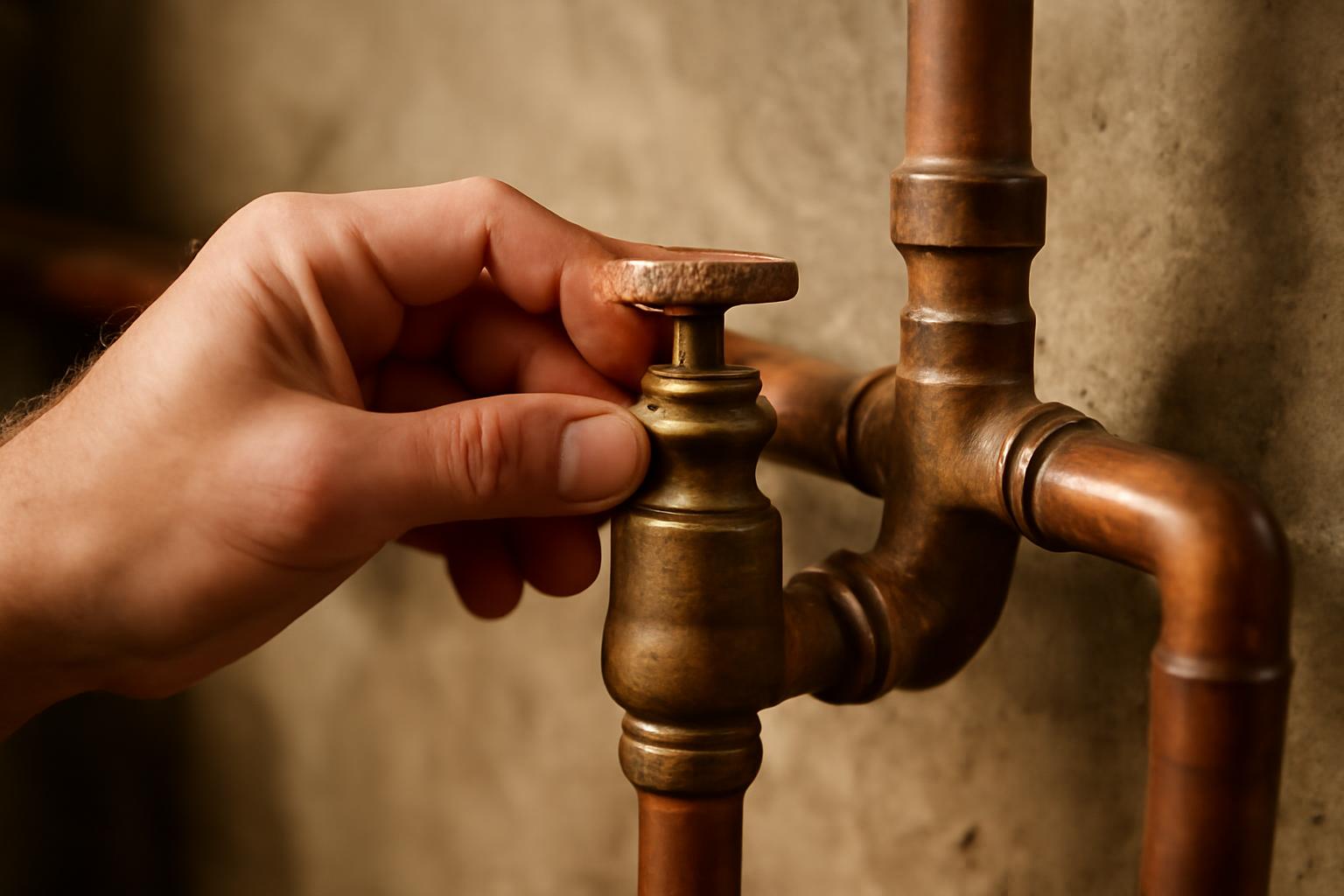
A brief drain-down is normal after shutoff. Continuous pressurized water from the waste side is a backward-installation symptom.
If you live in a freezing climate, a stop and waste valve is one of those plumbing parts that matters most when you forget it exists. Its job is simple: shut off water to an exterior branch, then let the isolated section drain so standing water is less likely to freeze and burst pipe.
That basic function is easy to understand, but the name gets used for more than one kind of valve. Some homeowners mean the buried irrigation shutoff operated with a long T-handle from a yard box. Others mean an indoor shutoff on the branch feeding an outdoor faucet, with a small drain or waste feature built in. The important common thread is the same: stop the supply, then waste or drain the downstream water.
A stop and waste valve can only protect the section it actually isolates and only if the downstream water can really escape.
What Is a Stop and Waste Valve?
At the broadest level, a stop and waste valve is an in-line shutoff valve with a drain feature. NIBCO describes stop and waste valves as multi-purpose in-line shutoff valves for low-pressure domestic potable water systems, which is the clearest manufacturer-level definition in the evidence pack. NIBCO
In irrigation work, the term is commonly used for the buried “sprinkler main shutoff” that lets you turn off water to the sprinkler system without shutting off the whole house. Contractor guidance from Sprinklers Utah describes that version as a valve installed on the irrigation takeoff line, often several feet below grade and operated with a long T-bar.
What separates a stop and waste valve from an ordinary shutoff is the drain path. A standard shutoff stops flow, but it usually leaves the downstream line full until you open another drain point. A stop and waste valve is meant to isolate the branch and open a waste path so trapped water can leave the isolated section.
In many buried irrigation installations, that discharged water drains into gravel and surrounding soil. In many indoor hose-bib setups, the waste feature is used to empty the branch feeding the outdoor faucet before winter. Same principle, different location.
A quick terminology check helps keep those versions straight:
| What you have | Usual location | Main purpose |
|---|---|---|
| Buried irrigation stop and waste valve | Yard or valve box, below grade | Isolate sprinkler supply and drain the main irrigation branch |
| Indoor shutoff with drain/waste feature | Basement, crawlspace, utility room | Shut off and drain branch feeding an exterior faucet |
| Ordinary shutoff valve | Anywhere on a supply line | Stop flow only; separate draining step usually needed |
| Frost-free sillcock | At the exterior faucet itself | Move the shutoff seat back into heated space so the faucet can drain after use |
That distinction clears up a lot of conflicting advice.
How Does a Stop and Waste Valve Work?
The operating idea is straightforward: when the valve is turned off, the supply closes and the waste port opens. An irrigation guide in the evidence pack says that waste port is typically small—often about 1/8 inch—and explains the basic cycle as shut off supply, open waste port, drain downstream water into gravel or soil, then close the waste port again when the valve is reopened in spring. Sprinkler System Calculator
In real systems, though, the valve only drains what can actually empty. Water needs a path out, and air usually needs a path in. On a buried irrigation branch, it means the isolated water drains toward the valve’s waste opening or another low point in the system.
You will also run into several operating styles in the market. Product listings and guides commonly show quarter-turn ball-and-waste valves, multi-turn gate or stop styles, and buried tee-handle versions operated from grade. Indoor supply-stop versions may be sold more like shutoff valves “with drain” than like the classic buried irrigation model. Ferguson
Flow direction matters because the internal seat is designed to see pressure from the correct side. In a plumber discussion about a stop-and-waste valve that delivered continuous pressurized water from the waste opening, multiple replies agreed that the waste side should drain the downstream piping when the valve is closed and that getting street pressure there points to reverse installation. Plbg.com
That leads to one of the best troubleshooting rules in this whole topic: off should mean supply shut, drain open, and downstream water running out only until the isolated section empties. If the waste side behaves like a live pressurized outlet, something is wrong with the installation or the valve.
Types, Sizes, Materials, and Specifications
There is no single residential stop and waste valve format. Supply-house listings show the category spread across common residential sizes such as 1/2 inch, 3/4 inch, and 1 inch, with materials including brass, bronze, forged brass, stainless steel, and occasional plastic. The same listings show end connections such as sweat, compression, threaded, flare, and barbed depending on the valve style and application. Ferguson
Retail listings widen that picture a little further. Lowe’s examples include brass push-to-connect, sweat, FIP, and quarter-turn stop and waste valves in 1/2-inch, 3/4-inch, and 1-inch sizes, which is useful for homeowners because it shows how many “same name, different connection” products are sold in ordinary retail channels. Lowe’s
For selection, start with the use case before the brand:
- Indoor potable branch to a hose bib: look for a valve clearly sold for domestic water use and matched to the branch pipe and connection style.
- Buried irrigation takeoff: look for a valve style intended for below-grade service, yard-box access, and seasonal draining.
- Simple service shutoff only: do not assume an ordinary shutoff can replace a stop and waste valve without losing the drain function.
- Short exterior faucet replacement: sometimes a frost-free sillcock is the better answer than adding or replacing an upstream drain valve.
Connection style matters just as much as nominal size. A 1/2-inch sweat valve is not interchangeable with a 1/2-inch compression valve. A threaded valve is not the same as a push-to-connect valve. Matching the new valve to the actual pipe material and existing joint type is what keeps a “simple swap” from turning into a much bigger repair.
For indoor potable applications, material and compliance matter too. NIBCO’s product family includes lead-free bronze and stainless options, with product examples showing 125 psi cold working pressure ratings on listed valves. That rating is a product specification, not a reading of your home’s actual water pressure. NIBCO
Where and How to Install a Stop and Waste Valve
Placement depends on what you are trying to protect.
For a buried irrigation system, the stop and waste valve is commonly installed on the sprinkler takeoff between the water meter side and the house entry side of the service line so the irrigation branch can be isolated without shutting off the house. Sprinklers Utah describes that setup as a compression tee cut into the main culinary line somewhere between the meter and the foundation, with the stop and waste running off perpendicular toward the sprinkler valves.
The goal is to isolate only the exterior run you want to empty, not the whole house.
Depth and drainage are central to the buried version. One irrigation guide gives rough example frost-depth ranges of about 24 to 36 inches or more in colder northern U.S. areas and about 12 to 18 inches in some southern areas, and it recommends installing the valve below local frost depth rather than copying a generic number. The same guide gives an example gravel base of about 12 to 18 inches deep, extending about 6 inches beyond the valve, so the waste water has somewhere to drain. Treat those as example installation details, not a substitute for local requirements. Sprinkler System Calculator
Orientation is the next big rule. If the valve body has a flow arrow, follow it. A DIY replacement guide for an outdoor-line shutoff emphasizes checking flow direction during installation and using two wrenches so you do not twist or stress the piping you are connected to.
A good installation usually includes:
- the right valve for the pipe material and connection style
- correct flow direction
- access for seasonal operation
- a real drainage path on the downstream side
One practical point homeowners often miss: a stop and waste valve is not a backflow preventer. Forum discussion around outdoor faucets and sprinkler-fed branches notes that hose connections and irrigation setups may also need vacuum breakers or other backflow protection, which is a separate code and safety issue from freeze protection. Terry Love Forum
As for the DIY line, accessible indoor replacements are usually the most realistic homeowner jobs. Digging up a buried irrigation main, cutting into the service line, or rebuilding an exterior takeoff near the meter is a different class of repair and is where many homeowners are better off calling a pro.
Signs of Problems and How to Diagnose
Most stop and waste valve problems fall into three buckets:
- the valve leaks
- the valve is installed backward
- the downstream line never fully drains
The most useful backward-installation symptom is simple: you shut the valve, open the waste side, and instead of a brief drain-down you get continuous pressurized water. In the plumber discussion cited earlier, that symptom was treated as evidence that the valve was installed in reverse and that pressure was reaching the wrong side of the internal seat. Plbg.com
That gives you a practical field test:
- Close the valve.
- Open the waste feature or drain point.
- Watch the flow.
Normal behavior: water drains from the isolated downstream side and then slows or stops. Abnormal behavior: a steady pressurized stream keeps coming.
Buried irrigation valves show failure in a few other recognizable ways. Sprinklers Utah points to steady water leaking from the pipe the T-bar goes down into, or a valve that becomes increasingly difficult to turn, as common replacement signs. Their guidance also describes the buried stop and waste valve as the main sprinkler shutoff that drains part of the branch line when closed.
That last point matters because homeowners often blame the wrong component. A stop and waste valve can drain only to the point the system allows. Terry Love Forum
The cleanest diagnostic sequence is:
- Confirm the valve actually shuts off supply.
- Confirm the waste side drains the downstream section rather than acting like a live outlet.
- Confirm the downstream piping has a path to empty completely.
Stop and Waste Valve vs. Frost-Free Sillcock
These products solve related winter problems, but they do it in different ways.
A stop and waste valve is an upstream shutoff-and-drain device. It is especially useful when you need to isolate and drain more than just the faucet body—such as a buried irrigation feed or a longer outdoor branch.
A frost-free sillcock moves the working shutoff seat back inside the heated wall space, so the exterior portion can drain after the faucet is shut off. Aquarius Home Services describes the frost-free design as locating the sealing point several inches inside the house rather than right at the outside wall.
In plain terms, choose a stop and waste valve when you need to protect a longer downstream run or a sprinkler branch, and choose a frost-free sillcock when the issue is mainly the faucet itself and a short wall-through branch. A frost-free faucet does not drain an entire irrigation line, and a buried stop and waste valve does not replace the faucet body.
A frost-free sillcock is also not foolproof. It still has to drain. Trade and forum sources repeatedly note two easy ways to defeat that design: install it without enough downward pitch to the exterior, or leave a hose attached so water cannot drain back out after use.
Whether a frost-free faucet also gets a separate interior shutoff varies. A long-running plumber discussion shows that some plumbers do not routinely install a separate shutoff for frost-proof faucets, while others prefer one or work in jurisdictions where a shutoff is expected. The safe takeaway is not “always yes” or “always no,” but that practice varies and local code decides. Plbg.com
So if you are deciding between the two, think in terms of what section needs draining.
DIY Replacement Steps and When to Call a Pro
A homeowner can sometimes replace a stop and waste valve, but the realistic DIY jobs are the accessible indoor ones: clear pipe material, known connection type, no buried service work, and no soldering if you are not equipped for it.
For an indoor branch replacement, the basic sequence is:
- shut off the main water
- open a low fixture and a higher fixture to drain pressure
- identify the old valve’s exact size and connection style
- remove the old valve without twisting nearby piping
- install the new valve in the correct flow direction
- restore water slowly and check for leaks
A DIY replacement guide for outdoor-faucet shutoffs recommends matching the replacement valve to the connection type already in the system and paying attention to the flow arrow on the new valve. It also notes that shutoffs serving outdoor lines should include a drain feature rather than being treated like an ordinary interior stop.
For threaded repairs, a plumbing forum discussion adds the practical details many homeowners actually need: use two wrenches, shut off and drain the system first, use thread sealant such as Teflon tape or pipe dope on new threaded joints, and use a penetrating oil like PB Blaster rather than ordinary spray lubricant on stubborn old fittings.
Your tool list for a modest indoor replacement is usually short:
- two adjustable wrenches
- bucket or towels
- replacement valve in the same size and connection style
- cleaning cloth or abrasive for copper if needed
- penetrating oil for stuck threaded parts
The biggest DIY mistake is assuming size alone tells you what to buy. It does not. “1/2 inch” only tells part of the story. You still need to know whether the valve is sweat, compression, FIP, push-to-connect, or something else.
Call a pro when any of these are true:
- the valve is buried on an irrigation main
- the repair involves the main service line
- the piping is badly corroded or hard to identify
- you need soldering or press tools you do not have
- the old assembly has no safe backup point for wrenching
- the replacement valve category you need is sold through supply channels with purchase restrictions or certification requirements in some listings Ferguson
Seasonal Operation and Maintenance Tips
A stop and waste valve only helps if you actually use it the right way at the right time.
In fall, close the valve before sustained freezing weather and make sure the downstream section really drains. For irrigation systems, shutting off the buried stop and waste valve helps drain the main branch, but Sprinklers Utah also notes that this does not guarantee every sprinkler line is empty; a blowout may still be needed to remove remaining water from the rest of the system.
In spring, reopen the valve slowly and watch what happens. You want normal flow, no stem leakage, no persistent seepage at the waste point, and no new stiffness in the handle or T-bar operation.
For long life, accessibility and drainage matter. Keep buried valves in a box you can reach, keep the drain area from turning into a mud trap, and do not leave the system half winterized. Sprinklers Utah says a commercial-grade buried stop and waste valve may last 20 to 30 years or more, but that should be treated as field experience from a contractor page, not a universal service-life promise.
A simple yearly checklist helps:
Each fall - close the valve - open the downstream faucet or drain point - confirm water actually drains - blow out irrigation lines if the system calls for it - leave the system in its proper winter position
Each spring - reopen slowly - check for leaks - make sure the valve turns smoothly - confirm normal flow downstream - fix seepage early rather than waiting for the next freeze season
If a buried valve leaks from the operator tube, becomes hard to turn, or behaves unpredictably during drain-down, replacement is often smarter than trying to nurse it through another winter.
Does pressure water from the waste port mean backwards installation?
Usually, yes. In the plumber discussion cited earlier, the expected behavior was for the waste side to drain the downstream piping after the valve was closed. Continuous pressurized water from that opening instead pointed to reverse installation.
Are stop and waste valves suitable for indoor potable water use?
Some are. Manufacturer listings from NIBCO describe stop and waste valves as in-line shutoff valves for low-pressure domestic potable water systems and show lead-free options in the product family. That does not mean every valve sold under the term is appropriate for every indoor potable application, so check the actual model, material, and listing before installing it on drinking-water piping.
What is the typical frost line depth for burial?
There is no single national depth. The irrigation guide cited earlier gives rough examples of about 24 to 36 inches or more in colder northern climates and about 12 to 18 inches in some southern areas, but it also says to verify local requirements before installation. Sprinkler System Calculator.
Do frost-free faucets require a separate stop and waste valve?
Not always. Plumber discussion in the evidence pack shows mixed practice: some do not routinely install separate shutoffs for frost-proof sillcocks, while others prefer them or work under rules that expect them. Treat it as a jurisdiction-and-layout question, not a universal rule.
What does 125 psi on the valve indicate?
It indicates a pressure rating, not your home’s measured water pressure. In the outdoor-faucet shutoff discussion, the “125” marking was explained as PSI, and manufacturer product examples in this category use 125 psi cold working pressure as a valve specification.
Used correctly, a stop and waste valve is a very practical piece of freeze protection. The key is to match the valve to the job, install it in the correct direction, make sure the downstream line can truly drain, and stay realistic about when the repair has crossed from straightforward indoor plumbing into buried service-line work.