
Fixing Sink Leaks in New Jersey Homes: Spot the Cause, Try Safe DIY, Know When to Call for Help
A sink leak in NJ usually falls into one of two buckets: a visible, fairly simple problem at a connection, seal, or trap; or a leak that only looks simple…
By Miles Carver ·
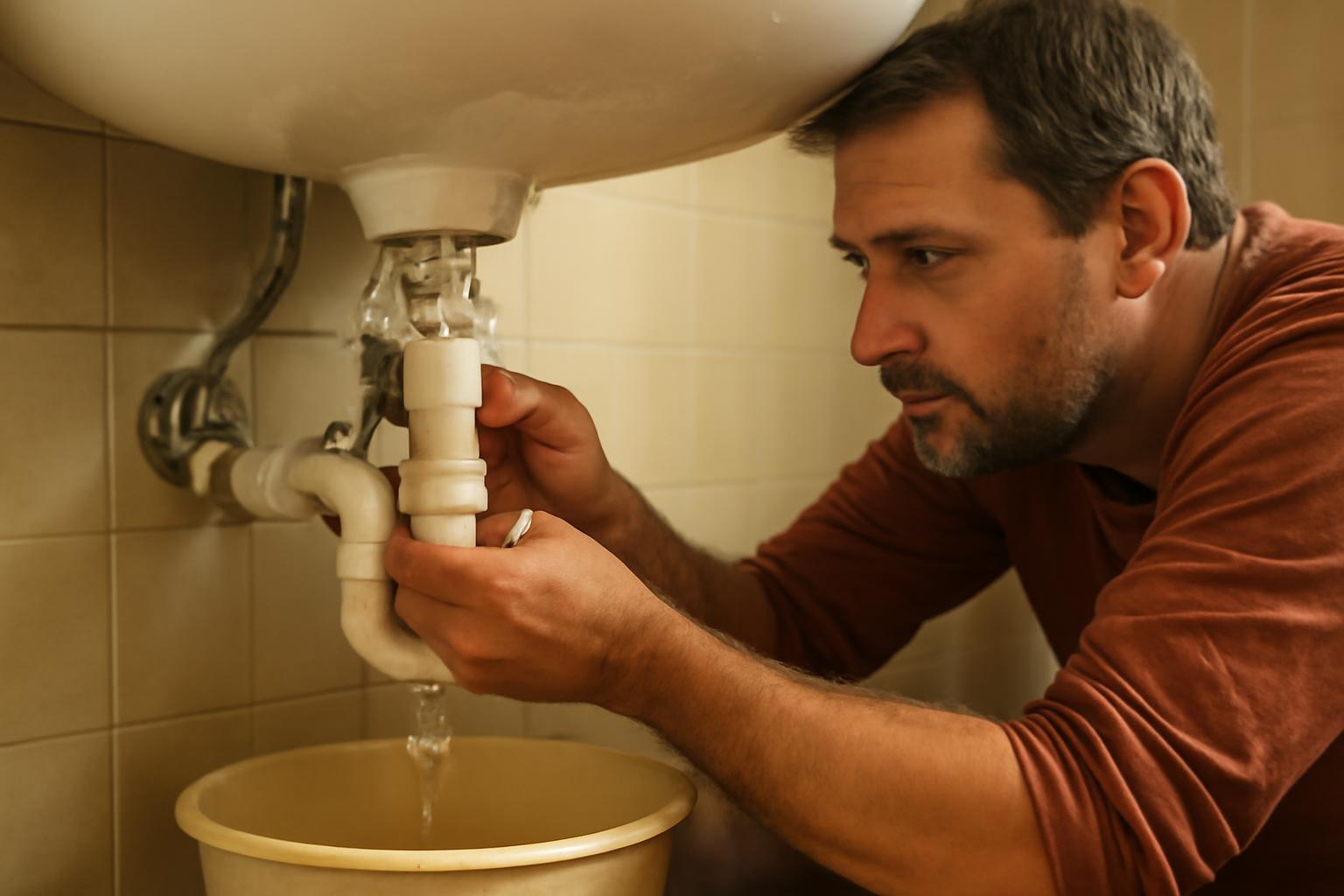
A sink leak in NJ usually falls into one of two buckets: a visible, fairly simple problem at a connection, seal, or trap; or a leak that only looks simple until you notice swelling cabinet panels, recurring dampness, or drainage symptoms that point to something bigger.
The good news is that many under-sink leaks can be narrowed down quickly if you stop guessing and work in order. First, determine whether the leak happens only when water runs or even when the sink is off. Next, separate supply-side problems from drain-side problems. Then decide whether this is truly safe DIY territory or whether paying for diagnosis now is cheaper than repairing water damage later.
This guide is for homeowners who want a realistic, low-drama approach: how to spot the likely cause, what you can safely test yourself, where to stop, and how to budget for professional help when the job is no longer small.
When to Call a Plumber: The Drain Symptoms That Mean Stop DIYing: Most drain clogs are DIY-fixable in under 30 minutes. These seven symptoms are the exceptions — signs of main-line, sewer, or structural problems that get worse if you wait.
Common Causes of Sink Leaks Under Kitchen or Bathroom Sinks
One of the fastest ways to narrow the problem is to ask a simple question: does the cabinet get wet even when no one is using the sink? If yes, the leak is more likely tied to a part that stays pressurized all the time, such as a faulty shutoff valve, corroded pipe, or aging seal or gasket. If the leak appears only when you turn on the faucet, loose connections, damaged seals, cracked fittings, and leaking supply lines move higher on the list, as summarized in this general under-sink leak guide from AZ Quality Plumbing.
Not every under-sink leak is on the water-supply side. Drain-side failures are extremely common and are often missed because people focus on the faucet first. A sink can leak from the P-trap, drain seal, slip-joint connections, corroded trap parts, or the drain assembly itself; Angi’s homeowner guidance specifically lists worn washers, gaskets, O-rings, clogged or corroded P-traps, supply-line leaks, and loose drain seals among the common causes of under-sink leaks (Angi).
Material age changes the risk. Older NJ-focused plumbing guidance warns that aging galvanized steel and older copper are more vulnerable to corrosion, weakened joints, and hidden leaks than newer materials, which is one reason a “small drip” under an older sink deserves quicker attention than many homeowners give it (Plumb-Rite).
That does not mean every old house is one repair away from a major project. It does mean the right mindset is caution rather than confidence. A loose slip nut on a newer PVC trap may really be a quick fix. A similar drip under an older sink with stained tubing, corroded shutoffs, or mixed repair parts may be only the visible part of the problem.
Signs of a Sink Leak and Related Drain Problems
Those are classic warning signs of an under-sink leak rather than ordinary condensation or a one-time splash, as summarized in Tennessee Standard Plumbing’s consumer guidance on leaking sinks (Tennessee Standard Plumbing).
Drain symptoms matter because they help separate a leak problem from a clog problem—or show that you may have both at once. Slow draining, gurgling, and foul odors are all warning signs associated with drain trouble near the fixture, including buildup from grease, soap scum, and hair; NJ plumbing guidance aimed at homeowners also notes those symptoms as common early signs that a drain needs attention (Zeek Plumbing).
As a homeowner rule of thumb, one slow sink usually points to a local problem near that fixture, while several slow fixtures on the same floor at the same time suggest the issue is larger than that one sink. DrainFinder’s symptom-first homeowner guidance makes the same distinction and treats a single slow drain as more likely local, while multi-fixture slowing is a stop-and-reassess sign rather than a cue to keep forcing tools into the sink line (DrainFinder’s drain diagnosis guide).
For kitchen sinks especially, the first close look should be around the trap, slip joints, and drain assembly.
It also helps to watch the sequence of symptoms. If the sink is dry until you fill the basin and release the stopper, that points strongly toward the drain side. If the cabinet gets wet even when the sink has not been used for hours, supply-side components deserve more suspicion. If the leak shows up with bad odors, recurring slowdowns, or a second fixture acting up, widen your view before you buy parts.
Safe First Steps: Diagnose and Triage a Sink Leak Yourself
Start by gaining control. Shut off the hot and cold valves under the sink if they work, remove everything from the cabinet, and dry the entire area so you can tell old moisture from a fresh drip. Then test in short stages instead of running everything at once: first the faucet, then the drain, and then any disposal-related connection. Angi’s homeowner leak guidance recommends starting the same way—turn off the water supply, clear the area, identify the exact drip point, and test methodically rather than guessing (Angi).
Use simple tools before strong force. A flashlight, dry paper towels, and a small bucket are usually more helpful at the beginning than a wrench. Wrap a dry towel around one suspect connection at a time, run a short test, and look for the first wet point. That tells you much more than the puddle at the cabinet bottom.
If the source is an accessible connection, a careful tightening may solve it. This is most reasonable for a clearly loose slip-joint nut or a fitting that has backed off slightly. If a washer, gasket, or O-ring is visibly deteriorated and easy to match, replacing that one part is also a reasonable DIY move. What you should not do is force a frozen shutoff, lean hard on corroded tubing, or overtighten plastic trap nuts until they distort or crack.
If the sink is slow as well as wet, start with the trap area rather than jumping straight to aggressive drain-clearing tools. DrainFinder’s homeowner guidance favors a local, symptom-based approach: treat the trap and nearby branch line first, use only simple tools you can control, and stop when resistance or symptoms suggest the problem extends beyond that sink (DrainFinder).
After any change, retest in stages. Run the faucet and watch the supply side. Then fill the basin and release it to stress the drain side. If the sink has a disposal, run enough water to reproduce the original symptom. Wipe everything dry again and check back later. A leak that vanishes for three minutes and returns an hour later is still a leak.
DIY remains reasonable only while the problem is visible, isolated, and easy to stop if something goes wrong. Once the leak is hidden, the shutoffs do not fully hold, the drip returns after a simple repair, or the setup looks old and fragile, the job is no longer the cheap, controlled kind of DIY that usually makes sense. HomeRepairCalc’s planning guidance puts it plainly: DIY is cheaper only when the repair is simple, visible, controlled, and low-risk; hidden leaks, failed shutoffs, and water-damage risk are the point where professional help is usually the better financial choice (HomeRepairCalc).
When to Call a Professional Plumber for Your Sink Leak
Call a professional when the leak source is hidden, hard to reach, actively worsening, or already causing visible damage. Recurring drips after a “fix,” cabinet swelling, mildew smell, soft cabinet flooring, and moisture that seems to be tracking behind the cabinet are all signs that the problem needs more than trial and error. Under-sink leaks can lead to mold, mildew, cabinet damage, and even subfloor damage if they are not repaired thoroughly (Angi).
You should also stop DIY when the problem no longer looks local to that sink. If another fixture starts draining slowly, if sewage backs up anywhere, or if water is showing up where it should not—such as near the foundation—the safer move is to stop diagnosing from the sink cabinet and have the system evaluated. That is especially true if the sink leak and the drain symptoms seem connected.
There is also a practical threshold that has nothing to do with skill: access. A leak that disappears behind the cabinet back, inside the wall, below the floor, or around a disposal connection you cannot clearly inspect is not a responsible DIY repair from the visible end of the drip.
Once you decide to call, make the call more useful.
Ask a few practical questions too: Is there a separate trip or diagnostic charge? Is pricing hourly or flat-rate? Are common under-sink parts such as trap fittings, shutoffs, and supply lines usually handled on the first visit? Will you get a quote before any non-emergency replacement work starts? For an obvious local drip, one solid quote may be enough.
The goal is not to interview a dozen companies. It is to move from “I have water under the sink” to a clearer description of what is happening, what the likely scope is, and what you are actually being charged for.
Average Costs for Sink Leak Repairs in New Jersey
For budgeting in New Jersey, the most useful baseline is statewide category pricing rather than a single universal “sink leak repair” number. ProMatcher reports New Jersey residential plumbing contractors at $92.99 per hour plus parts and materials, with a reported range of $87.13 to $98.85. The same report lists faucets, fixtures, and pipes installation or repair at about $200 fixed fee on average, with a reported range of $100 to $300, or about $87.50 per hour plus parts with a range of $80 to $95. For clearing a drain clog or blockage for a sink, tub, or shower, the same statewide report lists an average fixed fee of $164.91, with a reported range of $148.27 to $181.54 (ProMatcher New Jersey plumbing cost report).
Those numbers are useful because real sink-leak jobs often overlap categories. A plumber may spend time diagnosing the source, replace a supply line or trap fitting, and then clear a nearby clog if poor drainage contributed to the leak. In other words, the final bill is usually built from scope, not from the phrase “sink leak” alone.
For very simple homeowner work, the math is different. HomeRepairCalc’s planning ranges put a basic sink-trap cleaning at about $0 to $50 for DIY and a simple sink-clog attempt at about $0 to $60, while comparable professional visits often begin around $130 or more once diagnosis, travel, and minimum service charges are involved (HomeRepairCalc).
What moves the price up? Usually access, old shutoff valves, concealed leak paths, the need to replace parts instead of tightening them, and signs that the job is really a broader drain issue rather than a local sink issue.
That is why statewide averages are best used as a planning baseline, not a promise. A visible trap drip is one kind of job. A corroded shutoff, hidden leak behind the cabinet, or recurring drain problem is another. Ask for pricing based on the diagnosed cause, not just the symptom you first noticed.
Risks of Ignoring Sink Leaks in NJ Homes
The first cost of delay is usually not the plumbing bill. It is cabinet damage. Under-sink cabinet bottoms—especially particleboard panels—can swell quickly when they stay damp. Shelf liners trap moisture. Caulked corners hide it. And because many people do not open that cabinet just to inspect it, a steady drip can keep working in the dark until there is odor, staining, or visible warping.
Under-sink leaks also create conditions that support mildew and mold and can damage material below the cabinet. Angi’s homeowner guidance specifically warns that leaks in this area can damage cabinets and subflooring if they are not addressed promptly and thoroughly (Angi).
In older homes, the downside is often bigger because the leak may be a symptom of aging plumbing rather than a single bad seal. Guidance aimed at older Northeastern homes notes that galvanized steel, cast iron, and older copper are more prone to corrosion and weakening over time, and that hidden leaks may show up as stains, musty odors, sagging materials, or rising utility bills before the failure point becomes obvious (Harris Plumbing).
Delay also makes hidden leaks more expensive. HomeRepairCalc’s planning guidance places a pipe leak inside a wall at roughly $450 to $1,500+ for professional repair, before you add drywall, paint, cabinet replacement, or flooring restoration (HomeRepairCalc).
Even when the root problem is drainage, waiting can keep the cabinet leak in rotation. A weak trap connection or drain seal may only seep when the sink drains slowly. If the buildup remains, the same joint keeps getting stressed, the leak keeps returning, and the homeowner ends up repairing symptoms instead of the cause.
There is also the less dramatic but still real cost of water waste. A small persistent drip may not look urgent day to day, but over time it can show up in higher water bills on top of the cabinet-damage risk. The larger point is simple: a sink leak rarely gets cheaper by being ignored.
Preventing Sink Leaks and Drain Issues in New Jersey
Most prevention is basic housekeeping, which is exactly why it works. Use sink strainers where they make sense, avoid sending grease and heavy food sludge into kitchen drains, and pay attention when a sink starts draining slowly instead of hoping it clears itself. NJ plumbing guidance on drain problems identifies slow drains, odors, and buildup from grease, soap scum, and hair as early warning signs worth addressing before they turn into backups or recurring leak issues (Zeek Plumbing).
Routine visual inspection is one of the cheapest forms of prevention. A few times a year, open the cabinet and look for darkening, mineral residue, swollen cabinet flooring, corrosion around shutoffs, moisture on supply tubes, or dampness around the trap and drain connections. That habit matters even more in older homes, where age-related deterioration can turn a minor seep into a larger repair faster than homeowners expect.
Older homes benefit from a more deliberate inspection habit. Guidance focused on older Northeastern plumbing systems recommends routine professional inspections because aging materials, previous repairs, and hidden leak paths are easier to miss and more expensive to ignore once moisture has been sitting for a while (Harris Plumbing).
When you do try DIY drain maintenance, stay conservative. DrainFinder’s homeowner reference guidance treats chemical cleaners as a poor answer for kitchen grease problems and describes enzyme products as maintenance tools rather than fast fixes for an active clog. The practical takeaway is simple: use mild, local maintenance where appropriate, but do not turn a slow sink into a broken fitting by getting aggressive with the wrong tool or product (DrainFinder’s drain guidance).
The payoff is not just avoiding a leak. It is catching a problem while it is still visible, controlled, and relatively cheap to manage. A loose connection found early may need nothing more than a careful retightening or a small replacement part. A leak discovered after months of dampness may involve a service call, damaged cabinetry, and repair work beyond the plumbing itself.
That is also why prevention should stay focused on what actually matters under a sink: keeping drains moving normally, watching shutoffs and supply lines, inspecting trap connections, and checking the cabinet floor. The goal is not to become your own plumber. The goal is to spot trouble before it gets expensive.
Can I fix a simple sink leak myself in NJ?
Yes, sometimes. If the leak is clearly visible, easy to isolate, and limited to something like a loose slip-joint nut, an obvious trap washer, or a simple accessible gasket, a careful DIY repair is reasonable.
The safe approach is to shut off the water, dry the cabinet completely, identify the exact drip point, make one controlled repair, and retest. Where homeowners get into trouble is trying to DIY through uncertainty. If you cannot tell where the water starts, if the shutoffs do not work, if the leak appears to be inside the wall or floor, or if the drip comes back after a basic fix, it is time to call a pro.
What’s a typical cost range for sink leak repair in New Jersey?
There is no single universal sink-leak price, because the work may involve diagnosis, a small part replacement, drain clearing, or some mix of all three.
As a planning baseline in New Jersey, think in categories: statewide plumber pricing in roughly the high-$80s to high-$90s per hour plus parts, common fixture or pipe work often in the low hundreds, and uncomplicated sink, tub, or shower drain clearing commonly in the mid-$100s, based on statewide averages from ProMatcher’s New Jersey report.
The practical question is less “What is the average sink leak?” and more “What failed, and how easy is it to reach?” A visible trap drip is one kind of job. A corroded shutoff, hidden leak path, or recurring drain problem is another.
Does a clogged drain cause sink leaks?
It can. The most common real-world version is not a mysterious failure somewhere far down the line, but a nearby clog or heavy buildup exposing weakness at the trap, slip-joint connections, or drain assembly.
If your sink is slow, gurgles, smells bad, and leaks when it drains, the clog and the leak may be connected. That does not mean every clog causes a leak, but it does mean you should not treat a wet cabinet and a slow drain as totally separate problems.
When is a sink repair job too big for DIY?
It is too big for DIY when you lose control of the risk. Hidden leaks, failed shutoff valves, recurring water after a “successful” fix, multiple slow fixtures, sewage backup, visible mold, cabinet rot, or symptoms suggesting the problem extends beyond the sink branch are all good reasons to stop.
A useful rule is simple: DIY the part you can clearly see, safely stop, and easily retest. Hire a pro for anything hidden, repeated, wastewater-related beyond the immediate trap area, or likely to damage cabinets, flooring, or walls if you guess wrong.
Are sink leaks worse in older NJ homes?
Often, yes. Older homes are more likely to have aging galvanized steel, cast iron, older copper, or a history of mixed-material repairs. Those conditions make corrosion, weakened joints, and hidden leak paths more likely than in newer plumbing systems.
That does not mean every older NJ home needs major pipe replacement. It does mean under-sink moisture deserves quicker attention, closer inspection, and a lower threshold for professional diagnosis when the source is not immediately obvious.
If you are dealing with a sink leak in NJ right now, the smartest next step is not buying random parts. It is confirming whether the leak is supply-side, drain-side, or bigger than the sink itself. Tighten and replace only what you can clearly identify. For anything hidden, persistent, or damage-prone, use New Jersey’s statewide plumbing averages as a budgeting reference and get a local diagnosis before the problem turns into cabinet, wall, or flooring repair.