
What Determines How Long Your Home Water Softener Will Last
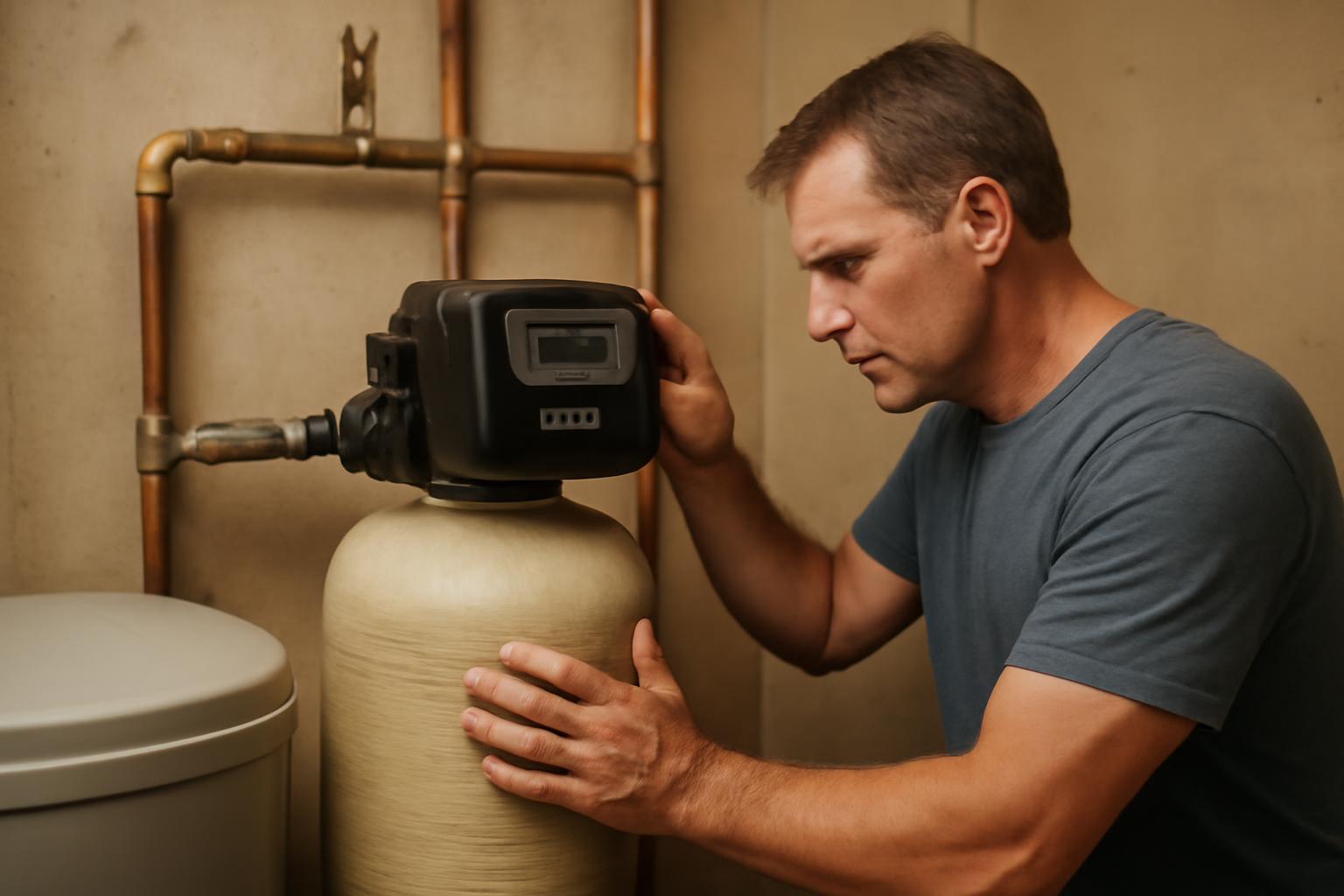
Salt-based softeners generally fall in the 10-15-year range, but some need replacement earlier while others continue working longer.
If you are asking how long does a water softener last, the most useful short answer is this: a typical residential salt-based softener is often expected to last about 10 to 15 years with regular maintenance.
That range appears again and again in homeowner guidance from manufacturers, dealers, and service companies. But it is best treated as a practical industry estimate, not a hard warranty or independently field-proven rule. Published lifespan advice on water softeners is mostly commercial guidance, so the numbers are helpful for planning, not precise promises.
That distinction matters because water softeners do not all age the same way. Two units installed on the same day can wear very differently depending on:
- water hardness
- household water use
- iron, sediment, or chlorine exposure
- maintenance habits
- installation quality
- whether the unit was sized and programmed correctly
So the better homeowner question is not just “How many years should it last?” It is also:
- What makes a softener wear out faster?
- Which symptoms point to maintenance versus replacement?
- What upkeep actually extends service life?
- When is DIY enough, and when should a professional take over?
Average Lifespan of a Residential Water Softener
Across the available homeowner guidance, the most consistent estimate for a residential salt-based water softener is 10 to 15 years with regular care.
That is the closest thing to a consensus in the source material, but it still needs context:
- it assumes the unit is maintained
- it reflects typical residential use
- it is a range, not an expiration date
Some guides describe 8 to 12 years as the period of best or most efficient performance, while others say well-maintained systems can run longer than 15 years. Those statements are not necessarily contradictory. A softener may still operate after a decade, but efficiency, resin performance, or reliability may start slipping depending on water conditions and upkeep.
A realistic rule of thumb
For most homeowners, this is a balanced way to think about lifespan:
| System condition | Reasonable expectation |
|---|---|
| Well-maintained, correctly sized salt-based softener | Often about 10–15 years |
| Higher-quality or premium model in favorable conditions | May approach 20 years |
| Neglected system or one handling difficult water | May need replacement around 8 years or sooner |
That last row matters. Several guides warn that neglected units can wear out much earlier. Low salt, salt bridging, sludge in the brine tank, iron fouling, or clogged parts can all force a softener to run inefficiently and shorten useful life.
Can some units last 20 years?
Possibly, but that longer number should be read carefully.
Seller and service guidance often says that premium, dual-tank, or better-built systems may serve for close to 20 years. That is plausible when the unit is well sized, maintained consistently, and not dealing with especially harsh water.
Still, those longer estimates are less firmly supported than the 10- to 15-year baseline. They are better understood as possible upper-end outcomes than as a normal expectation.
The practical takeaway
If you want one planning range for a typical residential salt-based system, use this:
- about 10 to 15 years is the safest general expectation
- around 8 years can happen when water is harsh or maintenance is poor
- close to 20 years is possible, but more of a best-case scenario than a standard outcome
Age alone is not enough to judge a softener. A 12-year-old system that still delivers soft water consistently may have useful life left. An 8-year-old system that no longer softens well, uses far more salt, or cycles erratically may be much closer to replacement.
Key Factors That Affect Water Softener Longevity
The answer to how long does a water softener last depends less on the calendar than on how hard the system has to work. Water quality, household demand, maintenance, and installation all affect wear.
1. Water hardness
High hardness is one of the biggest drivers of softener wear.
A softener removes calcium and magnesium from the water. When hardness is high, the resin bed has to capture more minerals, which usually means:
- more frequent regeneration
- more salt use
- more water used in the regeneration process
- more wear on resin and control components over time
In plain language: harder water means harder work.
This is why the same model may last longer in mildly hard municipal water than in a home with very hard water. If the unit is also undersized, that added workload can shorten lifespan further.
2. Household water usage
Usage matters almost as much as hardness.
Every gallon treated adds to the workload on the resin bed and control system. Larger households, frequent laundry, multiple bathrooms, and consistently high daily water demand all increase that load.
That is why two identical softeners can age differently:
- a lightly used unit in a two-person household may last longer
- the same unit in a high-use family home may reach the same wear point sooner
More water use usually means more regeneration, and more regeneration usually means more cumulative stress.
3. Contaminants such as iron, sediment, and chlorine
Hardness is not the only thing that ages a softener.
The guidance repeatedly points to iron, sediment, and similar contaminants as life-shortening factors, especially in well-water homes. These can foul resin, clog injectors and valves, or leave sludge in the system.
Common troublemakers include:
- iron, which can coat or foul resin beads
- sediment, which can clog internal parts
- sand or grit, which can wear moving components
- chlorine, which some guidance associates with resin deterioration over time
This is one reason pre-filtration is often recommended where sediment or iron is present. The evidence does not support a universal claim about how many years a pre-filter adds, but the logic is straightforward: cleaner water is easier on the softener.
4. Maintenance habits
Routine upkeep does not make a softener last forever, but it can make a meaningful difference.
Poor maintenance can lead to:
- salt bridging
- salt mushing or sludge
- improper brine strength
- fouled resin
- clogged injector or venturi parts
- unnoticed settings problems
- unnecessary regeneration
A maintained softener works the way it was designed to work. A neglected one often keeps operating in a partly obstructed, inefficient state until performance drops or parts wear out sooner than expected.
5. Installation quality and sizing
Even a good system can have a shorter life if it was installed poorly or chosen badly for the house.
Problems that show up in the guidance include:
- incorrect sizing for household demand or hardness level
- wrong hardness settings or poor programming
- lack of needed pre-filtration in dirty water
- improper drain or bypass setup
- installation in poor environmental conditions
An undersized system tends to regenerate too often. A badly programmed system may waste salt and water or fail to keep up with the home. Both can shorten usable life in practice.
6. Temperature extremes and environment
Some homeowner guidance also notes that extreme temperatures can reduce durability.
A softener installed where it can freeze, overheat, or sit in harsh conditions may be at greater risk for cracked housings, damaged valves, or shortened electronics life. This is more relevant in garages, utility spaces, and outbuildings that are not well controlled.
The big picture
If you want the shortest summary of what affects water softener longevity, it is this:
- harder water
- higher water use
- more contaminants
- weaker maintenance
- poorer installation
All five tend to push lifespan downward.
Salt-Based vs. Salt-Free Water Systems: Lifespan Comparison
Homeowners often ask whether a salt-free system lasts longer than a traditional softener.
Based on the available guidance, the answer is often yes in quoted lifespan, but the comparison needs a major caveat: the two systems do not do the same job.
Salt-based softeners
Traditional ion-exchange softeners are the standard for actual softening. They remove hardness minerals by exchanging calcium and magnesium for sodium or potassium.
Commonly cited residential lifespan: - about 10 to 15 years
Why they wear: - repeated regeneration cycles - resin fouling or exhaustion over time - moving parts and valves cycling regularly - salt-related maintenance demands
Salt-free systems
Salt-free units are more accurately described as conditioners in much of the guidance. Seller and service sources often put them in the 15- to 20-year or longer range, usually because they involve less regeneration and less routine maintenance.
But there is a key tradeoff:
- they may help reduce scale formation
- they generally do not remove hardness minerals the way ion-exchange softeners do
That distinction matters. If your goal is actual soft water for soap performance, laundry feel, fixture protection, and strong hardness reduction, a salt-free conditioner is not a direct substitute in every home.
Dual-tank and premium salt-based systems
Some guidance also says dual-tank or higher-end salt-based systems can last longer than basic single-tank units, sometimes in the 15- to 20-year range.
The reasoning is fairly intuitive:
- workload may be shared across tanks
- regeneration can be managed more efficiently
- higher-end components may be more durable
Again, these longer numbers are best viewed as seller-reported estimates, not universally proven residential norms.
Lifespan comparison at a glance
| System type | Commonly cited lifespan | Important tradeoff |
|---|---|---|
| Salt-based softener | About 10–15 years | True hardness removal, but more maintenance and regeneration wear |
| Salt-free conditioner | Often 15–20+ years | Less maintenance, but does not soften like ion exchange |
| Dual-tank or premium salt-based | Sometimes 15–20 years | May last longer, but depends heavily on quality, sizing, and upkeep |
Which “lasts longer” is not the only question
If you are comparing systems, do not ask only which one lasts longer. Also ask:
- Do I need actual hardness removal or mainly scale control?
- How hard is my water?
- Am I willing to manage salt and routine upkeep?
- Is my water likely to foul media regardless of system type?
A salt-free conditioner may come with a longer quoted service life, but that does not make it the better fit for every hard-water home.
Signs Your Water Softener Is Nearing the End of Its Life
A softener usually does not fail in one dramatic moment. More often, performance declines gradually.
Just as important, many warning signs do not automatically mean replacement. Low salt, salt bridging, wrong settings, or dirty internal parts can mimic end-of-life symptoms.
1. Hard water symptoms return
This is the most common warning sign.
Watch for:
- soap not lathering well
- spots or film on dishes and glassware
- scale buildup on faucets and fixtures
- stiff or scratchy laundry
- dry skin or flat-feeling hair
- soap scum returning in tubs and showers
If these symptoms come back after years of good performance, the softener is no longer doing its job as well as it should.
2. Salt use changes noticeably
A change in salt behavior can point to trouble.
Examples include:
- needing to refill salt much more often than before
- the unit seeming to regenerate constantly
- the salt level barely changing because the system is not drawing brine correctly
High salt use can signal inefficiency. No salt use at all can also signal a problem.
3. Regeneration becomes frequent or erratic
Odd regeneration behavior is another warning sign.
You might notice:
- regeneration happening more often than expected
- strange timing or inconsistent intervals
- incomplete cycles
- a unit that seems stuck in cycles or not cycling properly
Possible causes include aging controls, worn valves, incorrect programming, or resin that is no longer performing well.
4. Water pressure drops
A pressure drop can point to restriction in the softener or related plumbing.
Possible causes include:
- fouled resin
- clogged internal parts
- sediment buildup
- failing valves
Lower pressure does not always mean the whole unit is finished, but it does mean the system needs attention.
5. Gritty particles, resin beads, or unusual taste changes
If you see gritty particles in the water, or what looks like tiny amber or gold beads, that can suggest resin failure or internal breakdown.
Some guidance also mentions noticeable water taste changes as a warning that the treatment process is no longer working as expected.
This is a more serious sign than simply being low on salt. It points more toward internal wear.
6. Leaks, noises, or visible aging
Other warning signs include:
- unexplained leaks around the unit
- unusual sounds during operation
- cracked tanks or fittings
- corroded or deteriorating external parts
These do not always require full replacement, but in an older system they make replacement more likely.
7. The unit is older and needs repeated repairs
Age matters most when it is paired with declining performance.
A softener that is already over about 10 to 15 years old and also has:
- repeated service issues
- weak softening
- salt or cycling problems
- pressure loss
- resin-related symptoms
is a much stronger replacement candidate than an equally old unit that still performs normally.
A simple homeowner diagnostic sequence
Before assuming the softener is done, work through a quick check:
-
Confirm the salt level. Make sure the brine tank is not simply low.
-
Look for a salt bridge or mush. A tank can appear full while the system is not making proper brine.
-
Verify the bypass position. Make sure the unit has not been left in bypass.
-
Review basic settings against the owner’s manual. Incorrect settings can cause weak performance or unnecessary cycling.
-
Note any pressure drop, leaks, or gritty particles. Those point more strongly to internal problems.
-
Call for service if symptoms persist after basic maintenance. That is the point where testing, repair, or replacement becomes easier to judge.
A practical way to read the warning signs
| What you notice | What it may mean |
|---|---|
| Low salt, bridge, mild hard-water symptoms | Basic maintenance may solve it |
| Repeated hard-water return, odd cycles, higher salt use | Service or parts replacement may be needed |
| Resin beads in water, frequent failures, advanced age | Replacement becomes much more likely |
That middle category is where homeowners often replace a system too soon. It usually makes sense to rule out maintenance and repair issues first.
Essential Maintenance to Extend Your Softener’s Lifespan
A water softener lasts longest when upkeep is simple, regular, and unglamorous.
The good news is that most homeowner maintenance is straightforward. The hard part is consistency.
Check salt levels regularly
Monthly checks are a solid baseline. Some maintenance guides suggest checking every 4 to 6 weeks, and high-use households may need more frequent attention.
Common advice includes:
- use the salt type recommended for your system
- keep salt above the water line
- many guides suggest keeping the tank roughly one-third to one-half full
- do not pack the tank so full that bridging becomes more likely
- use higher-purity salt when possible to reduce residue and sludge
Poor-quality salt can leave more buildup in the tank and may lead to more frequent cleaning.
Watch for salt bridges and mushing
A salt bridge is a hard crust that forms above the water, leaving empty space below. The tank looks full, but proper brine is not being made.
Mushing is sludgy, softened salt at the bottom of the tank.
Both can interfere with regeneration and make a softener look broken when it really needs cleaning or salt correction.
Homeowners can often deal with this by:
- gently breaking up a salt bridge
- removing mush or sludge
- refilling with fresh salt
Clean the brine tank periodically
This is one of the areas where homeowner guidance varies the most.
Published recommendations range from:
- every 6 months
- to every 6 to 12 months
- to every 1 to 2 years
- and in some cases every 2 to 3 years
A practical way to reconcile that range is:
- every 6 to 12 months if you have well water, iron, sediment, sludge, or frequent bridging
- about every 1 to 2 years for many typical residential systems
- up to 2 to 3 years in lighter-duty situations with clean water and cleaner salt, if the manufacturer allows it
If your owner’s manual gives a schedule, follow that first.
Inspect the resin side of the system
Some maintenance guidance recommends periodic resin cleaner use, especially when iron is present. Others focus more on annual inspection and performance testing.
The main goal is to prevent fouling that reduces softening efficiency.
For homeowners, that usually means:
- watching for declining soft-water performance
- using an approved cleaner if the manual allows it
- arranging service if symptoms continue after normal maintenance
Schedule annual inspection or service
Annual inspection is one of the most repeated recommendations in the source material, especially for homes with:
- very hard water
- well water
- high iron
- recurring softener issues
A professional inspection may check:
- settings and programming
- regeneration function
- valve operation
- leaks or bypass problems
- evidence of resin fouling or wear
Not every home will need a service call every year without exception, but yearly inspection is a sensible preventive schedule in tougher water conditions.
Use pre-filters where needed
If you have sediment, grit, or iron problems, a pre-filter can help protect the softener from contaminants that shorten its life.
This is especially relevant for:
- well-water homes
- homes with visible sediment
- systems that have struggled with fouling
A pre-filter is not a guaranteed life-extender, but it can reduce unnecessary wear.
Monitor regeneration settings and frequency
A softener that regenerates too often wastes salt and water and may age faster. One that regenerates too seldom may let hardness break through.
Some maintenance guides say a well-sized system may often regenerate every 4 to 7 days, but that should not be treated as a universal target. Actual frequency varies by:
- hardness level
- system size
- settings
- household demand
- system type
What matters most is that the settings match your water and your household use.
A simple maintenance routine
| Task | Reasonable frequency |
|---|---|
| Check salt level | Monthly or every 4–6 weeks |
| Look for bridges or mush | Monthly |
| Inspect for leaks or unusual operation | Monthly |
| Clean brine tank | About 6–12 months to 1–2 years, depending on conditions |
| Review settings and performance | A few times per year |
| Professional inspection | About once a year, especially in hard or dirty water |
None of this guarantees a 15-year life. It simply gives the softener the best chance to reach its normal range.
Resin Beds and Key Components: When They Wear Out
When homeowners ask how long a water softener lasts, they are often really asking about the resin, because the resin bed is central to the softening process.
How long do resin beads last?
The most common estimate in the homeowner guidance is about 10 to 15 years for resin beads.
In harsher conditions, some guidance puts resin life closer to 8 to 10 years. The factors most often associated with faster resin wear or fouling include:
- very hard water
- high iron
- sediment
- chlorine exposure
- frequent regeneration from high demand or undersizing
Resin can also lose effectiveness before it is completely unusable. That is why a system may still run while delivering weaker softening.
Signs the resin may be the problem
Possible resin-related warning signs include:
- poor soft water performance even when salt levels are fine
- increased salt use
- more frequent regeneration
- hard-water symptoms returning soon after regeneration
- gritty particles or resin beads in the water
These symptoms do not prove resin failure by themselves, but they make it a strong possibility.
Other major components
Residential guidance is less precise on individual part life than on total system life, but a few broad patterns are consistent:
- Control valves and control heads are common wear points because they manage repeated cycling and water flow.
- Brine-side components can often be cleaned or replaced if sludge, bridging, or age causes problems.
- Tanks may outlast resin or control components if they are not physically damaged.
The key point is that a softener is not one single all-or-nothing part. Different components age at different rates.
Do you replace the whole softener when resin wears out?
Not always.
If the tank and control system are otherwise in good condition, resin replacement may restore performance without replacing the full unit. That can make sense when:
- the softener is not especially old
- the control head is still in good condition
- parts are available
- the system was a good fit for the home to begin with
If the unit is already older, inefficient, and showing multiple problems, replacing resin alone may not be the best long-term move.
The practical takeaway on parts
Think of a water softener as a system of aging components. Depending on the problem, the right fix may be:
- resin replacement
- valve repair or rebuild
- cleaning and reprogramming
- brine tank cleaning or part replacement
And sometimes the unit is simply old enough that replacing parts only delays full replacement.
Repair vs. Replacement: Making the Decision
There is no single birthday at which every water softener should be replaced.
A better question is whether the next repair is likely to restore useful service, or just postpone replacement for a system that is already declining.
When repair usually makes sense
Repair is often worth considering when the unit is:
- under about 8 to 10 years old
- otherwise in decent condition
- dealing with a limited or isolated problem
- supported by available parts
Examples of repair-first issues include:
- low salt
- salt bridging
- dirty brine tank
- clogged venturi or injector parts
- incorrect settings
- isolated valve or seal problems
- resin problems in an otherwise solid system
This is especially true if the unit has been reliable up to this point.
When replacement becomes more sensible
Replacement becomes more likely when the unit is:
- over about 10 to 15 years old
- having frequent or recurring failures
- no longer softening consistently
- using much more salt
- regenerating erratically
- difficult to repair because parts are scarce
- clearly outdated or inefficient
Older timer-based systems can still function, but they may be less efficient than demand-initiated systems because they regenerate on a fixed schedule rather than according to actual use. That alone does not require replacement, but it matters when performance is already slipping.
Part availability matters
A repair is only a good decision if it is practical and likely to last.
If service parts are hard to find, or if the unit has become a chain of small recurring repairs, replacement often makes more sense than continuing to patch it together.
A four-question decision test
Before deciding, ask:
-
How old is the unit? A minor repair on a 6-year-old system is very different from the same repair on a 14-year-old one.
-
Is this the first issue or one of several? Repeated failures push the case toward replacement.
-
Is the problem isolated or systemic? A single clogged part is different from weak softening, aging resin, and control trouble at the same time.
-
Will repair leave you with a reliable system? If the answer is no, replacement is usually the cleaner long-term choice.
The best homeowner framing
Do not use a hard age rule by itself. Instead:
- repair younger units with limited issues
- replace older units with recurring problems, weak performance, or poor repair prospects
That is more realistic than treating 10 years as an automatic discard date.
DIY Limits and When to Call a Plumbing Professional
Homeowners can do a fair amount of basic softener upkeep themselves. But there is a clear line between routine maintenance and work that requires diagnosis, tools, or experience.
What most homeowners can do themselves
Reasonable DIY tasks include:
- checking salt levels
- refilling with the correct salt
- breaking a salt bridge
- cleaning out visible mush or sludge in the brine tank
- checking for obvious leaks
- verifying that the system is not in bypass
- reviewing basic settings against the owner’s manual
These steps cover a lot of common “my softener stopped working” complaints.
What usually calls for a professional
Professional help is a better choice for:
- persistent hard-water symptoms after basic maintenance
- resin testing, replacement, or re-bedding
- control valve diagnosis or rebuild
- unexplained pressure loss
- repeated regeneration problems
- electrical or timer/control issues
- installation corrections or sizing questions
- water quality issues involving iron, sediment, or fouling
A professional can also help determine whether the problem is really the softener or another plumbing-related issue.
Why this matters for the rest of the home
Hard water does not just affect the softener. It can also affect:
- faucets and showerheads
- appliance water lines
- fixtures and valves
- plumbing surfaces where mineral scale collects
That means softener problems can show up as broader household water-quality and scale issues, not just poor performance at the softener itself.
A practical stop point for DIY
DIY is appropriate when the job involves salt, cleaning, visual inspection, and basic checks.
It is time to call for help when:
- performance does not improve after routine maintenance
- pressure is dropping
- you see resin beads or gritty particles
- the unit leaks
- regeneration or control behavior seems abnormal
- you are considering internal disassembly or resin replacement
That approach helps you avoid both common mistakes: replacing a unit too early, or waiting too long while hard-water symptoms return throughout the home.
A well-maintained residential softener often provides about 10 to 15 years of useful service, but lifespan is only part of the story. What matters most is how the unit performs in your water conditions, how consistently it is maintained, and whether problems are isolated enough to repair.
FAQ
How often should I clean the brine tank in my water softener?
There is no single interval that fits every home, but about every 6 to 12 months to every 1 to 2 years is a reasonable general range from the available maintenance guidance.
A practical way to adjust it:
- every 6 to 12 months if you have well water, iron, sediment, sludge, or frequent bridging
- about every 1 to 2 years for many municipal-water homes using cleaner salt
- up to 2 to 3 years in lighter-duty situations with clean water and little residue, if the manufacturer allows it
If your owner’s manual gives a specific schedule, follow that first.
Can very hard water significantly shorten a softener’s life?
Yes, it can.
Very hard water usually forces the softener to regenerate more often, which increases wear on resin and control components. If that water also contains iron or sediment, the effect can be worse.
That does not mean every home with very hard water will have a short-lived system. A correctly sized, well-maintained unit can still last many years. But compared with the same system serving milder water, the harder-water system is usually under more stress.
What are the first signs my water softener resin is failing?
The earliest signs usually look like declining softening performance rather than obvious mechanical failure.
Common warning signs include:
- hard-water symptoms returning even though salt levels are fine
- reduced soap lather
- more spotting on dishes and fixtures
- increased salt use
- more frequent regeneration
- water that seems soft only inconsistently
A more advanced sign is gritty material or resin beads in the water, which points more strongly to internal media or component failure.
Because these symptoms can overlap with low salt, bridging, or dirty parts, it is smart to rule out basic maintenance issues first.
Does adding a pre-filter help a water softener last longer?
Often, yes, especially when sediment or iron is part of the problem.
A pre-filter can help by keeping grit, particles, and some foulants from reaching the softener’s internal components and resin bed. That is particularly useful for:
- well-water homes
- homes with visible sediment
- systems that have struggled with fouling
A pre-filter is not a guaranteed life-extension device, and the available guidance does not support a universal claim about how many years it adds. But in the right conditions, it can reduce unnecessary wear.
Is 10 years a hard rule for water softener replacement?
No.
Ten years is better treated as a checkpoint than a hard replacement rule. Most published residential guidance puts salt-based softeners in the 10- to 15-year range, but some need replacement earlier and some continue working longer.
A 10-year-old unit that still softens properly, uses salt normally, and has not needed repeated repairs may have useful life left. A younger unit with recurring failures, erratic regeneration, and weak performance may be closer to replacement sooner.
The better rule is to look at age, symptoms, and repair history together, not age alone.