
B Vent Pipe Is a Double-Wall Vent for Certain Gas Appliances
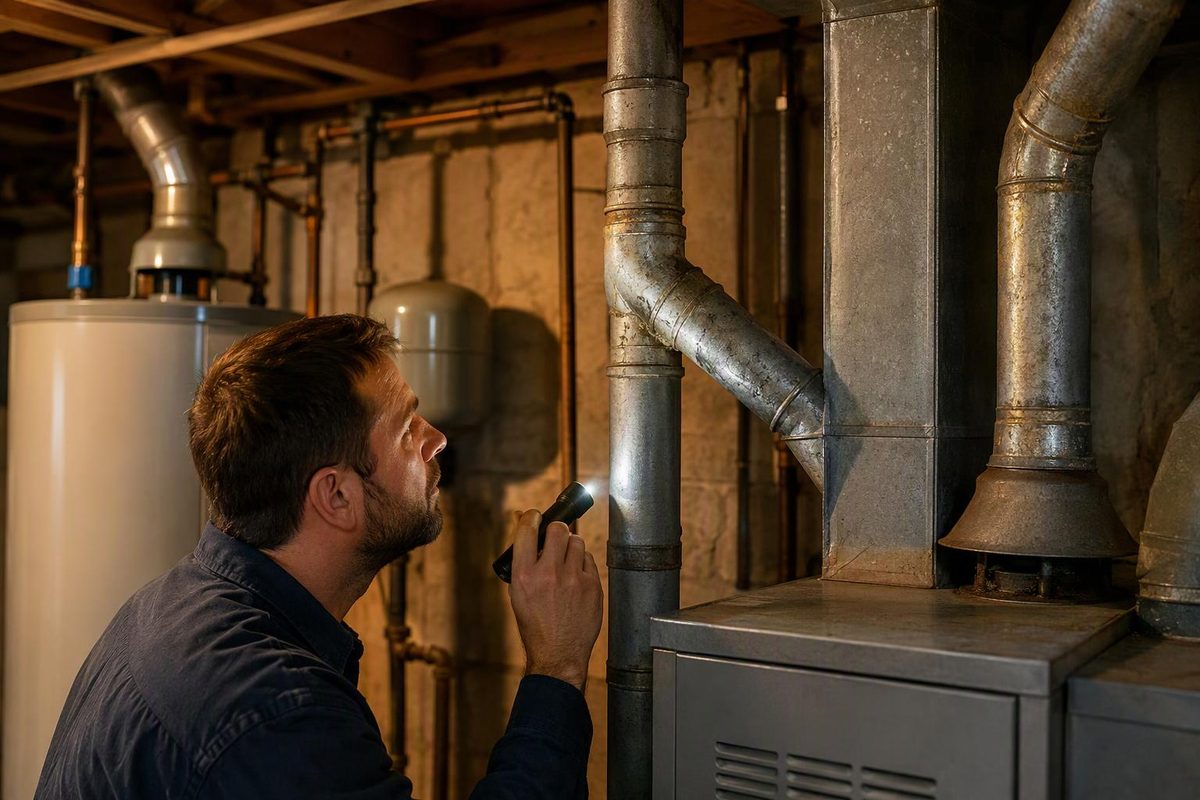
Identify B vent pipe, learn which gas appliances can use it, check visible defects and know when corrosion, gaps or CO concerns require a professional.
A B vent pipe, or Type B gas vent, is a listed double-wall metal system that carries combustion gases from certain gas-fired appliances outdoors. It is not a plumbing drain vent, dryer duct or general-purpose chimney pipe.
The inner wall carries warm flue gas while an air space and outer metal wall reduce heat transfer to nearby construction. One manufacturer uses an aluminum inner pipe and galvanized-steel outer pipe, but construction details vary by listed system (Hart & Cooley).
Where B vent can—and cannot—be used
Type B vent is commonly associated with conventional gas water heaters, furnaces, boilers and some gas fireplaces. That does not mean every gas appliance accepts it. The appliance rating plate and installation manual must allow Type B vent.
DuraVent specifies its system for listed natural-gas or propane Category I appliances equipped with draft hoods and other appliances listed for Type B vent. Its instructions prohibit use with Category II, III or IV appliances, equipment requiring a pressure-tight or liquid-tight vent, and oil- or solid-fuel appliances (DuraVent installation instructions). The 2024 International Fuel Gas Code requires Type B and BW vents to be tested to UL 441 and installed according to the vent and appliance manufacturers’ instructions (2024 IFGC, Sections 502 and 503). Your locally adopted code may be a different edition or contain amendments.
Do not decide compatibility from pipe diameter or appliance fuel alone. A high-efficiency condensing furnace, for example, typically uses a different, manufacturer-specified vent system. Never substitute B vent because it appears to fit the outlet.
How to identify it
Start at the appliance and follow the flue path without removing anything. Look for:
- A printed or embossed “Type B Gas Vent” or “B-Vent” marking
- A listing mark and manufacturer or model designation
- Factory-made locking joints rather than ordinary crimped duct seams
- A double-wall edge visible at an accessible end or approved fitting
- A route that rises from a gas appliance and ultimately terminates outdoors with a listed cap
The nominal size normally refers to the inner diameter, not the outside measurement. Do not order a replacement from an outside-diameter measurement alone. Do not assume parts from different manufacturers lock together safely; use only an adapter listed or permitted for the specific systems.
A plumbing vent may also leave through the roof, but it connects to the drainage system and balances pressure rather than carrying combustion products. See what a roof plumbing vent does if the pipe does not trace back to a fuel-burning appliance.
What a homeowner can check safely
Keep the appliance off if you find a disconnected section, crushed pipe, missing cap or obvious perforation. From accessible areas—and without climbing onto the roof or opening a concealed chase—check for:
- Separated or loose joints. A visible gap can release combustion products indoors.
- Rust, holes or staining. Corrosion and recurring moisture can indicate roof leakage, condensation or a venting problem; replacing one rusty section may not correct the cause.
- Contact with insulation, wiring or wood. Required clearance is an air space, so filling it with insulation is not an improvement. DuraVent’s 2024 instructions specify a 1-inch minimum air space for its 3- through 30-inch products in the United States and require insulation and wiring to remain outside that space (DuraVent installation instructions). Check the label and instructions for the actual system rather than treating 1 inch as universal.
- Unsupported offsets or sagging connectors. Lateral sections need support and an upward rise toward the vent. DuraVent specifies at least 1/4 inch of rise per foot for lateral portions of its system (DuraVent B-vent guide).
- A damaged or obstructed termination. Do not climb up to inspect it. Use a safe view from the ground or have a qualified technician inspect the cap, flashing and vent interior.
DuraVent’s maintenance guidance calls for inspection of the cap, vent, connector and appliance connection, including checks for damage, corrosion, excessive condensation, blockage and disconnected sections (DuraVent maintenance instructions).
Sizing and alterations are not guesswork
A larger pipe is not automatically safer. Vent sizing depends on the connected appliance input, vent height, connector rise and length, offsets, and whether more than one appliance shares the vent. The 2024 IFGC requires vent systems to be sized under its prescribed methods and requires a Type B vent to terminate at least 5 feet vertically above the highest connected draft hood or flue collar (2024 IFGC, Sections 503.6.6 and 503.6.10). Roof pitch, nearby walls, air inlets and the listed cap affect the termination details too.
Have a qualified HVAC or gas-appliance technician evaluate any resize, reroute, common-vent change or appliance replacement. These changes can alter draft for every appliance on a shared vent.
Stop immediately for a CO warning
If a carbon-monoxide alarm sounds, move everyone outside and call emergency services. Do not remain indoors trying to locate the source, and do not re-enter until emergency responders permit it. The U.S. Consumer Product Safety Commission also advises CO alarms on every home level and outside sleeping areas, plus professional annual inspection of heating equipment, chimneys and flues for blockage, corrosion and loose or disconnected sections (CPSC carbon monoxide guidance).
A B vent may look like simple metal pipe, but it is part of a listed combustion-safety system. Visual checks are reasonable homeowner work. Disassembly, sizing, joint repair and changes to the vent path are professional tasks.